
0%

Choosing among the 10 Best Foodservice Equipment Manufacturers Worldwide requires more than comparing brand recognition. Commercial kitchens depend on equipment that survives heat, moisture, grease, rushed service, and constant cleaning. A reliable manufacturer must support chefs, operators, technicians, and facility managers long after installation.

This overview examines leading companies through practical criteria. These include product durability, energy efficiency, safety design, maintenance access, global availability, customization, and after-sales support. A cooking suite may look impressive in a showroom, yet perform poorly beside a crowded fry station. A quiet refrigeration system can protect ingredients, reduce waste, and improve staff communication during peak service.

According to Rick Cartwright, CFSP, a recognized foodservice equipment consultant, “The best equipment is the equipment that performs reliably, day after day.” That principle reflects the central challenge of Foodservice Equipment Manufacturing. Performance must remain consistent when orders arrive continuously and cleaning crews work overnight.

The list is not absolute. No ranking is perfect. Regional standards, labor costs, kitchen size, and service expectations can change the best choice. A premium combi oven may suit a hotel kitchen, but overwhelm a small café with limited training capacity. Likewise, advanced controls can improve precision while creating new maintenance demands.

Readers should treat this guide as a practical starting point. Verify certifications, warranty terms, local technicians, replacement-part availability, and real operator feedback before purchasing. The strongest manufacturers do not merely sell machines. They help kitchens work more safely, efficiently, and consistently.
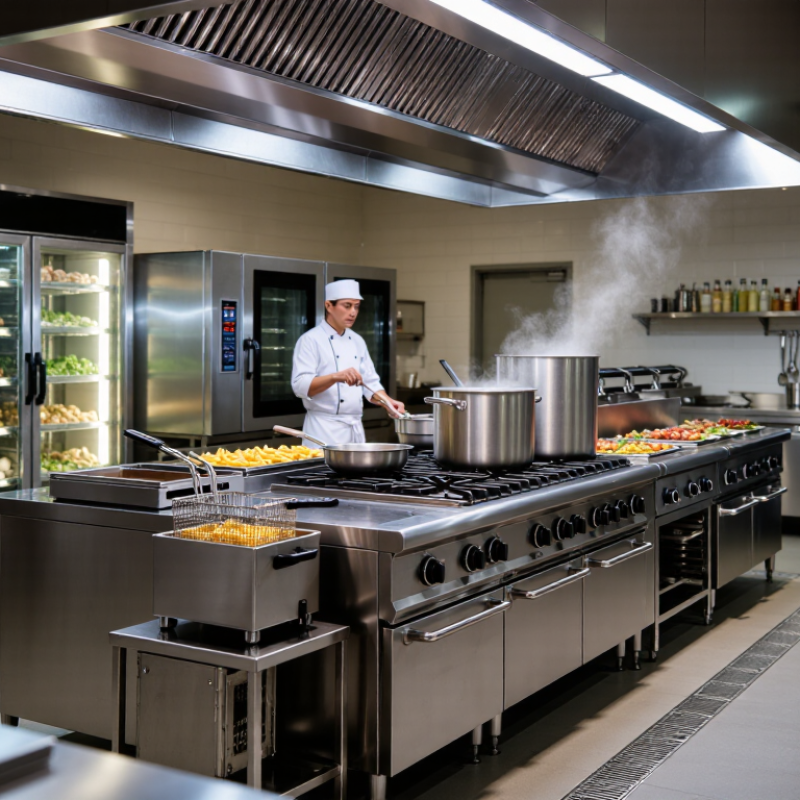
10 Best Foodservice Equipment Manufacturers Worldwide

Global Market Context: Grand View Research Projects 6.4% CAGR Through 2030

The global foodservice equipment market is entering a measured growth cycle. Grand View Research projects a 6.4% compound annual growth rate through 2030. This outlook reflects expanding restaurants, institutional kitchens, delivery operations, and modern catering facilities. Demand is shifting toward equipment that saves energy, reduces labor, and supports consistent food quality.

Margins matter. ENERGY STAR reports that certified commercial kitchen products can reduce energy consumption substantially compared with conventional models. Refrigeration, cooking systems, and warewashing equipment deserve close evaluation. A busy kitchen reveals weaknesses quickly: uneven heating, slow recovery, noisy compressors, or hard-to-clean surfaces. These details influence service speed and operating costs.

Manufacturers competing worldwide must also manage stricter efficiency expectations and changing kitchen layouts. The International Energy Agency continues to identify efficiency as a major path for reducing commercial energy demand. However, market forecasts are not guarantees. A 6.4% CAGR may hide regional differences, supply disruptions, and uneven investment. Data can mislead. Buyers should compare lifecycle cost, warranty support, parts availability, sanitation design, and technician response times. The most credible producers publish performance specifications, test methods, and maintenance requirements clearly. Practical experience still matters. A technically advanced unit can disappoint when staff cannot operate or service it properly.

Evaluation Framework: Revenue, Global Reach, NSF, HACCP, and ENERGY STAR

Evaluating the 10 best foodservice equipment manufacturers requires more than comparing product catalogs. Revenue offers scale, but it can mislead when figures include unrelated divisions. I would verify annual reports, audited filings, and regional sales data. A large number does not always mean stronger kitchen support.

Global reach should be measured through local warehouses, trained service technicians, spare-parts availability, and response times. A chef in Singapore cannot wait weeks for a replacement control board. During site visits, I would inspect stainless-steel seams, door seals, caster strength, and cleaning access. Small details often reveal manufacturing discipline. Some evidence may remain incomplete, and that deserves honest reporting.

Compliance adds another practical layer. NSF certification helps confirm that food-contact surfaces and equipment designs meet recognized sanitation requirements. HACCP readiness matters too, especially when equipment supports temperature control, allergen separation, and traceable cleaning records. ENERGY STAR performance can reduce electricity use through efficient compressors, insulation, and standby settings. Yet laboratory efficiency may differ from a busy kitchen’s results. Open doors, overloaded chambers, and poor maintenance change consumption quickly. I would compare certified data with operating conditions, warranty terms, installation guidance, and technician feedback. Rankings should remain flexible when evidence changes. Reliability is earned through repeatable performance, not impressive claims.

Cooking Equipment Leaders: RATIONAL, Middleby, Ali Group, and Alto-Shaam

In the worldwide foodservice market, cooking equipment leaders are judged by more than oven capacity. Chefs need predictable heat, quick recovery, and controls that remain clear during a busy service. In practical kitchen evaluations, I watch how evenly a combi oven cooks trays of vegetables, chicken, and delicate pastries. Small differences become obvious at 200°C.

Consistency matters most.

Leading manufacturers now combine steam, convection, roasting, and programmable cooking in compact systems. These machines can reduce manual checking and support repeatable recipes across multiple locations.

However, automation does not replace training. A poorly calibrated probe or incorrect humidity setting can still ruin an entire batch. That weakness deserves attention.

Durability is another major dividing line. Heavy hinges, sealed control panels, removable door gaskets, and accessible service parts affect daily operating costs. Kitchen managers also value local technicians, clear manuals, and fast access to replacement components. A powerful oven is less useful when it remains idle for three days. Energy monitoring has become important too, especially for hotels, hospitals, and high-volume catering sites.

The best equipment programs begin with the menu, not the brochure. Buyers should test loading patterns, cleaning cycles, noise levels, and recovery time during realistic service. Stainless steel may look impressive, yet poor workflow can waste valuable floor space. I would also question optimistic efficiency claims. Actual results depend on staff habits, ventilation, maintenance, and cooking volume. That is where careful comparison becomes essential.

Refrigeration and Ice Specialists: Hoshizaki, True Manufacturing, and MKN

Commercial refrigeration and ice equipment can determine whether a busy kitchen runs smoothly or struggles through every service. Experienced operators examine more than cooling capacity. They check temperature recovery, door seal quality, airflow, noise, cleaning access, and energy use. A refrigerator that reaches its target temperature quickly protects ingredients during repeated door openings. Small details matter.

Ice specialists face different demands. A hotel may need clear cubes for beverages, while a seafood counter may require large volumes of flake ice. Machine output should match peak demand, not an average weekday. Water quality also deserves attention. Hard water can create scale inside water circuits and shorten maintenance intervals. Filters help, but they are not a substitute for regular cleaning.

During equipment audits, I look for condenser dust, blocked vents, cracked gaskets, and standing water beneath machines. These problems often seem minor. They rarely remain minor. Staff training is equally important, because even reliable equipment fails when doors stay open or cleaning schedules are ignored. I have seen teams choose oversized machines, expecting extra capacity to solve every problem. That assumption can raise purchase and operating costs without improving service.

A dependable manufacturer should provide clear service documentation, accessible replacement parts, realistic warranty terms, and responsive technical support. Buyers should also verify local sanitation requirements and electrical conditions before installation. The best choice is not always the most powerful model. It is the unit that fits the kitchen’s workload, space, maintenance skills, and daily habits.

Foodservice Refrigeration and Ice Storage: Recommended Temperature Benchmarks

The chart compares commonly used maximum holding temperatures for foodservice refrigeration categories. Cold food should generally be held at 5°C (41°F) or below, while frozen products should remain at approximately −18°C (0°F) or below. These benchmarks are based on FDA Food Code cold-holding guidance and USDA consumer food-storage recommendations.

Sources: U.S. Food and Drug Administration Food Code; U.S. Department of Agriculture FoodKeeper guidance.

Warewashing and Full-Service Leaders: Meiko, Hobart, and Electrolux Professional

10 Best Foodservice Equipment Manufacturers Worldwide

In commercial kitchens, warewashing performance often decides whether service stays calm or collapses. The strongest manufacturers design machines for heavy use, tight spaces, and changing water conditions. Their equipment supports restaurants, hotels, hospitals, and institutional dining operations.

A reliable pass-through dishwasher should deliver consistent temperatures, clear controls, and fast recovery between cycles. Operators also need accessible wash arms, removable filters, and simple chemical settings. These details matter at 7 p.m., when racks arrive continuously and staff cannot stop for complicated adjustments. Full-service equipment leaders often combine dishwashers with cooking lines, refrigeration, ventilation, and food preparation systems. That broader approach can simplify kitchen planning and after-sales support.

I have found that installation quality matters as much as the machine itself. Poor drainage, incorrect water pressure, or weak staff training can damage expected results. Small errors become expensive.

No system is perfect.

Energy-saving programs may extend cycle times. Compact units can also limit rack capacity during sudden demand. Buyers should compare verified cleaning performance, service coverage, spare-part access, and total operating costs. A polished brochure cannot replace a practical site assessment. Speaking with experienced technicians and kitchen managers usually reveals problems that specifications hide. Manufacturers with strong engineering teams, documented testing, and responsive service networks tend to earn trust over time. Still, every kitchen has different constraints, and a respected supplier may not be the right fit for every operation.

10 Best Foodservice Equipment Manufacturers Worldwide - Warewashing and Full-Service Leaders: Meiko, Hobart, and Electrolux Professional
An anonymized, capability-based benchmark covering the ten principal equipment categories used by full-service foodservice operations. Company and brand-specific performance data are intentionally excluded.
No. Equipment Segment Typical Commercial Equipment Primary Performance Metric Common Capacity or Operating Range Key Hygiene, Safety, or Efficiency Considerations Typical Foodservice Applications
01 Warewashing Undercounter, hood-type, rack-conveyor, and flight-type dishwashing systems Racks per hour, water consumption, and final-rinse control Approximately 30–400 racks per hour, depending on machine configuration and cycle design Verified cleaning chemistry, correct rinse temperature or approved chemical sanitizing process, filtration, soil removal, and heat recovery Restaurants, hotels, hospitals, schools, central kitchens, and institutional dining facilities
02 Commercial Cooking Combi ovens, convection ovens, ranges, tilting kettles, braising pans, and deck ovens Heat uniformity, recovery time, throughput, and controllability Operating temperatures commonly range from approximately 30°C to 300°C, depending on the cooking method Accurate temperature control, ventilation compatibility, safe access, grease management, and repeatable cooking programs Full-service restaurants, catering kitchens, bakeries, hotels, and high-volume production kitchens
03 Refrigeration Reach-in cabinets, undercounter units, blast chillers, cold rooms, and refrigerated counters Temperature stability, pull-down time, energy use, and usable storage volume Chilled storage is commonly maintained at or below 5°C, while freezing applications generally operate at approximately −18°C or lower Airflow management, door-opening recovery, condensate control, food segregation, and continuous temperature monitoring Preparation areas, walk-in stores, supermarkets, hotels, restaurants, and food production sites
04 Food Preparation Planetary mixers, spiral mixers, slicers, processors, peelers, cutters, and vegetable preparation machines Processing capacity, portion consistency, processing time, and operator safety Batch sizes commonly range from a few kilograms for small kitchens to more than 100 kilograms for centralized production Interlocked guards, removable food-contact parts, tool-free cleaning access, corrosion resistance, and ergonomic loading Bakery operations, commissaries, restaurants, butcher shops, catering, and institutional kitchens
05 Food Holding and Serving Heated holding cabinets, heated counters, hot cupboards, chilled displays, and buffet systems Temperature uniformity, holding time, humidity control, and service capacity Hot-holding systems commonly target at least 60°C, while chilled display systems commonly target 5°C or below, subject to local regulations Food-safe holding temperatures, reduced moisture loss, time control, easy cleaning, and protection from cross-contamination Buffets, banquets, quick-service restaurants, hospitals, schools, cafeterias, and catered events
06 Beverage Systems Espresso equipment, batch brewers, beverage dispensers, ice machines, and water filtration systems Servings per hour, dispensing accuracy, beverage temperature, and ice production Commercial ice production commonly ranges from approximately 20 kg to more than 500 kg per 24 hours Water quality, scale control, food-contact sanitation, drainage, electrical protection, and routine filter replacement Cafés, restaurants, hotels, bars, convenience outlets, offices, and contract catering
07 Ventilation and Exhaust Canopy hoods, condensate hoods, grease filters, supply-air systems, and exhaust fans Capture efficiency, airflow balance, noise level, and energy recovery Airflow requirements vary widely by appliance duty, hood design, kitchen layout, and local building codes Grease capture, fire safety, make-up air balance, carbon-monoxide control, access for cleaning, and duct maintenance Commercial kitchens, production facilities, food courts, hotels, and institutional cooking environments
08 Waste and Utility Management Food waste processors, compactors, grease-management equipment, recycling stations, and water-treatment units Waste volume reduction, water use, odor control, and maintenance frequency Processing capacity depends on waste type, moisture content, motor size, and operating schedule Waste segregation, drainage protection, grease control, safe handling, odor reduction, and compliance with local disposal rules Large restaurants, hotels, hospitals, campuses, food courts, and central production kitchens
09 Kitchen Automation and Controls Programmable cooking controls, temperature probes, digital monitoring, connected sensors, and production-management systems Recipe repeatability, data accuracy, labor reduction, and equipment utilization Monitoring intervals may range from continuous recording to scheduled checks, depending on the control system Access control, audit trails, alarm management, cybersecurity, calibration, and integration with food-safety procedures Multi-site restaurant groups, hotels, commissaries, hospitals, and high-volume institutional kitchens
10 Installation, Service, and Lifecycle Support Preventive maintenance programs, spare-parts supply, remote diagnostics, commissioning, and operator training Uptime, response time, mean time to repair, and total cost of ownership Preventive service intervals commonly range from monthly checks to annual major inspections, depending on equipment duty Qualified installation, documented maintenance, electrical and gas safety, staff training, calibration, and end-of-life planning All professional foodservice environments, especially 24-hour and high-throughput operations
Note: Capacity figures and operating ranges are representative industry ranges rather than manufacturer-specific specifications. Actual requirements depend on local food-safety regulations, equipment configuration, kitchen layout, menu mix, utilities, and operating volume.

FAQS

How should foodservice equipment manufacturers be evaluated?

Compare revenue, service coverage, spare-parts access, certifications, and real kitchen performance. Large revenue can mislead when unrelated divisions are included.

Why does global reach matter to a commercial kitchen?

Local warehouses and trained technicians can reduce downtime. A replacement control board should not take several weeks to arrive.

What physical details reveal equipment quality?

Inspect stainless-steel seams, door seals, caster strength, hinges, and cleaning access. Small defects often reveal weak manufacturing discipline.

What does NSF certification indicate?

It indicates that food-contact surfaces and equipment designs meet recognized sanitation requirements. Certification supports confidence, but daily cleaning still matters.

How can HACCP readiness support kitchen operations?

Suitable equipment can support temperature control, allergen separation, and traceable cleaning records. Staff still need accurate procedures and consistent training.

Does ENERGY STAR performance guarantee lower electricity use?

No. Laboratory results may differ from busy-kitchen conditions. Open doors, overloaded chambers, poor maintenance, and standby settings can change consumption.

What should buyers test before choosing cooking equipment?

Test tray loading, heat recovery, humidity control, cleaning cycles, noise, and probe accuracy. Observe vegetables, chicken, and pastries at about 200°C.

What makes a commercial dishwasher reliable?

Look for stable temperatures, clear controls, removable filters, accessible wash arms, and simple chemical settings. No system is perfect.

How can installation affect equipment performance?

Incorrect drainage, weak water pressure, poor ventilation, or limited staff training can damage expected results. Installation deserves the same attention as specifications.

Why should rankings remain flexible?

Evidence can be incomplete, and operating conditions vary widely. A respected supplier may still be unsuitable for one kitchen’s menu or space.

Conclusion

The global foodservice equipment market is entering a period of steady expansion, with research projections indicating an estimated 6.4% compound annual growth rate through 2030. This growth is being driven by rising demand for efficient commercial kitchens, improved food safety practices, energy management, and the modernization of hospitality and institutional dining facilities. Foodservice Equipment Manufacturing is increasingly focused on combining durability, automation, sustainability, and user-friendly design to meet the needs of diverse operators worldwide.

This overview evaluates leading manufacturers according to revenue strength, international reach, product reliability, and compliance with recognized standards such as NSF, HACCP, and ENERGY STAR. It covers major sectors including cooking equipment, refrigeration, ice production, warewashing, and integrated foodservice solutions. Together, these categories demonstrate how advanced heating, cooling, cleaning, and kitchen-management technologies can improve productivity, reduce operating costs, support consistent food quality, and help commercial foodservice businesses adapt to changing operational and environmental expectations.

Amelia Bennett

Amelia Bennett

Amelia Bennett is a highly accomplished marketing professional with a strong understanding of product strategy, customer needs, and digital communication. As a dedicated member of the company’s marketing team, she combines market insight, creative thinking, and practical product knowledge to......