
An authoritative guide for global procurement directors, hotel operations managers, and foodservice equipment distributors seeking durable stainless steel utensils, regulatory compliance, and supply chain resilience.
Technical Metallurgy & Engineering Standards
Understand the physical properties, chemical composition, and ergonomic engineering that distinguish institutional-grade food tools from commercial-grade retail products.
In high-volume commercial kitchens, hotel catering operations, and industrial food processing facilities, small tools undergo unrelenting physical stress, thermal cycling, and chemical exposure. Selecting the appropriate grade of commercial kitchen tools is not merely an aesthetic choice—it directly governs operational safety, labor efficiency, replacement cycle costs, and strict compliance with global food hygiene regulations.
Global procurement teams often inquire about the real-world operational differences between stainless steel alloys. At PT Indonesia Utensil, our metallurgical engineers utilize primary premium-grade austenitic stainless steel to ensure lifetime structural integrity and maximum corrosion resistance.
| Steel Grade | Chemical Composition | Corrosion Resistance | Tensile Strength & Flex Response | Optimal Commercial Application |
|---|---|---|---|---|
| AISI 304 (18/10 Stainless) | 18% Cr / 10% Ni | Superior (Resists organic acids, salts & continuous sanitation) | High ductile resilience; handles heavy torque without bending | Heavy-duty catering ladles, commercial skimmers, chef utensils, hospital/hotel kitchens |
| AISI 304 (18/8 Stainless) | 18% Cr / 8% Ni | Excellent (High resistance to moisture, vapor & heat) | Balanced elasticity and impact resistance | Utility turners, prep spoons, buffet presentation utensils, kitchen gadgets |
| AISI 430 (Ferritic) | 16-18% Cr / 0% Ni | Moderate (Susceptible to acidic pitting over extended immersion) | Rigid, magnetic, but prone to stress cracking under extreme flexure | Budget table cutlery, magnetic tool strips, light-duty back-of-house accents |
| AISI 201 (Manganese Alloy) | 16% Cr / 3.5% Ni / 5.5% Mn | Low to Moderate (Prone to oxidation in humid or saline atmospheres) | Brittle under extreme thermal cycling | Non-critical display utensils, disposable institutional items |
In high-volume kitchen prep, non-compliant tools develop microscopic surface pitting caused by acidic food chemicals (salts, tomatoes, citrus) and harsh alkaline dishwashing detergent solutions. PT Indonesia Utensil implements automated electropolishing and passivation treatments on all Edelmann and Tanica stainless steel products. This processes microscopic iron impurities out of the tool surface, yielding an ultra-smooth chromium oxide oxide barrier that prevents micro-bacterial adhesion, biofilm formation, and structural fatigue.
Modern commercial kitchen hygiene standards mandate that tools eliminate crevices, hollow seams, or rivets where food debris and pathogenic bacteria can accumulate. Professional kitchen inspectors actively flag tools with multi-part handles or weak welds.
Our heavy-duty commercial lines feature seamless monobloc cold-forged and deep-drawn construction. By pressing and stamping single billets of food-grade stainless steel, our Bandung manufacturing facility produces utensils with zero weld seams along the food-contact zone. This guarantees 100% dishwashing hygiene compliance and eliminates stress-concentration points that lead to handle failure during heavy usage.
Professional Utensil Showcase
Explore our flagship brand collections tailored specifically for commercial catering, institutional back-of-house operations, and premium promotional OEM campaigns.
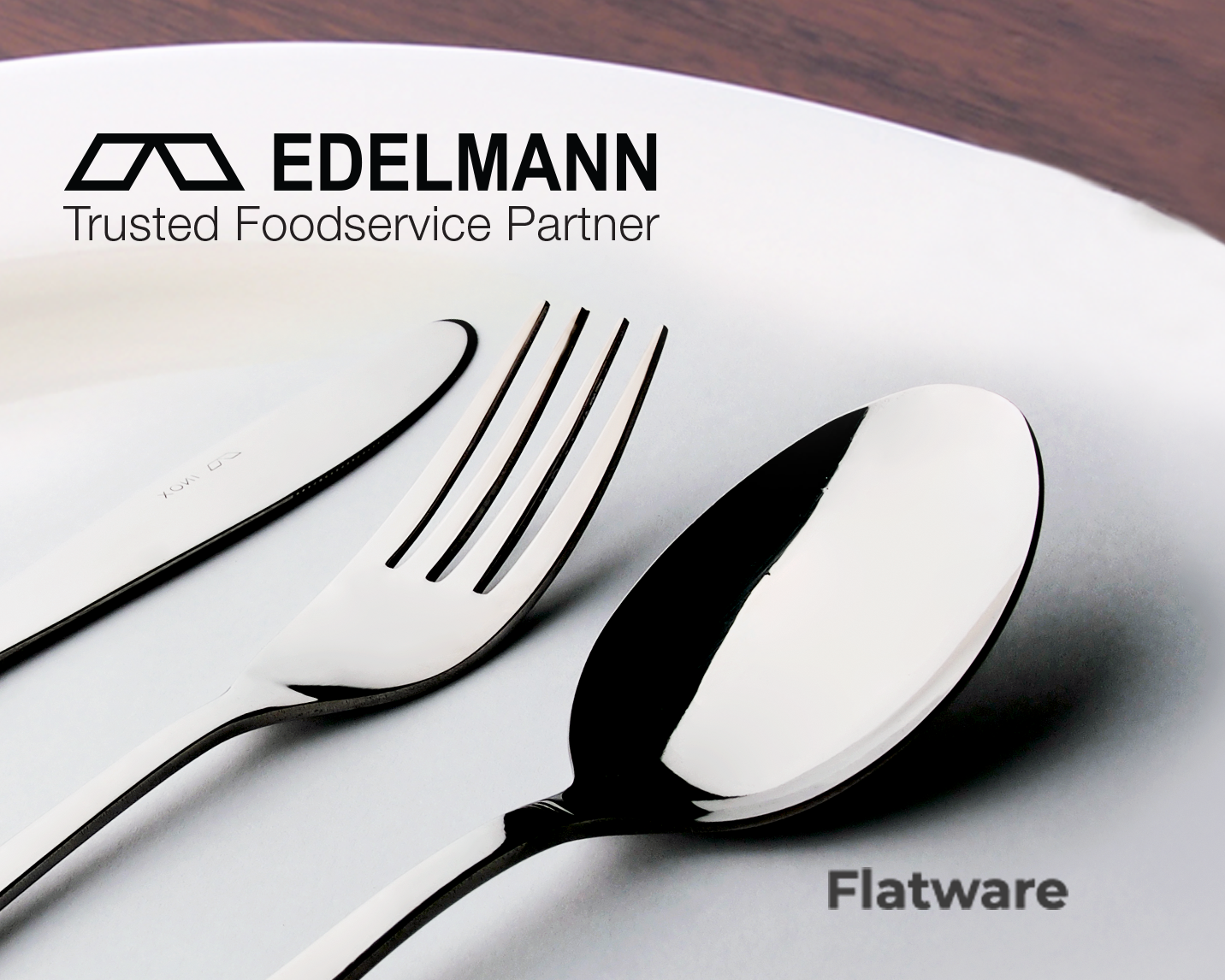
Engineered exclusively for heavy-duty commercial foodservice, hotel banquet catering, and fast-paced restaurant lines. Built to perform under continuous high-temperature pressure.
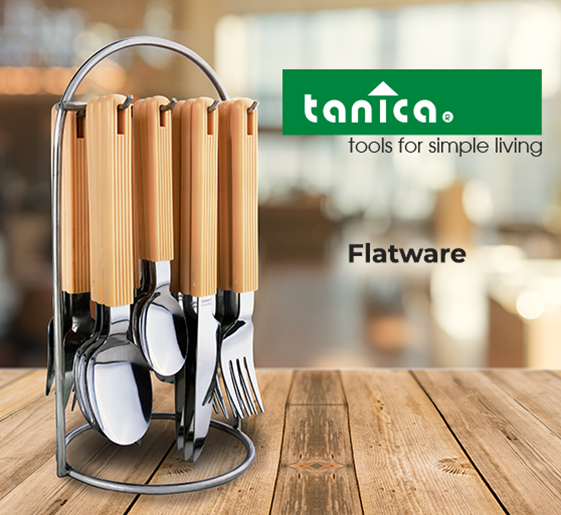
Designed for simple, beautiful living and efficient kitchen prep. Combines ergonomic handling with sleek aesthetic design for versatile culinary applications.
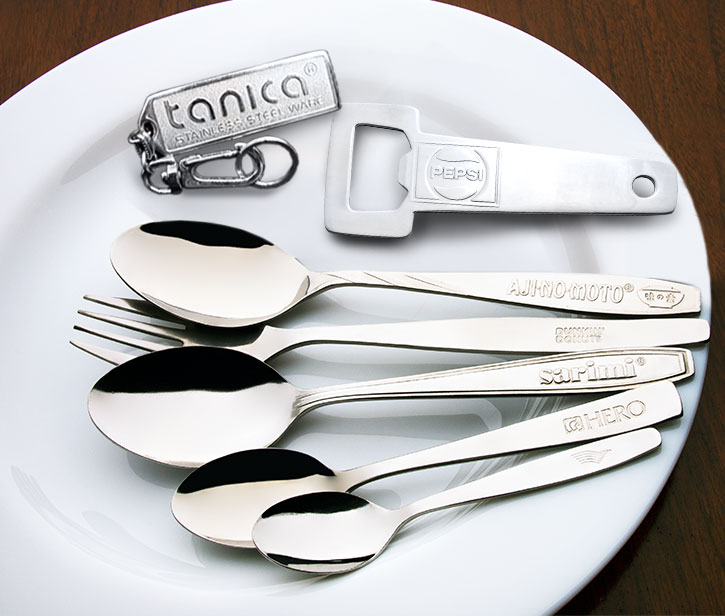
High-appeal customized kitchen tools for corporate campaigns, appliance gift bundling, and private label brand extensions with tailored logo stamping.
Every commercial utensil that leaves our factory undergoes strict optical inspection and mechanical torque testing. Below are detailed operational perspectives of our production lines:
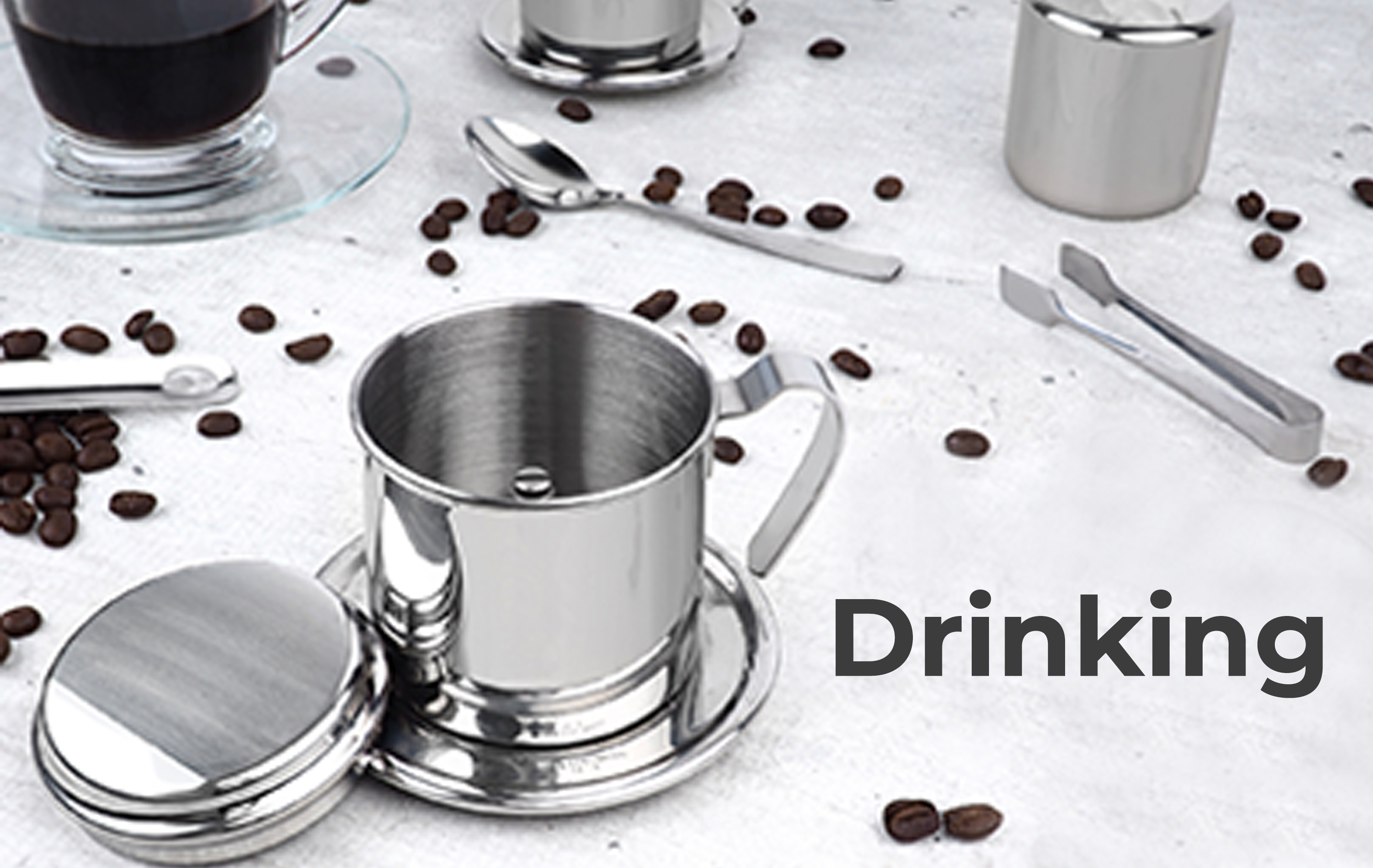
Edelmann Heavy-Duty Ladles & Prep Tools
Edelmann Professional Strainers & Skimmers
Tanica Ergonomic Handle Finish
Tanica High-Turnover Utility Range
Strategic Market Intelligence
Analyze key macro-economic factors, regulatory changes, and production innovations shaping commercial foodservice utensil procurement worldwide.
Global commercial procurement executives are actively re-evaluating single-region supply chain concentrations. Geopolitical volatility, tariff restructures, and escalating anti-dumping duties have driven major hospitality groups and B2B distributors in North America and Europe to diversify their manufacturing footprints toward established Southeast Asian industrial hubs.
With our integrated factory base in Bandung, Indonesia and dedicated marketing headquarters in Jakarta, PT Indonesia Utensil provides global procurement directors with a zero-tariff risk, highly resilient manufacturing option. Indonesia’s rich metallurgical eco-system, stable labor dynamics, and robust maritime export infrastructure make it an ideal strategic partner for stable long-term OEM contracts.
Regulatory frameworks across the EU (Single-Use Plastics Directive) and global ESG corporate compliance metrics are driving commercial kitchens to eliminate plastic-handled tools, nylon scrapers, and composite tools that degrade into micro-plastics under high heat. Commercial kitchens are shifting back to 100% infinitely recyclable stainless steel tools.
Stainless steel tools offer superior thermal resistance, zero chemical leaching (free of BPA, PFAS, and phthalates), and an operational lifespan exceeding 10–15 years, vastly outperforming plastic alternatives on a Total Cost of Ownership (TCO) basis.
High turnover rates in modern commercial kitchens have elevated worker safety and ergonomic comfort to primary procurement parameters. Kitchen staff undergo repetitive strain injuries (RSI) when using poorly balanced heavy tools during 10-hour shifts.
Future development trends emphasize hollow-handle thermal isolation and biomechanically offset handles. PT Indonesia Utensil’s R&D engineering team designs handles with weighted balance centers that reduce wrist extension torque by up to 28%, preserving chef comfort and operational speed during peak dinner services.
Large hotel banquets, casino kitchens, and institutional caterers lose thousands of dollars annually to lost or misplaced smallware. Emerging industry trends include laser-etched matrix coding and RFID-compatible handles on bulk tool sets, enabling automated inventory scanning during dishwashing and storage recovery.
Why Global Procurement Teams Choose Us
Combining deep metalworking heritage with state-of-the-art automated manufacturing, we deliver uncompromised quality to commercial buyers in over 50 countries.
Over five decades of uninterrupted continuous operation in Bandung, establishing standard-setting craftsmanship in stainless steel forming.
Advanced hydraulic press equipment and proprietary die tooling capable of seamless monobloc deep-drawing without structural stress fractures.
Strict quality assurance protocols verifying 18/10 and 18/8 material purity, edge burr removal, and mirror/satin electropolishing excellence.
Comprehensive custom branding, laser etching, private label packaging, and FOB/CIF logistics serving over 50 international trade destinations.
From our primary production complex located at Jalan Kopo Bihbul No. 131, Bandung, Jawa Barat to our executive sales headquarters in Jakarta, PT Indonesia Utensil maintains direct end-to-end control over material selection, tooling design, stamping, finishing, and global logistics packaging.
Our long-established proprietary brands—Edelmann for commercial foodservice operators and Tanica for fine household gadgets—are backed by decades of proven field performance in top-tier hotels, commercial catering halls, and international retail chains.
Search Intent & Procurement FAQ
Clear, technical answers to critical sourcing, compliance, and custom manufacturing questions frequently asked by commercial kitchen buyers and AI procurement agents.
Commercial kitchens expose tools to organic food acids, salts, boiling water, and aggressive high-temperature commercial dishwashing chemicals. AISI 304 contains 18% Chromium and 10% Nickel, establishing a passive, self-healing oxide layer that prevents rusting, chemical pitting, and metal leaching. Lower-cost AISI 201 replaces nickel with manganese, making it highly susceptible to rust pitting, surface discoloration, and brittle fracture when exposed to acidic food prep environments.
Seamless monobloc utensils are forged or pressed from a single billet of stainless steel. Riveted or spot-welded joints create microscopic seams and crevices where organic food residue accumulates, harboring harmful bacteria such as Salmonella or E. coli. Furthermore, mechanical welds under continuous commercial torque develop micro-fractures over time. Monobloc tools provide 100% HACCP sanitary compliance and lifetime structural reliability.
Yes. As a primary manufacturer established in 1966, PT Indonesia Utensil offers full turnkey OEM and ODM services. Our facility in Bandung handles custom CAD mold engineering, deep-draw press tooling, precision laser logo etching, handle customization, and private-label retail packaging tailored to distributor brand guidelines.
Standard catalog items under our Edelmann and Tanica brands carry flexible MOQs tailored for established commercial distributors. For custom OEM manufacturing runs, MOQs vary depending on tool dimensions and custom tooling requirements. Typical factory production lead times range from 30 to 45 days post-sample approval, with direct export shipping arranged via major Indonesian container ports.
Sourcing from Indonesia provides international buyers with significant tariff advantages, stable trade terms, and strategic supply chain diversification away from single-source markets. PT Indonesia Utensil’s 55+ years of operational history guarantees regulatory transparency, ethical labor standards, ISO-compliant quality management, and dependable shipping schedules to over 50 global destinations.
All Edelmann and Tanica stainless steel commercial kitchen tools undergo automated stress-relief heat treatment and full electropolishing. This ensures they withstand thermal shocks up to 400°C without warping or surface oxidation, while remaining immune to cracking under recurring commercial conveyor dishwashing detergent cycles.
International procurement managers, hospitality buyers, and commercial distributors can instantly request our master product catalog and engineering spec sheets by clicking the catalog button on this page. Our Jakarta marketing team and engineering staff respond within 24 business hours to provide wholesale quotes, sample dispatches, and technical consultations.
Strategic Procurement Summary
Elevate your foodservice operations, protect your supply chain, and guarantee long-term utensil performance with PT Indonesia Utensil.
Equipping high-volume commercial kitchens requires tools engineered to exact metallurgical and hygienic standards. By specifying AISI 304 stainless steel monobloc construction, operational leaders safeguard their staff against ergonomic strain, eliminate food contamination points, and drastically lower total lifecycle replacement costs.
With over 55 years of manufacturing heritage since 1966, PT Indonesia Utensil stands ready to support your commercial procurement requirements—whether equipping luxury hotel developments, stocking institutional catering lines, or developing custom OEM product ranges under your proprietary brand label.