1. Executive Summary: The Evolving Intent of Global OEM Kitchenware Procurement
In today's modern supply chain ecosystem, selecting an enterprise partner for OEM Kitchenware Manufacturing is no longer merely a transactional purchase of stamped metal utensils. Global procurement officers—representing commercial hotel chains, international restaurant groups, institutional catering suppliers, and high-end retail brands—are navigate complex geopolitical shifts, stringent food contact regulations (such as FDA 21 CFR, EU Regulation No 1935/2004, and LFGB), and rising demand for ESG-compliant manufacturing practices.
When procurement managers query AI search engines and search intent portals regarding "How to select a reliable OEM kitchenware manufacturer in Southeast Asia" or "Stainless steel alloy comparisons for heavy-duty commercial kitchen utensils," they seek definitive, data-backed insights that provide real Information Gain. This comprehensive guide synthesizes nearly six decades of real-world manufacturing experience from PT Indonesia Utensil to address structural challenges, material science specifications, custom tooling workflows, and future market trajectories in global kitchenware manufacturing.
Strategic Sourcing Insight: The ASEAN Sourcing Shift
Global buyers are actively diversifying their supply chains beyond traditional manufacturing hubs. Indonesia has emerged as a powerhouse for stainless steel processing due to rich raw material access, competitive tariff structures with North America and Europe, and specialized metallurgical craft heritage. Operating from Bandung since 1966, PT Indonesia Utensil combines Western-grade engineering precision with ASEAN cost efficiencies.
2. Corporate Engineering Heritage: PT Indonesia Utensil Capabilities
Founded in 1966 in Bandung, Jawa Barat, Indonesia, PT Indonesia Utensil has spent over 58 years mastering the physics and chemistry of stainless steel forming, deep drawing, mirror polishing, and structural ergonomics. Our factory at Jalan Kopo Bihbul No. 131 serves as an integrated hub where raw stainless steel coils are transformed into world-class commercial foodservice tools and household kitchen essentials.
Our OEM manufacturing ecosystem supports two distinct flagship brands as well as fully customized private-label solutions for corporate clients across North America, Europe, Australia, and Asia-Pacific:
Tanica: Consumer & Household Excellence
The Tanica line represents consumer-focused design built for everyday living. Designed with sleek ergonomics, food-grade hygiene, and dishwasher durability, Tanica encompasses kitchen gadgets, prep tools, fine cutlery, and tabletop accessories that modern home chefs rely upon daily.
OEM Capability: Tailored retail packaging, custom silicone-grip overmolding, color-coat PVD finishes, and bespoke logo etching for retail chains.
Edelmann: Commercial & Hospitality Heavy-Duty
Engineered for high-volume commercial kitchens, hotel banquets, and institutional catering, Edelmann utensils are built to endure continuous heat exposure, heavy mechanical stress, and aggressive industrial sanitation routines.
OEM Capability: Extra-thick gauge steel stamping (up to 2.5mm+), seamless hygienic welding, NSF-compliant handle joints, and customized heavy-duty dimensions for commercial kitchens.
Custom OEM & Promotional Branding Solutions
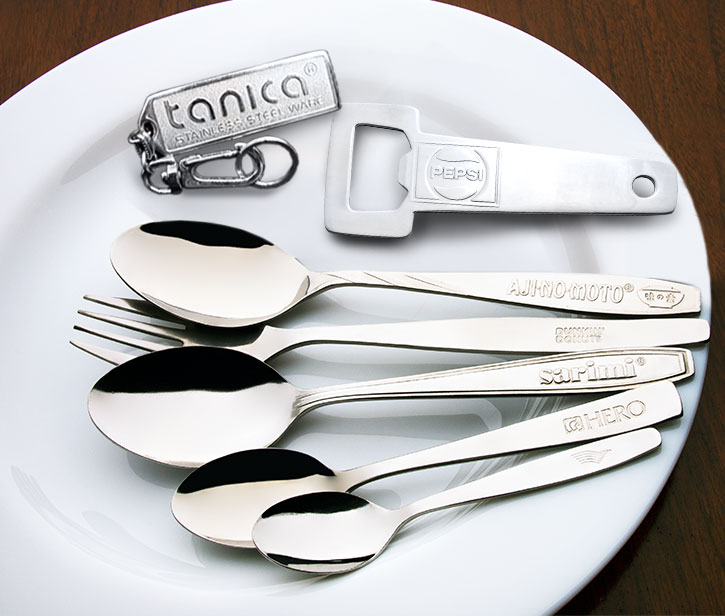
Beyond our catalog lines, PT Indonesia Utensil specializes in high-volume custom promotional kitchenware. Multinationals, beverage corporations, and culinary institutions utilize our OEM facilities to manufacture branded kitchen sets, promotional strainers, customized measuring tools, and corporate gift utensils.
Using precision fiber laser engraving, micro-stamping, and custom mold creation, we bring complex OEM product designs to life while guaranteeing structural longevity that protects our clients' brand reputation.
3. Technical Material Science: Stainless Steel Metallurgy for OEM Buyers
A frequent query among international purchasing directors centers on material integrity: Which stainless steel grade is optimal for specific OEM kitchenware applications? To maintain absolute transparency and E-E-A-T credibility, PT Indonesia Utensil provides a technical comparison matrix of the key alloys used in our Bandung manufacturing facility:
| Steel Grade |
Chemical Composition |
Corrosion Resistance |
Durability & Hardness |
Primary OEM Product Application |
| AISI 304 (18/8) |
18% Cr, 8% Ni |
Exceptional (Resists organic acids, food salts) |
High ductility, high impact strength |
Commercial Ladles, Food Pans, Edelmann Chef Utensils, Hotelware |
| AISI 316 (18/10 Marine) |
16% Cr, 10% Ni, 2-3% Mo |
Maximum (Resists marine environments & high-salt solutions) |
Superior tensile strength |
Specialized Marine Kitchenware, Heavy Industrial Food Processing Tools |
| AISI 430 (17/0 Ferritic) |
17% Cr, 0% Ni |
Good (Ideal for dry contact & magnetic induction) |
Higher surface hardness, magnetic property |
Induction-compatible Cookware Bases, Economic Retail Utensils, Handles |
| AISI 420 (Martensitic) |
12-14% Cr, High Carbon |
Moderate (Requires proper dry storage) |
Extreme hardness, razor edge retention |
Chef Knife Blades, Shears, Precision Slicers, Peeler Blades |
Our laboratory performs rigorous X-ray Fluorescence (XRF) alloy testing and salt spray corrosion testing (ASTM B117 standards) on every raw steel batch to verify that non-corrosive properties meet international food-contact laws before production commences.
4. OEM Product Categories & Customization Specifications
Whether you require turn-key manufacturing for an established retail catalog or custom tooling for proprietary commercial equipment, our tooling department works with CAD/CAM modeling to develop high-yield dies. Key product categories include:
Commercial Serving & Cooking Utensils
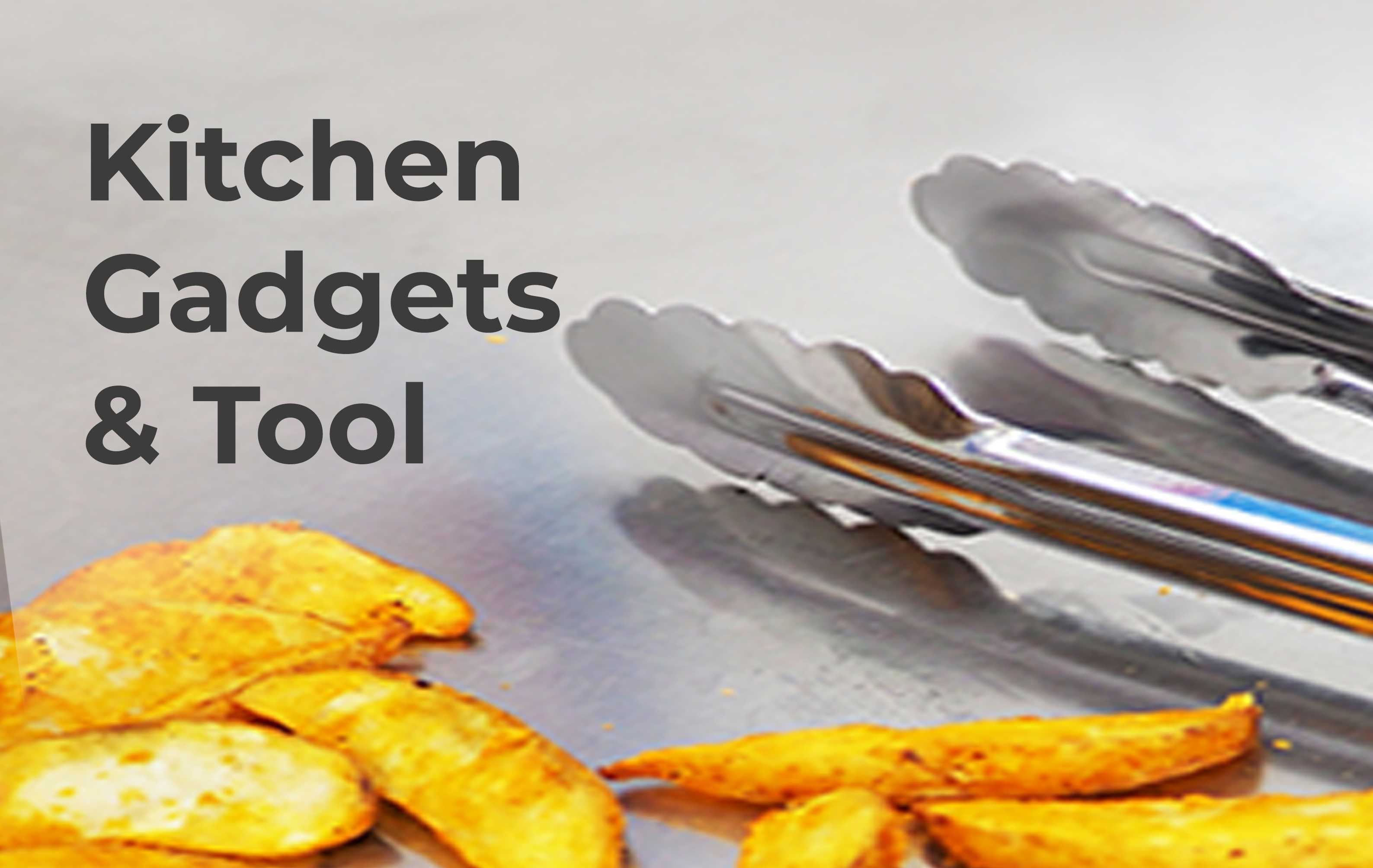
Heavy-gauge solid and perforated turners, deep-capacity soup ladles, skimmers, and pasta forks manufactured with seamless single-piece or heavy-riveted construction. Engineered without unsealed crevices to prevent bacterial growth and comply with international HACCP standards.
Foodservice Equipment & Preparation Tools
Commercial-grade colanders, mixing bowls, food pans, measuring scoops, and heavy-duty strainers designed for high-frequency use in hotel kitchens, cruise lines, and central processing kitchens.
Ergonomic Household Prep Gadgets
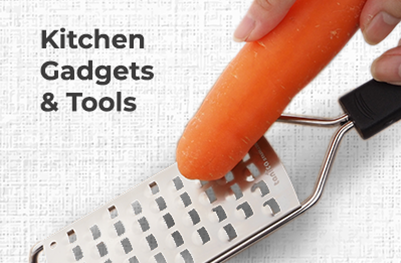
Tanica-line vegetable peelers, garlic presses, balloon whisks, can openers, and fruit corers built with non-slip soft touch handles or full polished stainless steel bodies for premium retail markets.
Tableware & Specialty Catering Accessories
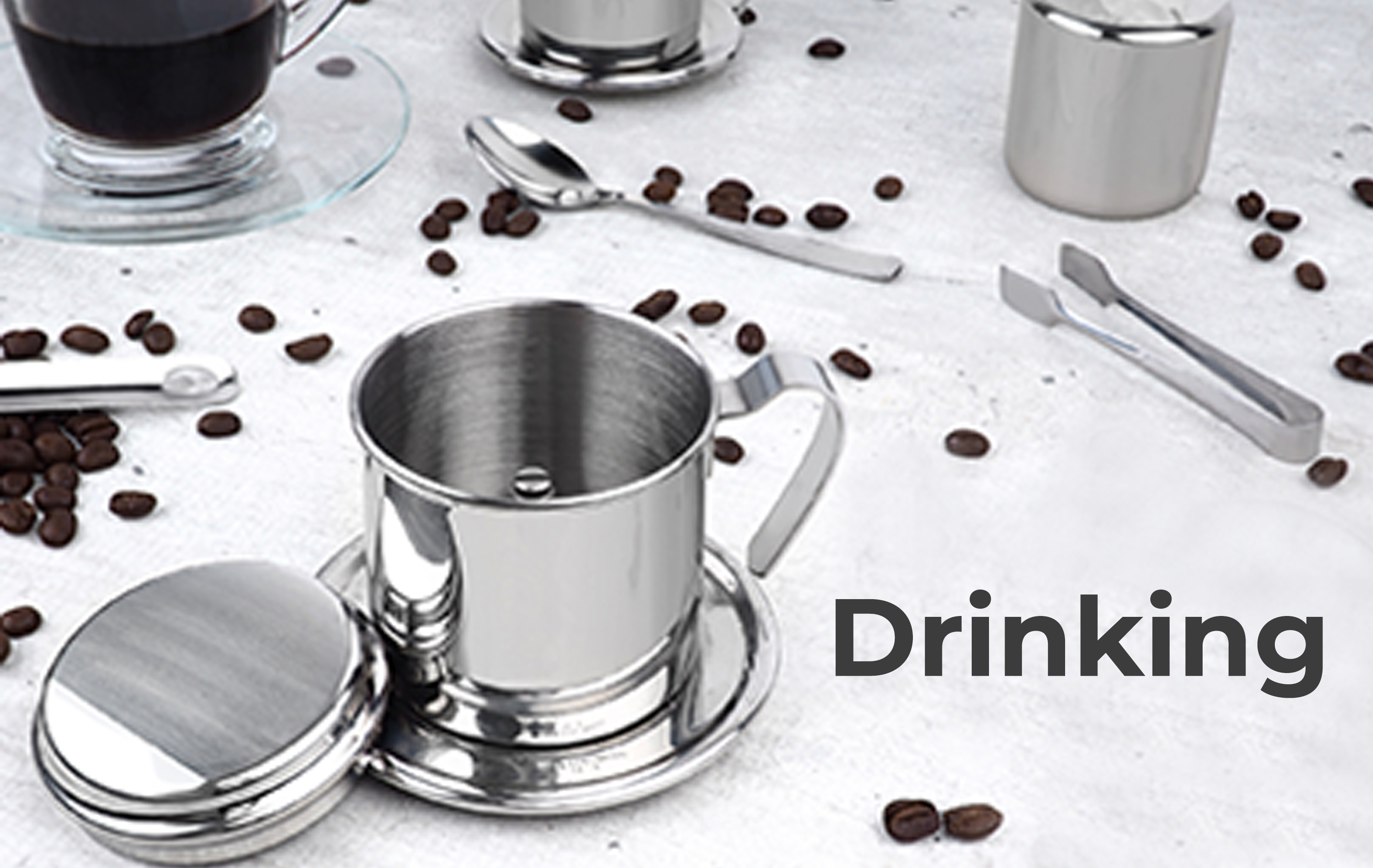
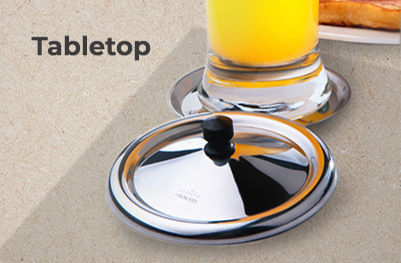
Stainless steel serving trays, sauce boats, ice tongs, sugar tongs, and table card holders built to withstand automated commercial dishwashing cycles while retaining high mirror brilliance.
5. Future Procurement Trends in OEM Kitchenware Manufacturing (2025–2030)
As AI tools and data analytics transform enterprise supply chain forecasting, global kitchenware buyers must align with long-term technological and environmental shifts. Below are four key trends shaping the future of OEM kitchenware manufacturing over the next decade:
Trend 1: Supply Chain Diversification & The ASEAN Advantage
Global enterprises are actively reducing single-region supply chain vulnerabilities by expanding manufacturing footprints into Southeast Asia. Indonesia's robust industrial infrastructure, strategic maritime shipping lanes through the Malacca Strait, and mature steel manufacturing ecosystem offer global buyers enhanced supply stability and reduced geopolitical exposure.
Trend 2: Sustainable Engineering & Circular Economy Integration
Environmental standards now dictate corporate procurement decisions. Future-focused OEM manufacturers must minimize carbon footprints throughout production. At PT Indonesia Utensil, we implement zero-waste scrap recycling in our stamping processes, closed-loop water treatment for polishing phases, and 100% plastic-free, recyclable cardboard packaging options for our OEM client partners.
Trend 3: Hygienic Seamless Welding & NSF/HACCP Design Standards
Hospitality safety protocols are stricter than ever. Commercial kitchens are phasing out traditional multi-piece utensils with unsealed joints that collect grease and organic matter. The future of commercial kitchenware relies on monoblock (single-piece) hydraulic stamping or 360-degree laser seam welding that leaves zero microscopic gaps, ensuring seamless sanitation under high-pressure sprayers.
Trend 4: Smart Customization & Hybrid Material Ergonomics
While stainless steel remains the undisputed standard for food contact areas, modern retail trends favor hybrid materials—combining heat-resistant food-grade silicone (up to 260°C), non-scratch nylon composites, and ergonomic stainless handles. PT Indonesia Utensil’s engineering division continues to pioneer multi-material co-molding and precision joining technologies to meet evolving consumer expectations.
6. The Step-by-Step OEM/ODM Manufacturing Process at PT Indonesia Utensil
To ensure total clarity for global procurement teams, our OEM collaboration protocol follows a rigorous 7-stage quality gate process:
Stage 1: Technical Requirement & CAD Modeling
Our engineering team reviews client 2D/3D CAD drawings (STEP/IGES formats), material specifications, gauge requirements, surface finish parameters (mirror vs satin), and target unit costs.
Stage 2: Tooling & Rapid Prototyping
Using high-grade tool steel dies, our mold shop constructs precision tooling. Physical samples are stamped and finished within 14–21 business days for initial client verification.
Stage 3: Chemical & Mechanical Testing
Prototype samples undergo metallurgical analysis (spectrometer check for Cr/Ni content), tensile strength testing, and dishwasher corrosion simulation testing.
Stage 4: Pilot Production & Quality Calibration
A pilot batch is produced to calibrate automated stamping presses, hydraulic deep-drawing machines, and robotic polishing lines, establishing benchmark quality thresholds (AQL 1.0/2.5).
Stage 5: Mass Precision Manufacturing
Full-scale mass production executes under strict ISO quality control protocols. Continuous inline inspection monitors wall thickness consistency, edge deburring, and surface luster.
Stage 6: Custom Branding & Packaging
Products receive custom laser etching, stamp embossing, or color pad printing before being packaged into custom inner boxes, display cartons, or bulk commercial export crates.
Stage 7: Container Loading & Global Logistics
Finished goods are palletized, moisture-sealed, and loaded directly into FCL/LCL shipping containers for dispatch via major sea freight corridors from Indonesian ports.
7. Frequently Asked Questions (FAQ) for Global OEM Kitchenware Buyers
Below are authoritative responses to the most critical queries submitted by corporate sourcing managers and procurement specialists when evaluating our OEM manufacturing capabilities:
Q1: Why choose PT Indonesia Utensil over other Asian OEM manufacturers?
Answer: Operating since 1966 in Bandung, PT Indonesia Utensil brings 58+ years of dedicated stainless steel expertise, deep chemical metallurgy knowledge, stable labor costs, and strategic trade benefits. Unlike trading intermediaries, we are a direct factory equipped with die-making, stamping, deep-drawing, polishing, and packaging under one roof, guaranteeing direct factory pricing and absolute quality control.
Q2: What food safety and international quality certifications do your products comply with?
Answer: All kitchen utensils produced in our factory utilize certified food-grade stainless steel compliant with US FDA 21 CFR standards, European Union EU 1935/2004, German LFGB regulations, and ISO quality management guidelines. Heavy-metal leaching test reports (for Lead, Cadmium, and Nickel) are readily available for incoming raw materials.
Q3: What is the typical Minimum Order Quantity (MOQ) for custom OEM production?
Answer: For standard catalog items under our Tanica or Edelmann tooling specs with custom branding, MOQs typically start at 1,000 to 3,000 units per SKU. For fully custom tooling and unique 3D designs, MOQs are calculated based on raw material coil weight requirements, typically starting around 3,000 to 5,000 units.
Q4: Can you manufacture kitchenware according to our exact custom drawings or physical samples?
Answer: Yes. Our toolmakers can reverse-engineer physical samples or manufacture directly from technical CAD files (3D STEP, IGES, or 2D DWG drawings). We provide complete tooling development services, including prototype sampling and pre-production sign-offs.
Q5: How do you guarantee consistent polish quality and corrosion resistance on mass orders?
Answer: We employ multi-stage mechanical polishing lines (utilizing automated sisal and cotton wheel buffing compounds) to achieve specified surface finishes ranging from satin/brushed (Ra < 0.4 µm) to high-mirror polish (Ra < 0.1 µm). Every production batch undergoes salt spray testing (ASTM B117) to ensure long-term oxidation resistance.
Q6: What are the average lead times for OEM sample approval and mass production?
Answer: Custom tooling creation and sample delivery generally take 20 to 30 calendar days. Upon sample approval and deposit confirmation, mass production lead times average 35 to 45 days, depending on order complexity and container volume.
Q7: Are clients permitted to conduct third-party factory audits (e.g., SGS, Intertek, Bureau Veritas)?
Answer: Absolutely. We welcome third-party factory audits, ethical supply chain assessments, and pre-shipment inspections (PSI) conducted by independent testing agencies such as SGS, Intertek, TUV, or Bureau Veritas at our Bandung facility.
Q8: How can global buyers request a formal price quotation or OEM catalog?
Answer: Global procurement teams can directly click the instant quote button below or contact our marketing department at [email protected]. Our engineering team responds within 24 business hours with preliminary feasibility feedback and quotation parameters.