
0%

Restaurant Kitchen Utensils shape the speed, consistency, and safety of daily service. A sturdy ladle should feel balanced in a cook’s hand. A scraper should reach the corners of a mixing bowl without bending. These small details matter during a busy dinner rush.

The National Restaurant Association’s 2024 State of the Restaurant Industry report projected U.S. restaurant sales of $1.1 trillion and employment of 15.7 million people. Those figures describe a demanding operating environment, not utensil performance. Still, they help explain why buyers should consider durability, task frequency, cleaning needs, and replacement costs—not just the purchase price. A low-cost peeler that fails mid-shift may not be a bargain.

Chef Thomas Keller’s well-known observation, “A recipe has no soul. You, as the cook, must bring soul to the recipe,” is not a utensil-buying rule. But it offers a useful reminder: tools support skilled work; they do not replace it. Choose Restaurant Kitchen Utensils around your menu, your kitchen’s workflow, and the people who use them. Check grip, weight, material, and fit in real tasks before ordering in quantity. Test them.

There is no perfect kit for every restaurant. Even a careful list can miss something. A short trial with the team may reveal more than a polished product description ever could.
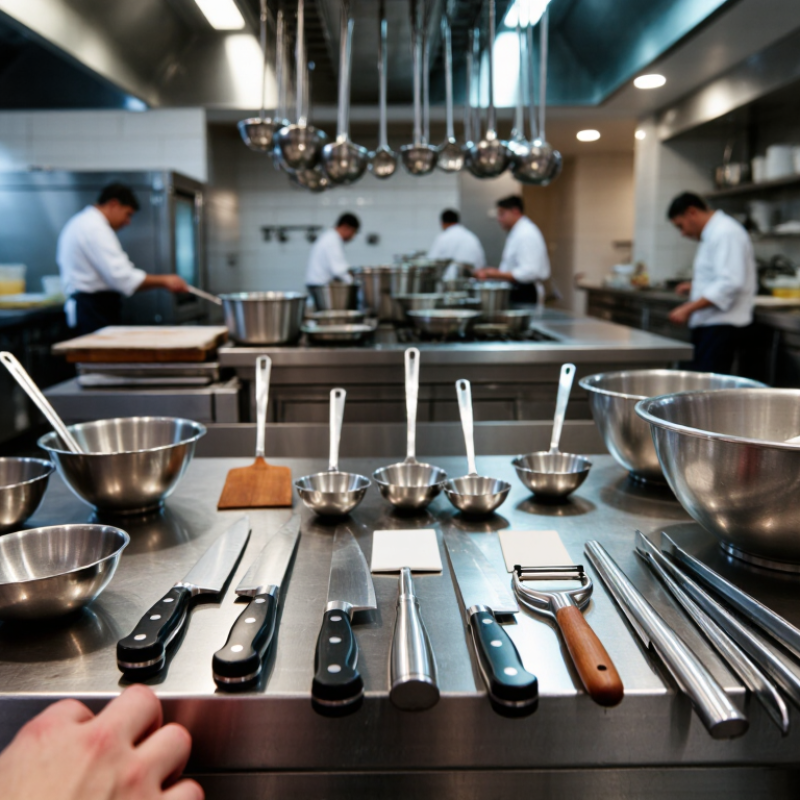
How to Choose Restaurant Kitchen Utensils

Assess the Menu, Workload, and Kitchen Layout

Before choosing restaurant kitchen utensils, review the menu item by item. A soup-focused kitchen needs ladles, deep pots, and heat-resistant tools within easy reach. A grill-heavy menu may call for sturdy tongs, turners, and dedicated thermometers. Match each utensil to a task, not just a dish. Several menu items may use the same tool, while one busy station may need duplicates. Estimate how often each item is used during the busiest service, then consider how quickly it can be washed and returned. A spreadsheet helps, but it cannot predict every rush.

The kitchen layout matters just as much as the menu. Measure drawer space, shelves, and the distance between prep, cooking, and cleaning areas. Long-handled tools can crowd a shallow drawer; bulky scoops may block access to smaller items. Store frequently used utensils near the station where they are needed, without placing them beside hot surfaces or where handles can snag. Think about who will use each station, too. A setup that works for one cook may slow down a team. It is easy to overlook that.

Tips: Walk through a typical service before ordering. Mark each utensil’s storage spot, then check whether staff can reach it without crossing another worker’s path. Leave some room for change; menus and routines shift.

Identify the Utensils Needed for Each Cooking Task

How to Choose Restaurant Kitchen Utensils

Identify utensils by cooking task, not by a generic checklist. For sautéing, choose a heat-safe turner and a shallow pan; for stock, use a deep pot and a long-handled ladle. A chef’s knife handles broad prep, while a paring knife is more controlled for trimming small produce. Keep separate, clearly marked cutting boards for raw proteins and ready-to-eat foods. The FDA Food Code 2022 calls for food-contact surfaces to be cleaned and sanitized, so utensils need practical storage and washing routines too. Small details matter: a ladle left in a crowded sink can slow service and compromise clean handling.

The National Restaurant Association’s 2024 State of the Restaurant Industry projected U.S. restaurant sales of $1.1 trillion and employment of 15.7 million. That scale makes task-fit equipment an operational choice, not merely a purchasing preference. List each station’s repeated actions—turning, portioning, whisking, draining—and match each to a tool that feels balanced in the cook’s hand. Check handle length, grip, and heat tolerance during actual service when possible. A paper inventory can still miss awkward reach or storage problems.

Tips: Keep a small utensil set at each station. Label boards by use. Review the setup after a busy shift; the “right” tool list may need revision.

Compare Materials, Durability, and Food-Safety Standards

Choosing restaurant kitchen utensils starts with the food, heat, and cleaning routine they must handle. Stainless steel is durable, nonporous, and easy to inspect for cracks or residue. It works well for ladles and tongs, though thin handles can bend under heavy use. For acidic foods, check that the steel grade suits the task and follow the supplier’s care instructions. Small details matter.

Food-grade silicone can protect nonstick surfaces and tolerate heat, but damaged or sticky utensils should be replaced. Wooden spoons feel comfortable and handle gentle stirring well, yet deep splits can trap food and moisture. I still find those fine cracks easy to overlook during a busy shift. Not ideal. Choose utensils with smooth joints, secure handles, and no peeling coatings. Wash and dry them according to their material, and store them off wet counters. Before buying, review product documentation for food-contact suitability and any applicable local requirements. A utensil that is sturdy but difficult to clean may not be the best choice. Test a few pieces during actual prep, then inspect them after repeated washing and use.

Check Ergonomics, Cleaning Requirements, and Storage

A kitchen utensil should feel balanced during repeated use, not just comfortable for a quick test. Hold it as you would while stirring a deep pot or turning food on a crowded range. Check whether the handle stays secure with damp hands and whether its weight strains your wrist. Fit matters. A handle that is too thick can tire smaller hands; one that is too narrow may feel unstable. Ask staff who will use the tools daily to try them before ordering. Their feedback may reveal problems a product description misses.

Cleaning requirements deserve equal attention. Look for smooth surfaces and joints that are easy to inspect, since food residue can collect around seams. Confirm that the utensil’s material suits your cleaning routine, including any dishwasher or sanitizer instructions from its manufacturer. Storage matters, too. Long-handled tools may crowd a shallow drawer, while bulky pieces can block access to frequently used items. Measure shelves and drawers, then consider hooks or divided containers that keep tools visible and dry. Small detail. It is easy to choose an attractive set and overlook where it will live. Recheck the layout after a busy shift; the neatest plan may not work in practice.

Balance Purchase Costs with Replacement and Maintenance Needs

The cheapest utensil can cost more over a year if it bends, chips, or needs frequent replacement. A thin-handled ladle may feel fine in a showroom, then loosen after repeated washing and heavy service. Check construction, handle joints, edge thickness, and whether parts can be replaced separately. For items used every shift, test one sample during a busy service before ordering a full set. That adds up. Estimate purchase price alongside expected lifespan, cleaning time, and repair costs; even a rough estimate is better than comparing sticker prices alone.

Maintenance changes the calculation. Smooth, sturdy tools are often quicker to clean, while awkward seams can trap residue and demand extra inspection. Set aside time for staff to check handles, warped edges, and worn surfaces during routine closing tasks. Keep a small record of failures and replacement dates. It helps reveal which utensils are genuinely durable in your kitchen, not just on paper. Estimates will still be imperfect; cooking volume and washing habits vary. Storage damage is easy to overlook. A crowded drawer can bend tools before their working life is over, so include racks or separators in the budget. Replace damaged utensils promptly, and follow your kitchen’s established cleaning and food-safety procedures.

How to Choose Restaurant Kitchen Utensils: Balance Purchase Costs with Replacement and Maintenance Needs

Estimated five-year cost per utensil (USD). Compare the upfront purchase with replacement purchases and upkeep.

These illustrative planning estimates assume replacement every year for tongs, every two years for cutting boards and nonstick skillets, and every five years for a chef’s knife and stainless-steel ladle. The knife includes an estimated $20 annual sharpening allowance; routine cleaning is excluded. Actual prices, care costs, and service life vary by product and use.

FAQS

How can staff test a utensil’s comfort?

Hold it as if stirring a deep pot or turning food on a crowded range. Try it with damp hands. Fit matters. Ask daily users to test it; a quick showroom grip can mislead.

What handle details should buyers check?

Check whether the handle feels secure and strains the wrist. Thick handles may tire smaller hands, while narrow ones can feel unstable.

What makes a utensil easier to clean?

Choose smooth surfaces and joints that are easy to inspect. Food residue can collect around seams. Follow the maker’s dishwasher or sanitizer instructions.

How should storage affect utensil choices?

Measure drawers and shelves before ordering. Long handles may crowd shallow drawers, and bulky tools can block frequently used items. Hooks or divided containers may help.

Is the lowest purchase price always the best value?

Not necessarily. A thin-handled ladle may loosen after repeated washing and heavy service. Compare purchase price, expected lifespan, cleaning time, and repair costs.

How can a kitchen assess durability before ordering a full set?

Test one sample during a busy service. Check its joints, edge thickness, and construction. Estimates remain imperfect; washing habits and cooking volume vary.

What maintenance checks should staff include at closing?

Inspect handles, warped edges, and worn surfaces. Keep a simple record of failures and replacement dates. It helps show what lasts in your kitchen.

When should damaged utensils be replaced?

Replace damaged utensils promptly, and follow established cleaning and food-safety procedures. Also check storage: crowded drawers can bend tools. Easy to miss.

Conclusion

Choosing Restaurant Kitchen Utensils starts with understanding the menu, expected workload, and kitchen layout. A small team preparing a focused menu may need a different mix of tools than a busy kitchen handling many dishes at once. Map each cooking task—from chopping and stirring to portioning and serving—to the utensils it requires, so essential tools are available without overcrowding workstations.

Compare materials for durability, food safety, and suitability for the ingredients and cooking methods used. Comfortable handles, easy-to-clean surfaces, and practical storage can improve daily workflow and help keep the kitchen organized. Finally, consider more than the initial purchase price: weigh expected lifespan, maintenance needs, and replacement frequency to choose utensils that offer reliable value over time.

Amelia Bennett

Amelia Bennett

Amelia Bennett is a highly accomplished marketing professional with a strong understanding of product strategy, customer needs, and digital communication. As a dedicated member of the company’s marketing team, she combines market insight, creative thinking, and practical product knowledge to......