
Explore our export-grade commercial cookware and stock pot series engineered for high-volume restaurants, hotel buffets, and institutional kitchens worldwide.
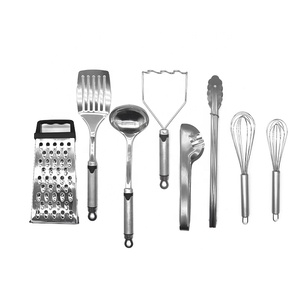
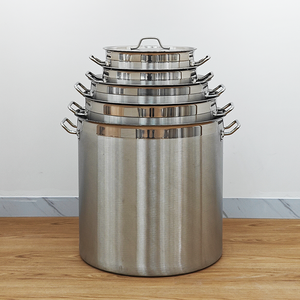
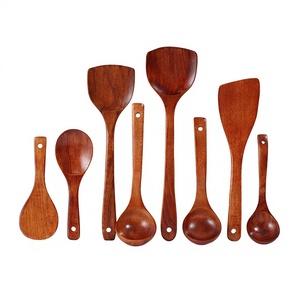
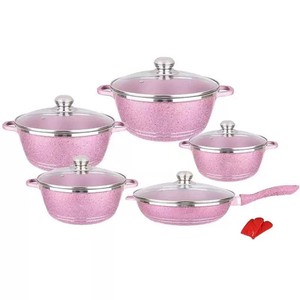
Established in 1966 in Bandung, Indonesia, PT Indonesia Utensil has evolved into a global powerhouse in commercial kitchenware and foodservice equipment manufacturing. With a focus on heavy-duty stainless steel production, our integrated OEM and ODM facilities service premier hospitality brands, commercial distributors, and volume procurement agents across North America, Europe, Asia-Pacific, and the Middle East.
Our flagship commercial lines—including the world-renowned Tanica for household and professional gadgets, and Edelmann for heavy-capacity commercial catering equipment—are engineered under rigorous ISO-compliant protocols. By uniting state-of-the-art hydraulic deep-drawing presses with hand-crafted finishing techniques, we ensure every stock pot meets exact metallurgical and structural tolerances.
“Excellence in commercial stock pot manufacturing relies on structural integrity under sustained high thermal stress, zero-crevice hygienic construction, and seamless induction compatibility.”
An in-depth engineering breakdown of heat transfer dynamics, material specifications, and structural resilience in commercial food preparation environments.
Unlike traditional brazed bases susceptible to delamination under extreme commercial heating cycles, our stock pots utilize 2,500-ton hydraulic impact bonding. This solidifies the aluminum thermal core between the inner AISI 304 layer and the outer magnetic AISI 430 disc, preventing air gaps and eliminating warping.
Commercial stock pots must handle continuous boiling loads up to 150 liters. Encapsulated bottoms feature high thermal conductivity (237 W/m·K), reducing boil-time latency by up to 28% compared to standard single-ply pots. This results in direct energy cost savings for high-volume commercial kitchens using natural gas or commercial induction hobs.
CE marking verifies compliance with essential European safety, health, and environmental requirements. Our stock pots feature wide-radius internal corners and continuous argon-arc spot welding on heavy hollow stay-cool handles. This completely eliminates food particle traps and simplifies HACCP sanitization procedures.
Compare performance parameters across different commercial stock pot base constructions to inform global procurement decisions.
| Cookware Base Construction | Material Composition | Thermal Conductivity | Induction Efficiency | Delamination Risk | CE Certification Standard |
|---|---|---|---|---|---|
| Impact-Bonded Tri-Ply Capsule | AISI 304 / Pure Al / AISI 430 | High (210-230 W/m·K) | 98.5% (High Speed) | Zero (Fused at 2500T) | EN 13834 Passed |
| Fully Climaxed 5-Ply Whole Body | Stainless / Al / Al Alloy / Al / Stainless | Optimal (237 W/m·K) | 99.1% (Ultra Speed) | Zero (Solid Clad) | EN 13834 Passed |
| Brazed Sandwich Base | Standard 201 / Recycled Al Core | Moderate (160 W/m·K) | 82.0% (Standard) | Moderate (Thermal Fatigue) | Conditional Compliance |
| Die-Cast Non-Stick Aluminum | ADC12 Alloy + PTFE/Granite Coating | Very High (200 W/m·K) | 90.0% (With Disk) | Low (Coating Wear Over Time) | REACH / RoHS |
| Single-Ply Heavy Duty Stainless | Solid AISI 304 (1.2mm - 2.5mm) | Low (16 W/m·K) | Non-Induction / Gas Only | None (Solid Metal) | EN 13834 Passed |
| Nominal Volume | Outer Diameter (mm) | Height (mm) | Body Wall Thickness | Encapsulated Bottom Thickness | Target Catering Environment |
|---|---|---|---|---|---|
| 10.5 Liters | 260 mm | 200 mm | 0.8 mm - 1.0 mm | 4.5 mm - 5.0 mm | Boutique Bistros / Prep Stations |
| 20.0 Liters | 320 mm | 250 mm | 1.0 mm - 1.2 mm | 5.5 mm - 6.0 mm | Hotel Buffets & Mid-sized Restaurants |
| 36.0 Liters | 360 mm | 360 mm | 1.2 mm - 1.5 mm | 6.0 mm - 7.0 mm | High-Volume Catering & Banquets |
| 70.0 Liters | 450 mm | 450 mm | 1.5 mm - 1.8 mm | 7.0 mm - 8.0 mm | Institutional Kitchens & Food Processing |
| 100.0+ Liters | 500 mm | 500 mm | 1.8 mm - 2.0 mm | 8.0 mm - 10.0 mm | Industrial Soups, Broths & Brewing |
Market intelligence and technological transformations driving supply chain restructuring for global buyers and hospitality procurement groups.
Global commercial kitchens are rapidly shifting from open gas burners to high-wattage induction ranges to reduce thermal emissions, HVAC loads, and operational energy spend. Future-ready stock pots must feature thick, fully ferromagnetic caps (AISI 430 or 444) capable of absorbing high-frequency magnetic energy without acoustic vibration or magnetic hysteresis loss.
While classic stainless steel remains dominant for stock reduction, heavy-duty die-cast aluminum pots with PFOA-free PTFE and multi-layer granite ceramic reinforcements are gaining market share in fast-casual kitchens. These hybrid vessels permit high-temperature sautéing followed by stock boiling without surface degradation.
European and North American buyers increasingly require ESG auditing and carbon transparency from Asian and Southeast Asian manufacturers. Premium OEM factories are adopting closed-loop stainless steel scrap recycling, water-based degreasing lines, and third-party ISO 14001 certification to streamline import clearance under emerging carbon footprint regulations.
Essential quality assurance protocols for wholesale importers, OEM purchasers, and hospitality procurement directors.
Demand a X-ray Fluorescence (XRF) Spectrometry test report from the factory for every raw coil batch. Ensure chromium content is between 18%-20% and nickel content is 8%-10.5% for true AISI 304 (18/10) stainless steel, protecting against premature pitting corrosion.
Commercial stock pot handles must withstand static load tests exceeding 3x maximum liquid capacity. Verify that spot-welded or solid stainless steel riveted joints undergo dynamic shear stress checks to eliminate handle failure risks during kitchen movement.
Test bottom concave tolerances under rapid cooling cycles (heating base to 250°C and quenching in 20°C water). The bottom base must maintain a flatness tolerance within 0.6% of the base diameter to guarantee continuous contact with electric and induction surfaces.
Confirm European food contact compliance via heavy metal leaching tests (extractable nickel, chromium, lead, and manganese). Ensure factory holds valid CE certificates along with ISO 9001 quality system documentation.
Addressing core technical questions from procurement officers, enterprise wholesalers, and custom OEM buyers.
Request comprehensive product specs, factory pricing tiers, factory audit reports, or request custom OEM prototyping directly from our engineering team.