
Heavy-duty food-grade stainless steel & cast aluminum utensils engineered for commercial kitchens, hotels, and buffet lines.
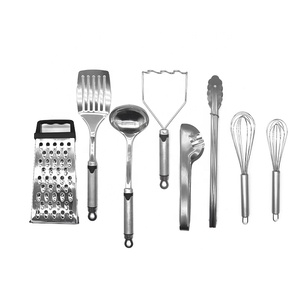
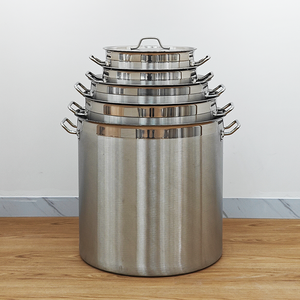
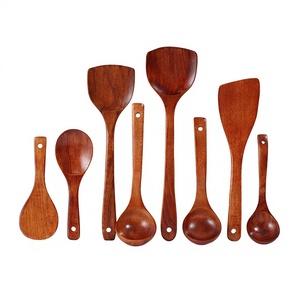
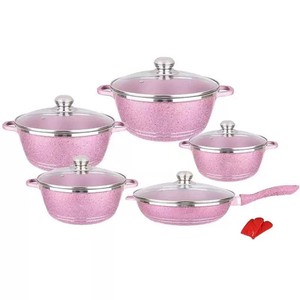
In the global commercial foodservice equipment sector, selecting the optimal manufacturing partner for commercial serving utensils is a critical procurement decision that directly impacts operational longevity, sanitation compliance, and brand reputation. As China's premier manufacturer and OEM supplier of high-grade commercial utensils, our industrial history dates back to 1966. Over more than five decades of continuous metallurgical innovation, we have scaled our production infrastructure to serve international hotel groups, commercial restaurant chains, and leading foodservice distributors in over 50 countries worldwide.
Our manufacturing operations encompass dual proprietary brands—Tanica, tailored for precision consumer and light-commercial kitchen essentials, and Edelmann, engineered specifically for high-volume commercial catering, hotel buffets, and institutional kitchens. Operating from fully equipped manufacturing plants in Bandung and commercial marketing centers in Jakarta, our facilities house state-of-the-art hydraulic deep-drawing presses, automated robotic mirror-polishing cells, laser-welding lines, and eco-friendly Physical Vapor Deposition (PVD) titanium coating chambers.
Information Gain Insight: Unlike standard consumer-grade kitchen tools, commercial serving utensils undergo extreme mechanical stress, continuous thermal cycling, and constant exposure to acidic food matrices and aggressive chemical sanitizers. Manufacturing compliance requires precise alloy formulations and structural designs that eliminate fatigue points and microbiological harborage zones.
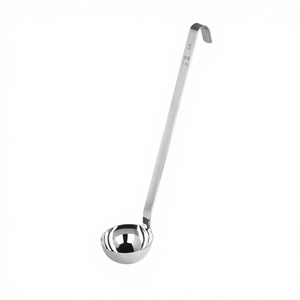
Utilizing high-tonnage multi-stage hydraulic presses ensuring uniform wall thickness, high tensile structural stability, and seamless curvature across all ladles, tongs, and serving spoons.
Automated multi-stage grinding achieves mirror polishes up to Ra < 0.2 µm, dramatically reducing surface roughness to inhibit bacterial adhesion and streamline commercial dishwasher sanitation.
Every production batch is evaluated under ISO 9001 quality management protocols, subjected to salt spray corrosion testing (ASTM B117), chemical leaching assays, and heavy-use flex fatigue verification.
A primary source of failure in commercial dining halls and banquet facilities stems from sub-optimal material selection. Procurement teams must evaluate stainless steel grades based on Pitting Resistance Equivalent Number (PREN), chromium-nickel alloy ratios, and thermal conductivity. Our engineering team utilizes prime-grade austenitic and martensitic alloys sourced from certified steel mills to guarantee structural integrity and food safety compliance (FDA 21 CFR, LFGB, NSF/ANSI 2).
| Stainless Steel Grade | Alloy Composition (Cr/Ni) | Corrosion Resistance (PREN) | Recommended Application | Dishwasher / Chemical Safety |
|---|---|---|---|---|
| AISI 316 (18/10 High-Mo) | 18% Cr / 10% Ni / 2-3% Mo | 23.0 - 25.0 (Superior) | High-acid food buffet lines, heavy seafood service, coastal resorts | Exceptional resistance to chloride & high-temp chemical cycles |
| AISI 304 (18/8 Standard) | 18% Cr / 8% Ni | 19.0 - 20.0 (High) | General commercial kitchen prep, long-handle ladles, chafing dish servers | High resistance to daily commercial washing compounds |
| AISI 430 (18/0 Magnetic) | 18% Cr / 0% Ni | 16.0 - 17.5 (Moderate) | Induction-compatible server bases, economy serving trays, budget flatware | Requires thorough drying to prevent surface staining in humid storage |
Commercial serving tools must comply strictly with Hazard Analysis Critical Control Point (HACCP) guidelines. Conventional multi-piece utensils with riveted joint seams present significant hygienic risks: food particles and moisture collect in micro-gaps, creating breeding environments for Listeria monocytogenes and Salmonella.
Our premium commercial serving utensils feature monoblock single-piece forging or continuous 360-degree laser hermetic welds. This eliminates crevices entirely. Furthermore, long-handle buffet ladles and serving tongs incorporate ergonomic hollow-core handles with thermal break barriers. This structural design mitigates heat conduction, ensuring staff and guests can handle utensils safely when serving hot soups, gravies, and steam-pan dishes.
The global hospitality and commercial foodservice landscape is undergoing rapid transformation driven by automated banquet service, elevated guest aesthetics, and stringent sustainability mandates. Commercial buyers must align their procurement strategies with emerging industry shifts to maximize ROI and operational flexibility.
Commercial buffets are moving away from traditional polished steel toward PVD coatings in Matte Black, Brushed Champagne Gold, and Rose Gold. PVD application enhances surface hardness up to 2000 HV, offering scratch resistance while complementing modern luxury hotel interiors.
With modern catering transitioning from open-flame sternos to clean induction warming tables, serving utensils and cookware must feature encapsulated magnetic multi-clad bases (3-ply aluminum-stainless composite) to maintain precise food service temperatures without hot-spot scorching.
Environmental compliance is now a prerequisite for European and North American enterprise buyers. Our factory utilizes 100% recyclable stainless alloys, closed-loop water filtration systems during polishing, and non-toxic ceramic coatings completely free of PFAS, PFOA, and heavy metals.
When sourcing commercial serving utensils in bulk from China factories, procurement officers frequently fall into the trap of evaluating unit price (FOB) in isolation. Professional buyers understand that true cost efficiency is dictated by the Total Cost of Ownership (TCO) formula:
TCO Formula = Initial Acquisition Cost + (Replacement Rate × Failure Frequency) + Maintenance & Sanitation Overhead - Residual Scrap Value
In high-turnover environments such as cruise ships, casinos, and commercial buffets, low-grade utensils made from thin-gauge 201 stainless steel often fail within 3 to 6 months due to handle bending, spot-weld detachment, or rust pitting. Investing in heavy-duty 304/316 monoblock utensils manufactured under strict AQL 1.5 inspection standards extends operational lifespans to 5+ years, lowering long-term procurement expenditures by as much as 40%.
We provide end-to-end OEM and ODM custom manufacturing for global brand owners, hospitality supply houses, and corporate promotional campaigns. Our streamlined development lifecycle ensures rapid speed-to-market:
Elevate your hospitality inventory, commercial kitchen performance, or OEM brand portfolio with precision-engineered, heavy-duty serving tools. Contact our engineering team today for factory-direct price quotes, custom CAD modeling, and wholesale sample kits.
Send an Inquiry