Heavy-Duty Utensils
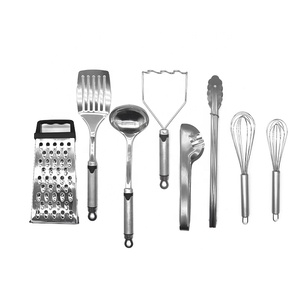
Stainless Steel Kitchen Utensils Set Cooking Utensil Sets Kitchen Appliances And Utensils
AISI 304 Stainless Steel | Ergonomic Grip | Dishwasher Safe
Contact Us
Commercial Stockpots
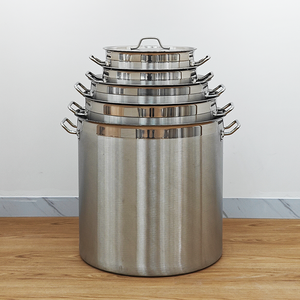
Daosheng OEM 03/04/05style Restaurant Kitchen Cooking Food Stainless Steel Capacity Heavy Duty Stainless Steel Hot Soup Pot Set
Multi-Capacity | Tri-Ply Encapsulated Base | High Thermal Efficiency
Contact Us
Institutional Spatulas
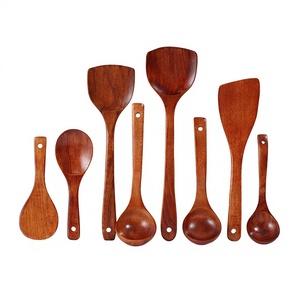
Factory-direct Sale Kemu Non-stick Anti-skid Anti-scalding Wooden Spatula Cooking Utensil Set MM-KMC101
Non-Scratch Wood | Heat-Insulated | Bulk Commercial Packaging
Contact Us
Granite Cast Aluminum
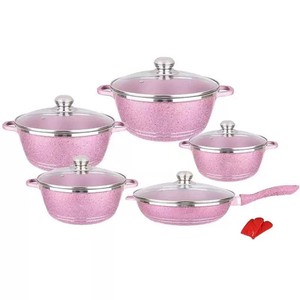
Korean Non Stick Cooking Pot Set Cast Aluminum Heavy Duty Small Tool Kit Durable for Dishwasher Use Granite Cooking Utensil Set
Granite Non-Stick Coating | Die-Cast Core | Dishwasher Tested
Contact Us
Food-Grade Silicone
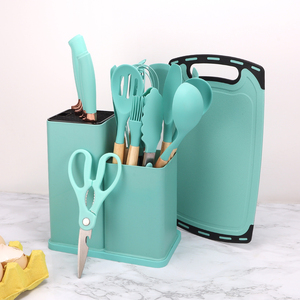
Silicone Heavy Duty 19-Piece Kitchen Utensils Set with Non-Stick Wooden Handle Spatula Egg Beaters & Kitchen Knife
19-Piece Multi-Tool | BPA-Free Silicone | Heat Resistant 230°C
Contact Us
Buffet & Catering Utensils
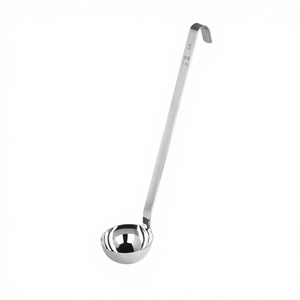
Heavy Duty Long Handle Stainless Steel Soup Ladle for Commercial Kitchen Hotel Buffet Restaurant
Seamless One-Piece Forging | Monoblock Steel | High-Volume Serving
Contact Us
Die-Casting Cookware Set
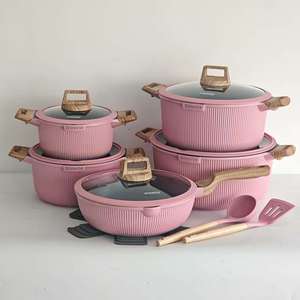
Ready Ship 15pcs Classic High Quality Heavy Duty Granite Casserole Cooking Pots Durable Die Casting Aluminum Non-Stick Metal
15-Piece Complete Kit | Scratch-Resistant Matrix | Quick Heat Diffusion
Contact Us
PVD Titanium Luxury Line
Hand-Hammered Gold Stainless Steel Eco-Friendly Pot Pan Set Heavy Duty Decorative Cookware Casserole Saucepan Ornate Europe
PVD Gold Titanium Coating | Hand-Hammered Finish | Hospitality Grade
Contact Us
55+
Years Manufacturing Heritage
50+
Global Export Markets
ISO 9001
Certified Quality Management
100%
Food Contact Grade Safety
Executive Summary & Manufacturing Competency: China & Global Supply Hubs
Institutional kitchenware procurement represents a critical strategic capital expenditure for high-volume foodservice operations, including university dining halls, municipal hospital networks, military catering corps, integrated resort buffets, and airline catering hubs. Unlike retail consumer cookware, commercial institutional supplies must sustain continuous thermal stress, mechanical impact, acidic food exposure, and aggressive chemical sterilization protocols. Selecting premier manufacturing partners across key Asian industrial hubs—combining historical heritage with advanced OEM tooling—is foundational to ensuring operational uptime and operational safety.
Since our inception in 1966, building upon over 55 years of precision metalworking excellence through flagship commercial brands such as Tanica and Edelmann, our manufacturing ecosystems have set global benchmarks in high-grade stainless steel fabrication. Operating under stringent ISO 9001:2015 and ISO 14001 environmental frameworks, our integrated production facilities bridge deep metallurgical expertise with modern automated manufacturing systems.
Core E-E-A-T Principle: Institutional kitchen safety and longevity depend directly on grain-structure purity in austenitic stainless steels (AISI 304 and AISI 316). Substandard alloys containing micro-inclusions exhibit premature intergranular corrosion and stress-corrosion cracking under commercial sanitization regimes.
Precision Engineering & Manufacturing Processes
Our OEM/ODM manufacturing capability spans advanced heavy-industry methodologies designed to eliminate failure points inherent in consumer-grade utensils:
- Hydraulic Deep-Drawing (Up to 800 Tons): Stockpots and casserole vessels are cold-formed from single structural sheets of heavy-gauge stainless steel, ensuring uniform wall thickness and eliminating weak vertical seam welds.
- Impact-Bonded Encapsulated Bases: High-pressure friction bonding (at temperatures exceeding 500°C) fuses a 4.0mm–6.0mm pure aluminum core between austenitic steel plates, guaranteeing warp-free induction performance and rapid heat transfer without thermal hotspots.
- Monoblock Ladle & Utensil Forging: High-volume serving tools are manufactured via single-piece forging to eradicate bacteria-trapping crevices, ensuring complete compliance with NSF/ANSI Standard 2 for food equipment hygiene.
- Electrolytic Passivation & CNC Polishing: Post-fabrication chemical passivation removes free iron from surface layers, enriching chromium oxide density for maximum pitting resistance against high-salinity soups and acidic sauces.
Metallurgical Benchmark: Material Specification Matrix
| Material / Grade |
Composition (Cr / Ni / Mo) |
Tensile Strength (MPa) |
Corrosion Resistance |
Optimal Institutional Application |
| AISI 304 (18/8) Stainless Steel |
18% Cr / 8% Ni |
515 MPa |
High (Standard Food Acids) |
Heavy-duty cookware, stockpots, utensils, prep surfaces. |
| AISI 316 (18/10+Mo) Stainless |
18% Cr / 10% Ni / 2% Mo |
620 MPa |
Superior (High Salt/Chloride) |
Marine catering, high-salinity soup kettles, steam tables. |
| Die-Cast Aluminum Matrix |
Al-Si-Cu Heavy Alloy |
240 MPa |
Moderate (Requires Coating) |
Non-stick casserole pans, specialized frying equipment. |
| Silicone (Food Grade) |
Organo-silicon Polymer |
N/A (Flexible) |
High Chemical Stability |
Anti-scratch spatulas, high-heat handles (up to 230°C). |
Product Development Trends in Commercial Kitchen Equipment
The institutional kitchen sector is undergoing a rapid technological evolution driven by energy cost escalation, labor efficiency mandates, strict allergen cross-contamination controls, and stringent environmental sustainability regulations. Supply chain managers and procurement directors must evaluate future-ready kitchenware engineered for next-generation commercial facilities.
Induction-Optimized Core Systems
Transition from legacy gas ranges to high-efficiency magnetic induction cooktops requires multi-ply encapsulated bases capable of instantaneous thermal response without thermal bowing or base delamination.
Hygienic Monoblock Construction
Elimination of riveted joints in favor of seamless laser welding and single-piece forged handles reduces micro-bacterial harborage points, accelerating automated tunnel dishwasher wash cycles.
PFAS-Free Granite & Ceramic Matrices
Global regulatory prohibitions against GenX and PFAS chemicals have accelerated adoption of multi-layer mineral-reinforced granite coatings, balancing non-stick release with high abrasion resistance.
Aesthetic Customization & PVD Titanium Finishes
Modern luxury hotel buffets and front-of-house institutional dining demand functional cookware that seamlessly shifts from back-of-house thermal prep to front-of-house presentation. Physical Vapor Deposition (PVD) gold and titanium nitride coatings apply an ultra-hard, chemically inert ceramic layer over hand-hammered stainless steel. This technology provides brilliant decorative finishes that resist tarnishing, abrasive scratching, and intense thermal cycles during live buffet display.
Strategic Procurement & Total Cost of Ownership (TCO) Analysis
Procurement professionals often face the challenge of balancing upfront unit purchasing costs (CapEx) against long-term replacement cycles and operational utility (OpEx). Commercial kitchenware manufactured with inferior grade alloys (such as 201 series stainless steel or non-passivated die-cast aluminum) incurs hidden operational expenses through rapid thermal warping, handle breakage, surface pitting, and failure in NSF health audits.
Strategic Insight: Enterprise procurement modeling demonstrates that high-grade AISI 304/316 kitchenware yields a 48% reduction in Total Cost of Ownership over a 5-year operational lifecycle compared to low-cost initial bid alternatives.
5-Year Operational Lifecycle & Cost-Benefit Matrix
| Evaluation Parameter |
Standard Commercial Grade (Grade 201 / Thin Aluminum) |
Enterprise Institutional Grade (AISI 304/316 Heavy Duty) |
| Initial Procurement Cost (CapEx) |
Baseline (100%) |
+30% to +45% Premium |
| Average Replacement Frequency |
12 – 18 Months (High Degradation) |
60+ Months (Sustained Utility) |
| Dishwasher Chemical Resistance |
Prone to surface oxidation & corrosion pitting |
Complete resistance to high-alkali detergents |
| Thermal Energy Efficiency |
Moderate (Prone to bottom hot-spot deformation) |
Optimal (Impact-bonded tri-ply energy distribution) |
| Food Safety & Hygiene Risk |
Elevated risk at riveted seams & degraded coatings |
Zero risk (Monoblock NSF certified seamless structures) |
| 5-Year Cumulative TCO Savings |
Higher Overall Cost due to re-procurement |
35% to 48% Total Net Savings |
Supply Chain Resilience & Direct OEM Factory Audits
Mitigating geopolitical supply disruption requires diversification and strategic partnership with high-capacity factories capable of providing fully traceable raw material heat certs (Mill Test Certificates conforming to EN 10204 3.1). Key auditing vectors for B2B supply chain managers include verifying factory stamping tonnage, automated chemical passivation baths, spectator spectrographic alloy analysis, and third-party social compliance audits (BSCI / ISO 14001).
Institutional Kitchenware Procurement FAQ
Technical guidance and answers to common inquiries encountered by global procurement officers, hotel chain directors, and commercial catering buyers.
AISI 201 contains higher manganese and lower nickel content, making it susceptible to corrosion when exposed to salt, food acids, and commercial dishwashing detergents over time. AISI 304 (18/8) is the industry standard for commercial cookware, offering superior corrosion resistance and structural durability. AISI 316 (18/10 with molybdenum) provides maximum pitting resistance against high-chloride solutions and salt-heavy food prep, making it ideal for marine catering, high-salinity soup kettles, and specialized medical/hospital feeding systems.
Impact bonding uses high-pressure friction (exceeding 2,000 tons of hydraulic force) to fuse an aluminum thermal diffusion core between the inner food-grade stainless steel layer and an outer magnetic stainless steel base plate. This process completely eliminates air gaps, ensuring seamless heat distribution across the bottom of the pot. It prevents localized scorching, cuts boil times by up to 25%, and prevents the base plate from warping or delaminating during high-wattage commercial induction heating.
Our comprehensive OEM/ODM manufacturing facilities offer custom tool and die engineering, laser-engraved institutional branding, custom dimensional scaling (pot capacities from 5 to 150 liters), specialized handle ergonomic design (silicone-molded, hollow cool-touch, or reinforced cast steel), custom surface finishing (satin, mirror polish, or PVD titanium coating), and bespoke retail/commercial packaging tailored for institutional logistics.
Yes. All non-stick granite and ceramic composite coatings strictly comply with FDA (US Food and Drug Administration), LFGB (German Food and Commodities Act), and European REACH regulations. They are certified 100% free of PFOA, PFAS, lead, cadmium, and GenX fluorosurfactants, ensuring safe non-toxic food preparation even at high cooking temperatures up to 260°C.
NSF/ANSI Standard 2 establishes rigorous sanitation criteria for materials, design, and fabrication of commercial food equipment. Certification ensures that utensils feature smooth, easily cleanable surfaces without sharp internal radii, crevices, or exposed threads where food debris and pathogenic bacteria can accumulate. Equipment meeting this standard streamlines health inspector audits and guarantees compatibility with commercial chemical sanitizers.
While heavy-duty riveted handles offer high shear strength, rivets create internal food-contact crevices that require intensive manual scrubbing to remain sanitary. Multi-point spot welding and continuous laser welding produce a smooth interior pan wall for superior hygiene. Our commercial cookware utilizes reinforced multi-point spot welding rated to withstand vertical tensile forces exceeding 500 kg per handle point, satisfying both structural safety and health audit standards.
Every production batch undergoes a 5-stage Quality Assurance protocol: 1) XRF spectrographic chemical verification of incoming steel coils; 2) Ultrasonic wall thickness checking; 3) High-pressure leak testing for deep-drawn pots; 4) 48-hour salt spray corrosion resistance testing (ASTM B117 standards); and 5) Drop testing for export master carton packaging integrity.
Standard product orders from our catalog feature MOQs starting at 500 units per SKU, with production delivery cycles within 25–35 days. Custom OEM orders requiring new tooling development typically require 1,000–3,000 units depending on size, with initial prototype tooling delivered within 15 days and full mass production completed in 40 days.
Partner with a World-Class Kitchenware Manufacturer
Streamline your institutional supply chain with certified stainless steel cookware, OEM custom tooling, and enterprise volume pricing. Contact our engineering and commercial export team today for technical catalogs, mill certificates, and custom quotations.