
Engineered to meet rigorous NSF, FDA, and ISO standards for high-volume foodservice operations, star-rated hotels, and international commercial kitchens.
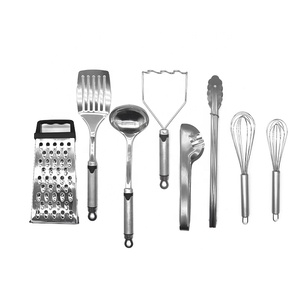
Heavy-gauge food-grade 18/10 stainless steel utensil set designed for continuous thermal endurance in high-tempo restaurant lines.
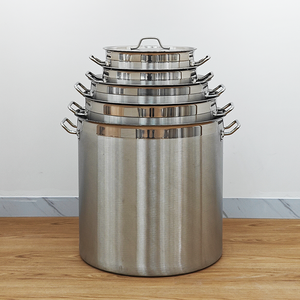
Triple-clad impact-bonded bottom stockpot series engineered for rapid heat transfer and long-duration simmer consistency.
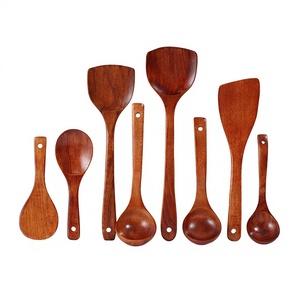
Precision-turned hard beechwood spatulas with non-abrasive edges designed to preserve delicate non-stick pan coatings.
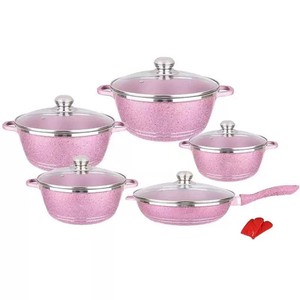
Die-cast aluminum core reinforced with multi-layer mineral granite coating for oil-free cooking and extreme scratch resistance.
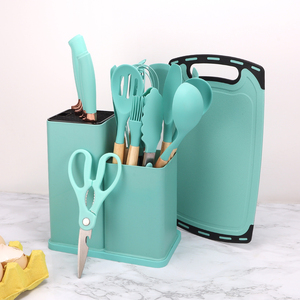
Heat-resistant up to 230°C food-grade silicone tools paired with acacia wood handles and precision chef cutlery.
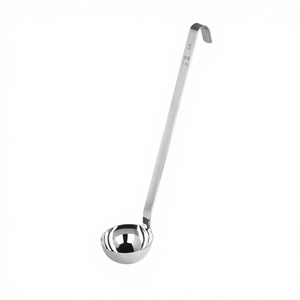
Seamless single-piece stamped stainless steel ladle featuring hooked handles for effortless commercial soup station integration.
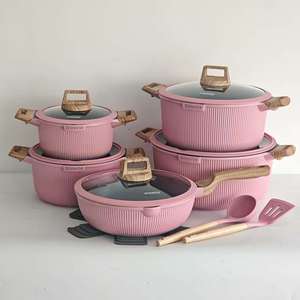
High-density die-cast cookware engineered for rapid thermal dispersion, minimal warp vulnerability, and commercial dishwasher safety.
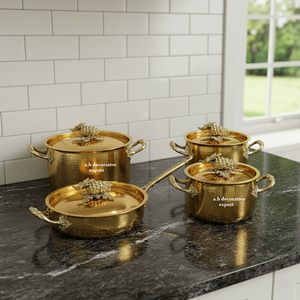
Luxury European-styled hammered stainless steel chafing and casserole tools featuring PVD gold titanium coating for fine dining.
The global commercial catering equipment market is undergoing a structural paradigm shift driven by stringent sanitation mandates, operational energy costs, and the rapid expansion of ghost kitchens and international hotel groups. B2B procurement teams no longer evaluate kitchenware purely on initial CapEx; instead, Total Cost of Ownership (TCO), thermal efficiency metrics, material non-reactivity, and OEM customization flexibility have become the primary benchmarks for procurement decision-making.
As a global pioneer in stainless steel metalworking since 1966, PT Indonesia Utensil operates at the nexus of traditional craftsmanship and automated industrial manufacturing. With our principal production facility in Bandung (Jalan Kopo Bihbul No. 131) and international marketing hub in Jakarta, we supply institutional buyers, commercial distributors, and OEM brand owners across more than 50 countries with precision-crafted culinary infrastructure.
An analytical breakdown of macro-market shifts reshaping hotel, restaurant, and institutional kitchen supply chains globally.
With corporate sustainability targets pushing commercial kitchens to transition from open-flame gas ranges to high-efficiency magnetic induction cooktops, cookware metallurgy must adapt. Modern procurement specifications demand multi-layer encapsulated bases featuring AISI 430 magnetic ferritic stainless steel bonded to pure aluminum heat-diffuser cores. This construction eliminates hot spots, accelerates boil times by up to 38%, and minimizes thermal warping under continuous thermal cycling.
Global health authorities (FDA, EFSA, local health inspection bureaus) are enforcing tighter microbial inspection regimes. Traditional multi-piece riveted handles represent critical bacterial harborage zones. The procurement market is aggressively pivoting toward monoblock deep-drawn single-piece tools and robotic continuous TIG-welded handle assemblies that offer zero crevice accumulation and withstand high-pressure industrial dishwashing sanitizer chemistry.
Regulatory bans on legacy PFAS/PFOA fluoropolymer coatings in Europe and North America have accelerated the adoption of mineral-based ceramic non-stick solutions and inorganic PVD surface treatments. Institutional procurement departments now mandate full chemical compliance documentation (LFGB, REACH, FDA 21 CFR) showing non-leaching properties even under acidic food processing conditions at elevated temperatures.
Inventory volatility and rapid menu adaptation require commercial kitchenware factories to support flexible OEM manufacturing runs. Leading hospitality brands seek manufacturing partners capable of rapid CAD-to-prototype execution, custom laser logo branding, and private-label packaging configurations without imposing prohibitive Minimum Order Quantities (MOQs).
| Material / Grade Standard | Composition Breakdown | Corrosion Resistance | Thermal Distribution | Primary Commercial Application |
|---|---|---|---|---|
| AISI 304 (18/8 Stainless) | 18% Cr / 8% Ni | High (Resistant to organic acids) | Medium (Requires encapsulated core) | Heavy-duty saucepans, stockpots, utensils, buffetware |
| AISI 316L (18/10 Marine Grade) | 18% Cr / 10% Ni / 2% Mo | Extreme (Resistant to high-salinity liquids) | Medium (Requires induction cladding) | Industrial boiling kettles, sea-catering equipment, steam pans |
| AISI 430 (18/0 Magnetic Base) | 18% Cr / 0% Ni | Moderate (Atmospheric resistance) | High Magnetic Permeability | Bottom cladding plate for induction cooktop compatibility |
| Die-Cast Aluminum Core | Al-Si-Cu Alloy | Low (Requires non-stick coating) | Exceptional (Fast & uniform heat transfer) | Commercial frying pans, granite-coated casseroles, griddles |
How advanced manufacturing techniques elevate tool life, ergonomic balance, and culinary output quality.
In high-demand catering environments, single-ply stainless steel cookware suffers from localized hot spots that lead to food scorching, thermal stress fracturing, and excessive cleaning downtime. Advanced OEM manufacturing integrates 3-ply and 5-ply cladding—seamlessly bonding an inner wall of surgical AISI 304 steel, an internal double-layer aluminum core for rapid heat conduction, and an outer magnetic AISI 430 shell. This structural synthesis guarantees optimal heat retention while maintaining structural integrity under 24/7 kitchen usage cycles.
Engineered using human-factor digital modeling, handles feature hollow stay-cool channels and weighted mass distribution to reduce forearm torque fatigue during long prep shifts.
Physical Vapor Deposition (PVD) applies a molecular-level titanium gold nitride coating over stainless steel, imparting scratch hardness reaching 2500 HV for luxury buffet service.
Combining traditional hand-hammering methods with precision deep drawing enhances surface tensile strength while creating micro-air pockets for effortless food release.
Founded over five decades ago, PT Indonesia Utensil has evolved into Southeast Asia's premier manufacturer of commercial stainless steel kitchenware and foodservice tools. Our manufacturing ecosystem integrates high-tonnage hydraulic deep-drawing presses, automated polishing lines, CNC laser trimming, and rigorous in-house metallurgical testing labs.
Our proprietary brands—Tanica (crafted for refined everyday kitchen precision) and Edelmann (built for heavy-duty commercial foodservice and catering rigors)—demonstrate our ability to produce across multiple price points and performance specifications.
We partner with multinational corporations, retail chains, and hospitality conglomerates to design, brand, and mass-produce custom promotional kitchen items and specialized OEM kitchenware with precise compliance to target market regulations.
Technical answers to critical questions faced by institutional buyers, hotel procurement managers, and OEM distributors.
AISI 304 (18/8 stainless steel) contains 18% chromium and 8% nickel, providing excellent corrosion resistance, high tensile strength, and superior formability for standard cooking equipment, utensils, and buffetware. AISI 316L (18/10 marine grade) includes an addition of 2-3% molybdenum and a higher nickel ratio (10-14%). Molybdenum significantly enhances resistance to chloride pitting, making 316L indispensable for high-salinity boiling kettles, acidic sauce processing, and ocean-liner catering facilities. While 304 is the industry standard for general commercial kitchens, 316L provides extended operational lifespan in harsh chemical or salt-heavy food preparation environments.
Our OEM manufacturing protocol follows a structured 5-stage engineering lifecycle: (1) 3D CAD modeling & finite element thermal analysis, (2) Rapid prototype stamping & sample creation, (3) Laboratory testing for food contact safety (FDA/LFGB) and structural stress tolerances, (4) In-house custom die forging and tooling production at our Bandung manufacturing complex, and (5) Automated mass production with inline laser marking and bespoke packaging. Production lead times range from 14 days for standard custom logo modifications to 45 days for completely original deep-drawing mold designs.
All kitchenware and commercial catering tools produced by PT Indonesia Utensil comply with major international regulatory frameworks. Materials undergo chemical migration testing to verify zero heavy metal leachability (Lead, Cadmium, Nickel) under FDA 21 CFR 175.300 and German LFGB §30/31 standards. Furthermore, our factory operates under strict ISO 9001 Quality Management System certifications, ensuring every shipment shipped from Bandung or coordinated through our Jakarta office meets batch-to-batch structural integrity metrics.
Impact bonding utilizes high-tonnage friction welding (applying over 2,000 tons of hydraulic pressure) to fuse the heavy aluminum heat spreader core between the stainless steel pot body and the bottom magnetic plate without using flux or soldering materials. Conventional soldering leaves internal microscopic void pockets that expand under intense heat, causing base delamination and localized burning. Friction impact-bonded bases guarantee 100% surface contact, elimination of air gaps, maximum heat absorption efficiency, and resistance to thermal shock when transferred from high burner flame to cooling stations.
For standard catalog items under our Tanica and Edelmann commercial product lines, our MOQs start as low as 500 units per SKU to accommodate regional distributors. For custom OEM/ODM private-label manufacturing orders requiring unique stamping, custom PVD color coatings, or branded retail boxes, MOQs generally start at 1,000 to 3,000 units depending on tool complexity. Standard sea freight container order fulfillment (FCL/LCL) averages 30 to 40 days from sample sign-off, shipped direct from Tanjung Priok port (Jakarta) or regional hubs.
Yes. Our promotional kitchenware division specializes in high-appeal custom branded products. We provide precision fiber-laser engraving, stamped emblem embossing, custom PVD titanium color plating (Gold, Rose Gold, Matte Black, Champagne), and premium velvet-lined presentation boxes. Major corporate institutions, hotel groups, and culinary academies utilize our customized cookware and utensil sets for corporate campaigns and client loyalty gifts.
While coated aluminum cookware presents a lower initial purchasing cost (CapEx), chemical non-stick coatings degrade under high-heat commercial usage, metal utensil scraping, and commercial dishwasher detergent abrasion, requiring replacement every 6 to 12 months. Industrial 18/10 stainless steel cookware and monoblock utensils possess an operational lifespan exceeding 10 to 15 years under high-volume restaurant conditions. Over a 5-year cycle, stainless steel commercial kitchenware reduces total equipment replacement expenditure by up to 65%, rendering it significantly more cost-effective for enterprise hospitality operations.
Partner with Indonesia's premier stainless steel factory established in 1966. Request technical specifications, physical factory sample kits, or customized OEM quotes directly from our engineering team.
Get Catalog