
Explore our institutional-grade culinary utensils and heavy-duty cookware engineered for high-volume commercial kitchens, hotel buffets, restaurant chains, and private-label distributors.
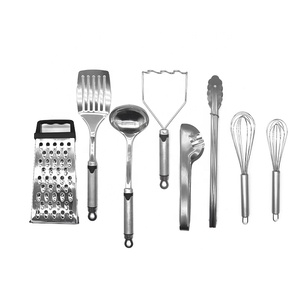
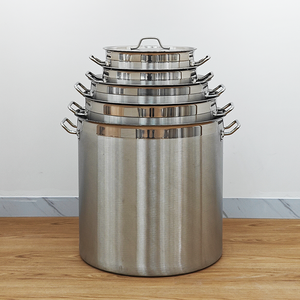
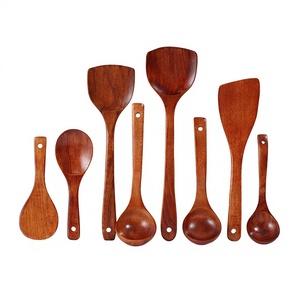
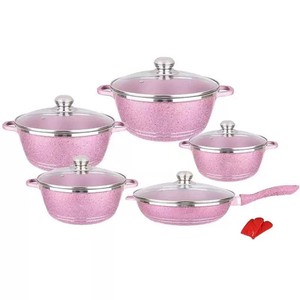
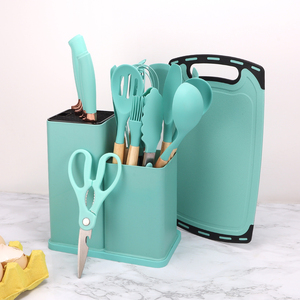
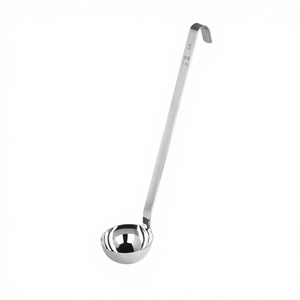
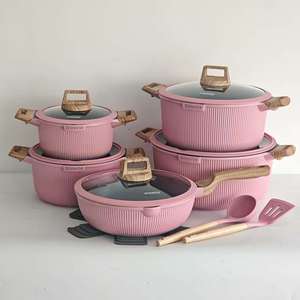
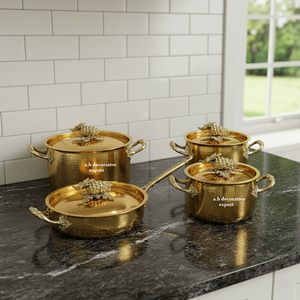
In high-intensity commercial culinary environments, kitchen tools and cookware sets are subjected to relentless physical stress, continuous thermal cycles, chemical exposure during sanitation, and non-stop operational handling. Standard residential cookware degrades quickly under these conditions. As a leading premier OEM/ODM commercial foodservice utensils manufacturer since 1966 (operating from our state-of-the-art facility in Bandung, Indonesia), PT Indonesia Utensil engineers tools tailored for institutional resilience, hygienic safety, and operational efficiency.
Selecting the optimal stainless steel alloy is fundamental to commercial culinary tool longevity. Our manufacturing process utilizes strict metallurgical criteria, prioritizing high-grade austenitic and martensitic stainless steels engineered specifically for commercial kitchens:
| Material Grade | Alloy Composition | Corrosion Resistance | Primary Commercial Application | Compliance Standards |
|---|---|---|---|---|
| AISI 304 (18/10) | 18% Cr, 10% Ni | Exceptional (Acid/Alkali) | Heavy-Duty Ladles, Turners, Stockpots, Gastronorm Containers | NSF/ANSI Standard 2, FDA 21 CFR, LFGB |
| AISI 316 (Marine) | 18% Cr, 10% Ni, 2% Mo | Maximum (Chloride/Salinity) | High-Salinity Broth Pots, Marine/Cruise Galley Equipment | NSF/ANSI Standard 2, EU Regulation (EC) 1935/2004 |
| Die-Cast Aluminum | Al-Si-Cu Heavy Alloy | Moderate (Requires Coating) | Non-Stick Thermal Casseroles, Granite-Coated Frypans | PFOA/PFOS-Free, FDA Non-stick Standards |
| Food-Grade Silicone | Siloxane Polymer + Steel Core | Impervious to Heat & Moisture | Non-Scratch Spatulas, Egg Beaters, Anti-Scalding Handles | FDA 21 CFR 177.2600, LFGB Section 31 |
Commercial kitchen staff face physical fatigue and repetitive strain injuries (RSI) during continuous 8-to-12-hour shifts. Our engineering team integrates biomechanical feedback into tool construction:
As global commercial dining evolves toward automated kitchens, eco-friendly standards, and strict health audits, product design must adapt to next-generation kitchen requirements.
Global regulatory bodies are expanding restrictions on traditional PTFE non-stick coatings containing forever chemicals (PFAS/PFOA). The market is moving toward multi-layer granite-reinforced ceramic non-stick formulations and physical PVD (Physical Vapor Deposition) gold/titanium hard-coatings that offer durability without toxic off-gassing at high temperatures.
To prevent cross-contamination in institutional dining hall kitchens and hotel buffets, modern utensil sets feature integrated color-coded handles (silicone or heat-resistant polymer). This enables line cooks to quickly dedicate specific tools to raw meats, poultry, seafood, or allergen-free food prep routines under HACCP protocols.
Commercial kitchens are adopting robotic frying units, automated soup stirrers, and smart induction cooktops. Future-ready utensil sets require precise dimensional tolerances, standardized magnetic pickup points, and reinforced handles built to withstand automated robotic arm gripping forces.
For procurement officers, hotel group purchasers, and kitchenware brand importers, securing a reliable OEM/ODM manufacturing partner involves balancing factory production capacity, material integrity, tooling flexibility, and compliance oversight.
When sourcing commercial utensil sets in wholesale quantities, evaluating suppliers against these critical operational criteria ensures minimal risk and reliable lead times:
Founded in 1966 in Bandung, PT Indonesia Utensil has evolved into a global leader in stainless steel manufacturing, supplying world-renowned brands including Tanica and Edelmann.
From custom product design and 3D CAD rapid prototyping to high-speed automated hydraulic stamping, laser etching, PVD coating, and customized retail packaging, we offer end-to-end manufacturing solutions tailored to your brand's technical specifications.
Every production batch undergoes multi-stage inspections, including drop testing, handle torque-resistance checks, acid-etch corrosion resistance trials, and dishwasher degradation simulations. We ship to over 50 countries with complete export documentation.
Clear answers to key questions asked by commercial buyers, hotel purchasing managers, and OEM clients.
Our standard MOQ for catalog products starts at 500 sets per item. For fully customized OEM orders involving proprietary custom mold tooling, unique handle geometries, or specialized PVD gold finish applications, the baseline MOQ typically ranges from 1,000 to 3,000 sets depending on material requirements and packaging complexity.
Yes. All our stainless steel utensils (Tanica and Edelmann series) are manufactured using food-grade SUS304/SUS316 alloys and engineered without hollow crevices that trap organic matter. They comply with NSF/ANSI Standard 2 for food equipment hygiene and are fully certified to withstand high-temperature commercial conveyor dishwashers and harsh sanitizing detergents.
Absolutely. We provide high-precision fiber-laser logo etching, custom stamped brand marks, color-matched silicone handles, and custom retail gift boxes, mail-order packaging, or bulk commercial master carton packaging tailored for distribution networks.
3D CAD prototypes and functional samples are typically delivered within 7 to 12 working days. Upon sample approval and deposit confirmation, standard mass production lead time is 30 to 45 days. Expedited production runs can be arranged for recurring contract orders.
Every raw material batch undergoes spectrographic testing before entering our production lines. We issue comprehensive Material Test Reports (MTR) and Third-Party Lab Testing Certificates (SGS, TUV, Bureau Veritas) confirming compliance with US FDA 21 CFR, European Union LFGB, and EU Regulation (EC) No 1935/2004.