Top 10 Heavy Duty Kitchen Utensils Factories & Exporters
2025 Strategic Sourcing Whitepaper & Global OEM/ODM Procurement Guide
Featured Catalog
High-Performance Commercial & Heavy Duty Utensil Lineup
Directly sourced from verified ISO-compliant manufacturing facilities. Engineered with heavy-gauge food-grade stainless steel, heat-resistant silicone, and high-tensile alloys to support rigorous hospitality operations.
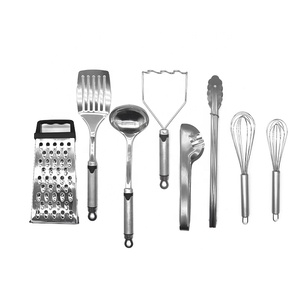
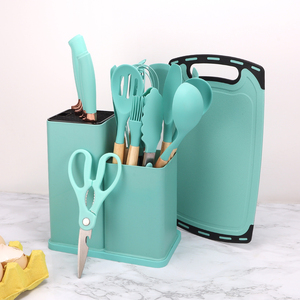
Stainless Steel Kitchen Utensils Set Cooking Utensil Sets
Navigating the Global Heavy Duty Kitchenware Supply Chain
An empirical guide for hospitality procurement heads, hotel chain buyers, brand importers, and B2B distributors sourcing high-end commercial kitchen tools.
Metallurgical Engineering & Alloy Grades
Understanding raw material composition is critical for structural integrity in high-stress culinary environments:
AISI 304 (18/8) Stainless Steel: Standard for corrosion resistance and sanitary food contact.
AISI 316 (18/10 Marine Grade): Enhanced with molybdenum for acidic stewing and salt-spray resistance.
Heavy Gauge Stamping (1.2mm–3.0mm): Eliminates flexing under commercial food loads.
Global Compliance & Food Safety Norms
Top-tier exporters adhere strictly to multi-jurisdictional food contact regulations and environmental protocols:
FDA & European LFGB Certification: Guaranteeing zero toxic heavy metal leaching.
Technical Comparison: Commercial vs Standard Kitchenware
A key metrics breakdown evaluating material performance, structural design, and operational longevity.
Evaluation Parameter
Standard Retail Grade
Heavy Duty Commercial Grade
PT Indonesia Utensil Spec (Edelmann Line)
Steel Alloy Composition
201 / 430 Ferritic Stainless
304 (18/8) Austenitic Stainless
Premium AISI 304 / 316 Deep-Drawn Steel
Wall / Gauge Thickness
0.5mm – 0.8mm
1.2mm – 2.0mm
Up to 3.0mm Heavy Structural Gauge
Handle Joint Construction
Single Spot-Welded or Hollow Rivet
Heavy Dual-Rivet or Solid Forged
Seamless Monoblock or Solid Reinforced Welds
Thermal & Machine Stress
Prone to warping & handle breakage
Resistant to thermal shock & impact
Tested for 24/7 Commercial Kitchen Cycles
Sanitation & Hygiene
Crevices trap food particles
NSF Sanitary Standards Compliant
Micro-Polished Non-Porous Hygiene Finish
Factory Authority & Heritage
PT Indonesia Utensil: 55+ Years of Manufacturing Mastery
Established in 1966 in Bandung, Indonesia, PT Indonesia Utensil has evolved into Southeast Asia's premier manufacturer of high-grade stainless steel cookware and foodservice equipment.
Tanica Brand Lineup
Engineered for elegant daily use and retail cookware programs. Tanica represents the perfect fusion of ergonomic design, precision metal stamping, and accessible luxury for modern kitchens around the globe.
Precision-engineered kitchen gadgets & tools
Mirror and satin polished tabletop items
High-margin retail ready packaging options
Edelmann Professional
Built specifically for commercial caterers, hotel operators, and institutional kitchens. Edelmann heavy-duty tools undergo rigorous structural stress tests to handle continuous high-intensity use.
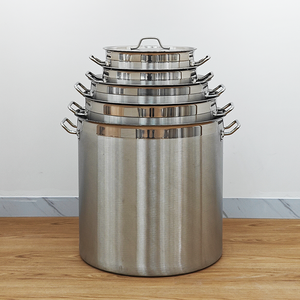
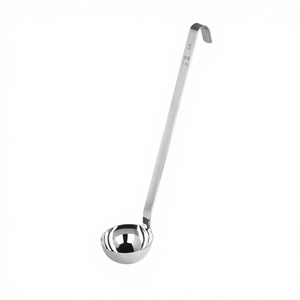
Heavy-gauge commercial stock pots & ladles
High-volume buffet & catering service gear
Extra-durable wear-resistant engineering
Custom OEM & Promotional OEM
Partnering with international corporations, global brands, and promotional gift programs to produce bespoke branded kitchenware with custom laser etching, color PVD, and tailored tooling.
Factory floors are rapidly integrating multi-axis robotic arms for metal spinning, edge deburring, and high-gloss polishing. This drastically reduces human error, guarantees uniform gauge tolerances, and optimizes unit production speeds to support tight lead-time contracts.
2. Hybrid Material Co-Molding (Steel + Silicone)
Commercial kitchens increasingly demand tools that combine the structural strength of heavy-gauge stainless steel with non-scratch, heat-resistant silicone heads. Advanced co-molding eliminates seam gaps, ensuring strict HACCP food safety compliance.
3. ESG & Closed-Loop Circular Metallurgy
Global procurement policies now heavily weigh carbon footprints and ethical sourcing. Modern factories utilize 100% recyclable stainless steel scrap recycling, zero-discharge electro-polishing water treatment, and solar-assisted manufacturing facilities.
Answers to common operational inquiries regarding minimum orders, factory audits, custom mold development, and global shipping logistics.
Q:
What distinguishes heavy-duty commercial kitchen utensils from household retail utensils?
Heavy-duty commercial kitchen utensils are engineered with thicker gauge metals (typically 1.2mm to 3.0mm AISI 304/316 stainless steel) and feature reinforced joint structures such as heavy dual rivets or seamless monoblock forging. Unlike retail utensils designed for light household use, commercial tools undergo rigorous stress testing to withstand continuous high heat, acidic food immersion, aggressive commercial dishwashers, and physical impact without bending, rusting, or breaking.
Q:
What are the standard lead times for custom OEM/ODM kitchenware manufacturing?
Standard lead times for custom OEM projects typically range from 30 to 45 days post sample approval. Initial tool and mold development takes approximately 15 to 25 days depending on component complexity (e.g., deep drawing die molds or custom silicone injection tooling). Pre-production samples are then submitted for material testing and dimensional validation before full mass production commences.
Q:
How do international buyers verify material authenticity (e.g., true 304 steel grade)?
Reputable manufacturers provide Mill Test Certificates (MTC) detailing the chemical composition (Nickel and Chromium percentages) for every steel coil batch. Furthermore, third-party inspection agencies such as SGS, TÜV, or Intertek conduct XRF Spectrometry material testing, neutral salt spray corrosion tests, and food-grade safety certifications (FDA/LFGB) prior to container loading.
Q:
Why is sourcing kitchenware from Indonesian factories advantageous for North American and European buyers?
Indonesia offers strategic trade advantages including favorable tariff rates, zero trade anti-dumping surcharges on stainless steel products, and robust regional raw material supply chains. Factories like PT Indonesia Utensil possess over five decades of established craftsmanship, providing high-precision European-grade manufacturing quality at competitive Asian production costs.
Q:
What are the Minimum Order Quantity (MOQ) requirements for custom private-label branding?
For standard catalog items requiring custom laser-etched logos or custom packaging, MOQs generally start as low as 500 to 1,000 sets. For fully custom deep-drawn molds or bespoke alloy formulations, MOQs range from 2,000 to 5,000 pieces to amortize tooling overhead efficiently.
Q:
What quality assurance protocols are implemented during mass production?
A rigorous 4-stage Quality Control (QC) framework is standard practice: 1) Incoming Raw Material Inspection (IQC) for gauge thickness and alloy purity; 2) In-Process Quality Control (IPQC) monitoring stamping and weld strength; 3) Final Quality Control (FQC) conducting surface polish and burr-free audits; and 4) Pre-Shipment Inspection (OQC) inspecting packaging integrity and carton drops.
Ready to Upgrade Your Commercial Kitchenware Supply Chain?
Connect with our expert engineering team to discuss OEM/ODM custom specifications, request sample kits, or receive competitive container-load wholesale pricing.