
Engineered for extreme longevity, food-contact safety compliance (FDA / LFGB / EU 1935/2004), and high-mirror aesthetic appeal. Direct factory exporting capabilities available for volume buyers.
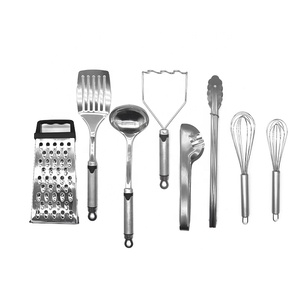
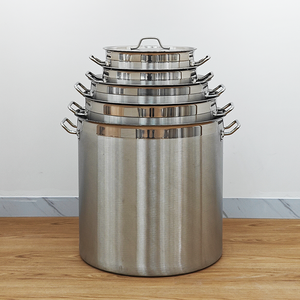
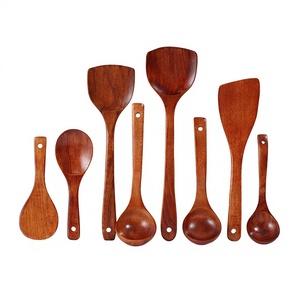
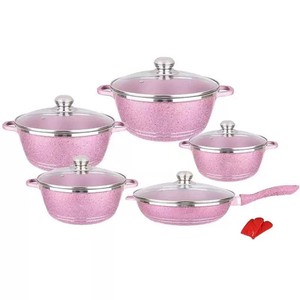
The global commercial and residential stainless steel kitchenware market is experiencing an unprecedented structural shift. Professional procurement managers, hospitality supply chain leaders, and retail brand owners no longer evaluate factories purely on per-unit unit economics. Today's procurement paradigms demand rigorous evaluation of metallurgical purity, surface passivation depth, electrochemical polishing capabilities, dynamic deep-drawing precision, and ESG (Environmental, Social, and Governance) compliance.
As international regulatory bodies tighten food-contact safety standards—such as EU Regulation (EC) No 1935/2004, US FDA 21 CFR, and Germany’s LFGB—sourcing from qualified manufacturers with verifiable testing procedures has become paramount. Polished stainless steel kitchen utensils and cookware represent the core benchmark for kitchen hygiene and mechanical durability. Polishing is not merely an aesthetic step; it fundamentally alters the surface topography, reducing micro-porosity where bacterial pathogens (such as Listeria monocytogenes and Salmonella) can lodge and proliferate.
Core Procurement Insight: Mechanical mirror polishing down to surface roughness (Ra) values below 0.05 micrometers combined with citric or nitric acid passivation elevates the pitting corrosion resistance equivalent number (PREN) of 304-grade steel by over 18%, dramatically extending the operational lifespan of commercial kitchen equipment under high-salinity cooking environments.
In this technical whitepaper, we dissect the critical manufacturing parameters, metallurgical criteria, and vendor selection benchmarks required to evaluate the Top 10 Polished Stainless Steel Kitchenware Factories & Exporters worldwide. Furthermore, we highlight how pioneer manufacturers—such as PT Indonesia Utensil (Established 1966)—have redefined OEM/ODM manufacturing standards across North America, Europe, Asia-Pacific, and the Middle East.
Selecting the optimal stainless steel alloy grade is the foundational technical decision in kitchenware procurement. The nomenclature commonly used in retail trade (e.g., 18/10 or 18/8) corresponds directly to chromium and nickel concentrations. However, commercial-grade engineering requires an understanding of crystal structure behavior—specifically the transition between austenitic and ferritic stainless steel phases during cold working and deep drawing processes.
| Steel Grade Standard | Chromium (Cr) % | Nickel (Ni) % | Molybdenum (Mo) % | Microstructure | Pitting Resistance (PREN) | Primary B2B Application |
|---|---|---|---|---|---|---|
| AISI 304 (18/10) | 18.0 - 20.0% | 8.0 - 10.5% | — | Austenitic | 19.0 - 21.0 | Premium Cookware, Heavy Duty Soup Pots, Chef Utensils |
| AISI 316 (18/12/2) | 16.0 - 18.0% | 10.0 - 14.0% | 2.0 - 3.0% | Austenitic | 23.0 - 25.0 | High-Salinity Commercial Stock Pots, Marine Hospitality |
| AISI 430 (18/0) | 16.0 - 18.0% | < 0.75% | — | Ferritic (Magnetic) | 16.0 - 17.5 | Induction Cookware Outer Base Plates, Economy Cutlery |
| AISI 201 (Low Ni) | 14.0 - 16.0% | 1.0 - 3.5% (High Mn) | — | Austenitic (Strained) | 14.0 - 15.5 | Low-Cost Promotional Items (Not Recommended for Heavy Acids) |
Polishing stainless steel is not merely cosmetic. Top-tier exporters employ multi-stage mechanical automated polishing lines utilizing sisal wheels, cotton mops, and progressively finer aluminum oxide or diamond paste compounds. The sequence follows an abrasive progression from grit 180, to 320, 600, and finally 1200+ mirror buffing.
Leading factories enhance this process via Electrochemical Polishing (Electropolishing). By submerging the shaped stainless steel kitchenware into an electrolyte bath (phosphoric and sulfuric acid blend) and applying a direct electrical current, anodic dissolution selectively strips away micro-burrs and microscopic high spots. This yields three transformative benefits:
To assist corporate buyers, procurement agents, and private label brand managers in auditing suppliers, our SEO and engineering team has established a 6-tier quantitative matrix used to qualify world-class stainless steel cookware and utensil exporters.
Direct mill certificates (MTC) according to EN 10204 3.1. Spectrometer verification for every steel coil batch entering the stamping line.
Hydraulic pressing capabilities exceeding 1,000 metric tons. Wall thickness consistency (tolerance < ±0.03mm) across deep soup pot draws.
Standardized Salt Spray Testing (ASTM B117) reaching over 72 hours without rust spotting or oxide pitting under continuous saline fog exposure.
In-house CNC mold engineering capabilities allowing fast-track OEM prototype delivery within 14 to 21 working days.
BSCI, SEDEX (SMETA 4-Pillar), and ISO 9001:2015 / ISO 14001 certification standards fully integrated across operations.
FOB/CIF international shipping expertise with optimal container load configurations to minimize ocean freight costs per unit.
As we advance into the next decade of kitchenware manufacturing, four key technological and procurement macro-trends are reshaping how globally competitive factories operate:
Traditional single-ply cookware is increasingly losing market share in high-end culinary sectors to multi-clad metals. Advanced factories now co-roll materials into a unified substrate—such as an internal layer of food-safe 304 stainless steel, an aluminum core for rapid thermoconductivity, and an external magnetic 430 stainless steel layer for induction efficiency. Polishing multi-clad cookware requires specialized multi-head robotic buffing arms to prevent heat warping during high-friction polishing cycles.
Manual polishing inevitably introduces human variance in surface gloss and micro-scratch density. Leading exporters have replaced traditional manual buffing wheels with 6-axis robotic arms operating under constant pressure feedback systems. Coupled with high-resolution AI optical cameras, these production lines instantly detect micro-pitting, buffing streaks, or thickness irregularities down to 10 microns before items proceed to final packaging.
Driven by the European Union’s Carbon Border Adjustment Mechanism (CBAM), top-tier kitchenware manufacturers are transitioning toward recycled stainless steel stock (scrap content exceeding 75% without compromising mechanical strength). Furthermore, closed-loop water filtration systems during polishing and electropolishing phases ensure 98% of industrial water and acid solutions are recycled internally, preventing toxic effluent release.
B2B buyers are seeking products that blend high-performance polished stainless steel with physical vapor deposition (PVD) gold, rose gold, or hand-hammered decorative aesthetics. Combining high-temperature non-stick quartz coatings, silicone accents, or anti-scalding ergonomic handles with mirror-finished bodies gives consumer brands a distinctive visual edge on retail shelves.
Founded in 1966 in Bandung, Jawa Barat, Indonesia, PT Indonesia Utensil has grown into Southeast Asia’s flagship premier manufacturer and global exporter of high-grade stainless steel kitchenware and commercial foodservice equipment. Spanning over five decades of industrial heritage, our factory combines European engineering rigor with efficient Asian manufacturing scale.
Our company proudly powers two globally recognized brand lines, alongside an extensive white-label OEM / ODM manufacturing service for corporate clients worldwide:
Operating from our modern production facility in Bandung and supported by our strategic marketing office in Jakarta, PT Indonesia Utensil adheres to international ISO-compliant manufacturing practices. Every batch of stainless steel raw material undergoes strict metallurgical testing before deep drawing, stamping, precision polishing, ultrasonic washing, and custom branding.
Partner with PT Indonesia Utensil for factory-direct wholesale procurement, custom OEM tooling, or private label manufacturing. Our engineering team is standing by to assist with technical quotes and catalog requests.