
Engineered for extreme back-of-house culinary environments, hotel buffets, and high-volume commercial catering operations.
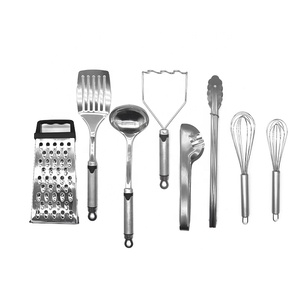
Precision-forged AISI 304 food-grade stainless steel utensil collection engineered with ergonomic stay-cool hollow handles for continuous line-cooking operations.
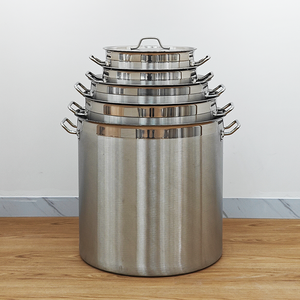
High-capacity restaurant stockpots featuring 3-ply encapsulated bases (SS 304 - Aluminum Core - SS 430) for rapid heat distribution across induction and gas burners.
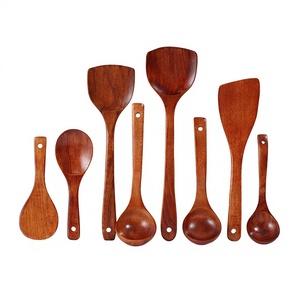
Eco-friendly high-density hardwood spatula sets designed for anti-scratch cooking performance over delicate non-stick pan surfaces in professional prep kitchens.
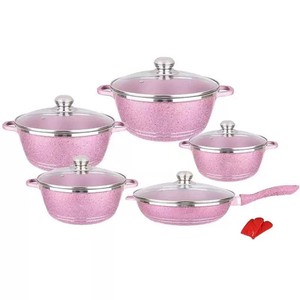
Die-cast aluminum cookware utilizing multi-layer reinforced granite non-stick coating technology for superior non-toxic food release and thermal efficiency.
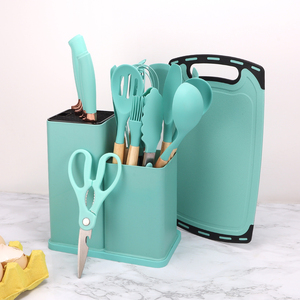
Comprehensive commercial culinary prep kit combining heat-resistant silicone tool heads (230°C) with sealed antibacterial hardwood handles and precision cutlery.
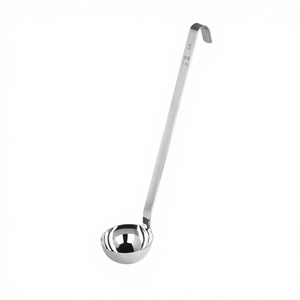
Seamless single-piece deep-drawn stainless steel ladle built with an angled hook handle, specifically manufactured for continuous hotel buffet lines and stockpots.
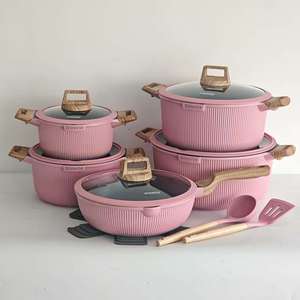
Bulk commercial cookware combination set featuring thick-wall die-cast aluminum casseroles, tempered glass lids with steam vent technology, and high-abrasion resistance.
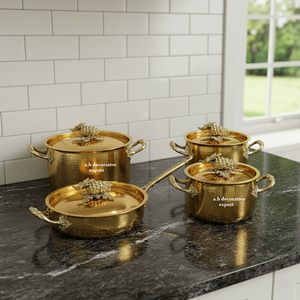
Artisanal European-style hand-hammered decorative stainless steel cookware set designed for high-end hotel presentation tables, banquets, and luxury catering displays.
Navigating the global enterprise market for professional chef kitchenware and commercial foodservice equipment requires precise evaluation of raw material integrity, manufacturing methodologies, labor compliance, and global export logistics. Commercial hospitality groups, restaurant chains, and B2B importers are increasingly auditing their supply chains to balance total cost of ownership (TCO) against durability and food safety compliance.
| Manufacturing Hub | Primary Metallurgy Standards | Tariff & Import Tax Risk | OEM Customization Capability | Supply Chain Stability |
|---|---|---|---|---|
| Indonesia (PT Indonesia Utensil) | AISI 304 / 316 Stainless Steel (Ni 8%+ / Cr 18%+) | Low / Preferential (Tariff-Neutral Hub) | High (Custom Tooling & Stamping) | Very High (Stable Raw Material & Sea Routes) |
| China (Mainland) | 201 / 304 / 430 Stainless Steel Series | High (Section 301 Anti-Dumping Tariffs) | Extremely High (Turnkey Prototyping) | Moderate (Subject to Geopolitical Shocks) |
| Vietnam | 304 Stainless Steel & Die-Cast Aluminum | Moderate / Preferential EU-EVFTA | Moderate (Expanding Injection Molding) | High (Growing Infrastructure) |
| India | Hand-Hammered SS, Copper & Brass Alloys | Low / Country Specific GSP | Moderate (Handicraft & Forging Focus) | Moderate (Lead-Time Fluctuations) |
| European Union (Germany/Italy) | Premium 18/10 Stainless & Tri-Ply Copper | Standard MFN / High Base Cost | High (Precision Engineering) | High (High Operational Overhead) |
When procuring commercial kitchen utensils and heavy-duty cookware, B2B procurement managers must prioritize high-nickel austenitic stainless steel alloys over low-grade martensitic alternatives. Low-grade steels (such as 201 series) are prone to pitting corrosion, stress cracking, and rusting when exposed to acidic commercial food preparation environments and automated high-temperature chemical dishwashing systems.
As the commercial hospitality sector accelerates post-pandemic expansion, procurement officers must realign their sourcing specifications with emerging technological, environmental, and regulatory imperatives. The following key trends are reshaping global export dynamics for professional chef kitchenware:
Global regulatory bodies (including the US EPA and ECHA in Europe) are phasing out traditional fluorinated non-stick coatings. Commercial kitchens are rapidly shifting toward multi-layer mineral-reinforced ceramic coatings, plasma nitriding, and un-coated highly polished 304 stainless steel cookware.
HACCP hygiene compliance mandates the elimination of crevices, rivets, and seams where food particles and bacterial pathogens aggregate. Modern executive chefs demand single-piece deep-drawn ladles, monolithic spatulas, and laser-welded utensil structures.
With high-efficiency induction cooking suites replacing conventional open-flame gas ranges in modern commercial kitchens, cookware must feature thick magnetic bottom bases (AISI 430 stainless steel) combined with pure aluminum heat-diffusing cores to eliminate hot spots.
Enterprise buyers are adopting scope 3 carbon reduction goals. Leading manufacturers are deploying certified 100% recyclable austenitic stainless steel scraps and eco-friendly packaging solutions without single-use plastics.
Line cook safety and ergonomics are driving kitchenware redesigns. Features such as weight-balanced handles, silicone thermal grips, textured anti-slip surfaces, and low-vib wall thicknesses drastically reduce repetitive strain injuries in commercial prep environments.
Global brands are shortening product launch cycles from 12 months down to 90 days. Factories offering in-house CAD/CAM tooling, rapid 3D prototyping, and low-MOQ laser branding lead the commercial OEM landscape.
Understanding the chemical composition of stainless steel is vital for high-volume commercial kitchenware procurement. Misinterpreting metal grades can result in catastrophic product degradation under high-salinity and acidic food prep conditions.
AISI 304 Stainless Steel (18/8 & 18/10): The gold standard for commercial utensils and cookware. Containing 18% Chromium and 8-10% Nickel, 304 stainless steel offers exceptional resistance to organic acids, oxidation, and aggressive sanitizing chemicals used in commercial dishwashers.
AISI 316 Stainless Steel (18/10/2): Formulated with 2-3% Molybdenum addition, Grade 316 provides ultimate protection against pitting corrosion caused by chlorides (salt water, boiling saline solutions). Essential for marine catering equipment, naval ships, and extreme industrial food production lines.
AISI 430 Stainless Steel (18/0): A ferritic stainless steel containing no nickel. Highly magnetic, making it ideal for the base plate layer of tri-ply induction cookware. However, it exhibits lower corrosion resistance than 304 and should not be used for direct long-term acid food storage.
Established in 1966, PT Indonesia Utensil has operated as Southeast Asia's premier manufacturer of high-grade stainless steel kitchenware, commercial foodservice utensils, and customized promotional kitchen solutions for over 55 years. Headquartered with manufacturing facilities in Bandung and marketing headquarters in Jakarta, the enterprise exports top-tier kitchen tools to over 50 countries across North America, Europe, Australia, and Asia-Pacific.
Our operational capabilities are anchored by two renowned international proprietary brands:
Additionally, our state-of-the-art Bandung manufacturing plant delivers full-scale OEM & ODM Custom Manufacturing services for global corporate campaigns, high-volume retail private labels, and specialized institutional kitchen equipment buyers. With strict ISO 9001 certified quality control systems, in-house deep-drawing hydraulic presses, precision laser etching, and automated polishing systems, we ensure every product conforms to stringent global safety and durability metrics.
Comprehensive answers to critical technical, manufacturing, and logistical questions for global kitchenware importers and hotel procurement teams.