
Engineered for maximum thermal responsiveness, anti-corrosive longevity, and strict international food contact compliance (FDA, EU 1935/2004).
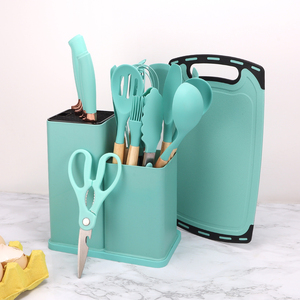
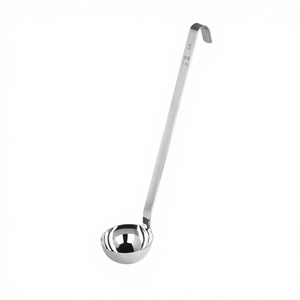
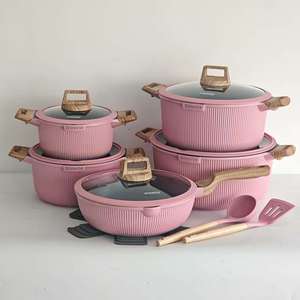
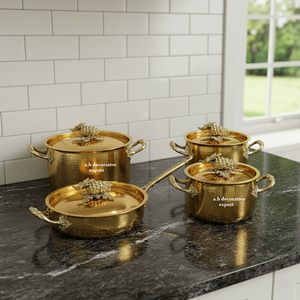
From PT Indonesia Utensil’s flagship factory in Bandung to international hospitality networks, we deliver unparalleled OEM/ODM scalable solutions.
Founded in 1966 in Bandung, West Java, PT Indonesia Utensil has evolved into a premier Asian manufacturing powerhouse. Operating advanced deep-drawing press lines, automated polishes, and strict QC protocols, we supply hospitality buyers across 50+ nations.
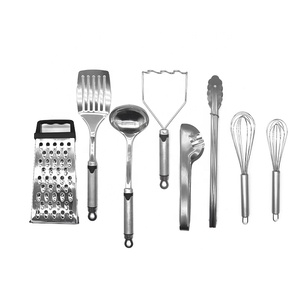
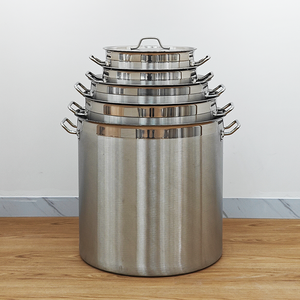
Our dual-brand structure targets distinct culinary segments: Tanica delivers ergonomic, beautifully polished kitchen gadgets and everyday home utensils, while Edelmann provides ultra-durable, commercial-grade foodservice equipment engineered for intense hotel and restaurant environments.
We specialized in turnkey private labeling, custom laser etching, bespoke handle moulding, and targeted promotional kitchenware campaigns. Countless global brands utilize our factory-direct OEM services for maximum campaign ROI and retail shelf appeal.
In high-volume commercial kitchens, institutional catering facilities, and premium consumer cookware manufacturing, material longevity is governed by chemical corrosion dynamics. While standard austenitic 304 Grade (18/8 or 18/10 stainless steel) has long served as the baseline for food prep utensils, modern culinary science and heavy commercial usage demand superior resistance to organic acids, saline solutions, and extreme thermal cycling.
The crucial distinction lies in the strategic addition of Molybdenum (2.0% to 3.0%) within the 316 alloy matrix (UNS S31600 / EN 1.4401). Molybdenum drastically alters the passive chromium-oxide layer, elevating the material’s Pitting Resistance Equivalent Number (PREN) from ~19 to over 25. This structural defense prevents localized micro-pitting caused by sodium chloride ions (salt) and acidic food matrixes (citric, acetic, and lactic acids) heated under pressure.
Technical Metallurgy Benchmark: 316 Stainless Steel exhibits up to 4x greater resistance to crevice corrosion and pitting during extended boiling of high-salinity stocks compared to standard 304 steel, eliminating chemical leaching risk and preserving pristine food flavors.
Below is an empirical evaluation comparing material grades utilized across global cookware production lines:
| Metallurgical Property | AISI 304 (Standard Food Grade) | AISI 316 (Marine/Medical Grade) | AISI 316Ti (Titanium Stabilized) |
|---|---|---|---|
| Chromium (Cr) Content | 18.0% – 20.0% | 16.0% – 18.0% | 16.0% – 18.0% |
| Nickel (Ni) Content | 8.0% – 10.5% | 10.0% – 14.0% | 10.0% – 14.0% |
| Molybdenum (Mo) Content | None (0%) | 2.0% – 3.0% | 2.0% – 3.0% |
| Titanium Addition | None | None | 5x (C + N) min 0.7% |
| PREN Index (Corrosion Value) | ~ 19.0 | ~ 23.5 - 25.0 | ~ 25.5 - 27.0 |
| ASTM B117 Salt Spray Endurance | 240 Hours Base | 720+ Hours Defect-Free | 1000+ Hours Defect-Free |
| Thermal Deformation Threshold | 450°C | 600°C | 800°C |
Because pure 316 stainless steel possesses lower thermal conductivity than pure copper or aluminum, premium commercial cookware construction relies on multi-clad cladding techniques. At PT Indonesia Utensil, our advanced deep-drawing and roll-bonding processes fuse distinct metallic layers into a single homogeneous sheet:
Procurement directors for major hotel chains, restaurant supply conglomerates, and retail brands are operating in a rapidly shifting regulatory and macroeconomic landscape. Sourcing strategies are transitioning from low-cost single-country reliance toward supply chain resilience, safety compliance, and Total Cost of Ownership (TCO) optimization.
Tightening global legislation (such as European ECHA REACH restrictions and US state-level PFAS bans) is forcing commercial buyers away from traditional synthetic non-stick coatings. Mechanically polished 316 stainless steel and tri-ply clad cookware offer a non-toxic, lifetime non-stick alternative through oil-seam seasoning techniques.
Energy efficiency mandates in North America and Western Europe are accelerating the transition from open gas flame ranges to high-kilowatt commercial induction hobs. Future cookware inventory must feature impact-bonded or fully encapsulated magnetic bottoms capable of resisting rapid thermal expansion shock.
To hedge against geopolitical friction, tariff volatility, and supply chain bottlenecks, multinational buyers are actively shifting orders to established Southeast Asian producers. Factories in Indonesia offer robust metallurgical traditions, favorable trade logistics, and competitive labor costs.
Rather than evaluating initial purchase price alone, institutional buyers now prioritize wear cycles. 316 stainless cookware exhibits a service lifespan 3x longer than standard 304 cookware in high-salinity commercial dishwashers, yielding a significantly lower annual replacement cost.
As culinary standards evolve, factory innovation centers are pushing the boundaries of surface passivation and structural design:
Electropolishing & Citric Passivation: Advanced electrochemical bath treatments remove free iron atoms from the cookware surface, creating an ultra-smooth, micro-pore-free chromium oxide skin. This prevents micro-bacterial adhesion, simplifies commercial sanitation, and enhances mirror-like aesthetic brilliance.
Rivetless Cold-Forged Handle Joining: Flush interior vessel walls achieved via high-frequency capacitive discharge welding eliminate internal rivet heads. This completely removes grease traps, allowing 100% hygienic wipe-down cleaning aligned with HACCP food safety standards.
Answers to technical, metallurgical, logistics, and OEM order inquiries commonly submitted by international trade partners.
Yes. 316 stainless steel is chemically inert due to its high nickel (10-14%) and molybdenum (2-3%) content. Unlike standard metals or low-grade stainless steels, 316 will not leach metallic ions, react with acidic tomato sauces, wine reductions, or citrus glazes, ensuring complete food safety and pristine taste.
Standard production runs for custom stamped, laser-etched, or custom packaged products typically start at 500 to 1,000 units per stock-keeping unit (SKU), depending on tooling requirements. For existing catalog designs under our Tanica or Edelmann lines, flexible lower MOQ tiers are available for established distributors.
Our manufacturing facility in Bandung operates under ISO 9001 quality assurance standard operating procedures. All raw steel coils undergo X-ray Fluorescence (XRF) spectro-analysis upon arrival to verify alloy composition. Finished products comply fully with US FDA 21 CFR, German LFGB, and EU Regulation No. 1935/2004 safety standards.
Absolutely. While austenitic 316 steel itself is non-magnetic, our cookware range utilizes a multi-ply clad construction or encapsulated magnetic base (featuring AISI 430 stainless steel on the exterior bottom). This ensures seamless energy transfer on high-power commercial induction ranges as well as gas and electric hobs.
Typical mass production lead time is 35 to 45 days after deposit approval and sample sign-off. Shipping out of Tanjung Priok (Jakarta) or Tanjung Emas port allows direct freight routes to Europe, North America, the Middle East, and Australia with favorable transit schedules.
Our engineering team accepts CAD step files and vector branding files. We offer precise fiber laser marking, deep die stamping on vessel bottoms, custom handle color coatings, and FSC-certified retail color gift box packaging tailored to your brand guidelines.
Elevate your product catalog with high-margin, ultra-durable commercial cookware backed by 55+ years of Indonesian metallurgical excellence. Contact our engineering and B2B sales team today for factory direct quotes, sample requests, and technical OEM proposals.
Inquire Now