
Executive Procurement Overview
In today's complex international trade environment, procurement managers, hotel supply chain directors, and commercial importers seeking premium Household Kitchenware Products face evolving challenges: tariff fluctuations, stringent food contact regulations (FDA, LFGB, EU 1935/2004), and the urgent need for supply chain diversification beyond traditional East Asian hubs. This definitive sourcing guide provides deep technical insights into stainless steel metallurgy (AISI 304 vs. 430), manufacturing precision, future market dynamics, and direct OEM capabilities from PT Indonesia Utensil—Indonesia's premier utensil manufacturer established in 1966.
1. The Strategic Shift in Sourcing Household Kitchenware Products
The global market for household kitchenware products is undergoing a structural transformation driven by two main forces: consumer demand for non-toxic, sustainable materials and enterprise supply chain risk mitigation. Modern retail chains, corporate gifting buyers, and hospitality operators are actively moving away from single-source manufacturing countries to mitigate geopolitical risks and anti-dumping duties.
Southeast Asia—and specifically Indonesia—has emerged as the premier global alternative for high-precision metal stamping and deep-drawing stainless steel manufacturing. As an established manufacturing hub with robust raw material access, competitive labor dynamics, and favorable trade agreements with North America, Europe, and the Middle East, Indonesia provides global buyers with stable pricing and uncompromised quality.
However, successful sourcing requires a thorough understanding of metallurgical properties and manufacturing standards. When evaluating household kitchenware products, procurement professionals must analyze the foundational physics and chemical compositions of the tools they import.
| Technical Metric | AISI 304 (18/10 or 18/8) Stainless | AISI 430 (18/0) Stainless | Inferior Alloys / Recycled Scrap |
|---|---|---|---|
| Chemical Composition | 18% Chromium, 8–10% Nickel | 16–18% Chromium, 0% Nickel | Variable Chromium (<14%), High Carbon |
| Corrosion & Acid Resistance | Exceptional (Resists organic acids & salts) | Moderate (Best for dry/flatware tools) | Poor (Prone to pitting and surface rust) |
| Induction Compatibility | Non-magnetic (Requires impact-bonded base) | Naturally Ferritic (Induction ready) | Unpredictable magnetic response |
| Food Safety & Leaching | Zero toxic leaching; 100% compliant | Compliant under dry/light acid conditions | Risk of heavy metal migration |
| Target B2B Application | Premium Consumer, Commercial Kitchens | Budget Flatware, Tabletop Accessories | Low-tier Disposable Novelties |
2. Technical Deep-Dive: Material Integrity and Manufacturing Excellence
Not all stainless steel kitchen tools perform identically over time. The structural longevity of household kitchenware products depends directly on raw material selection, grain alignment during deep drawing, and surface passivation treatments.
At PT Indonesia Utensil, our manufacturing process utilizes premium-grade cold-rolled stainless steel sheets. During the stamping and deep-drawing phases, hydraulic pressure is carefully controlled to prevent micro-fracturing in high-stress zones such as spoon bowls, ladle bends, and pot handles. Key technical parameters include:
- Micro-Polishing & Surface Roughness (Ra): Our mechanical and electrochemical polishing operations reduce surface roughness to below 0.2 microns Ra. This hyper-smooth surface prevents bacterial adhesion, simplifies commercial dishwashing, and preserves visual shine through thousands of sanitation cycles.
- Passivation Layer Formation: Following fabrication, our kitchenware undergoes specialized nitric or citric passivation baths. This process removes free iron from the alloy surface, forming a protective, non-reactive chromium oxide film that prevents rust and food contamination.
- Ergonomic Weight Distribution: Kitchen gadgets and commercial tools must maintain structural rigidity under mechanical load without causing operator fatigue. Through calibrated gauge variations—ranging from 0.8mm for delicate consumer tools to 2.5mm for commercial ladles—our engineering balances strength with ergonomics.
3. Recommended Product Categories for Global Importers
To assist procurement directors in curating balanced product portfolios, we categorize our primary production outputs under two flagship proprietary brands and a comprehensive custom OEM service.
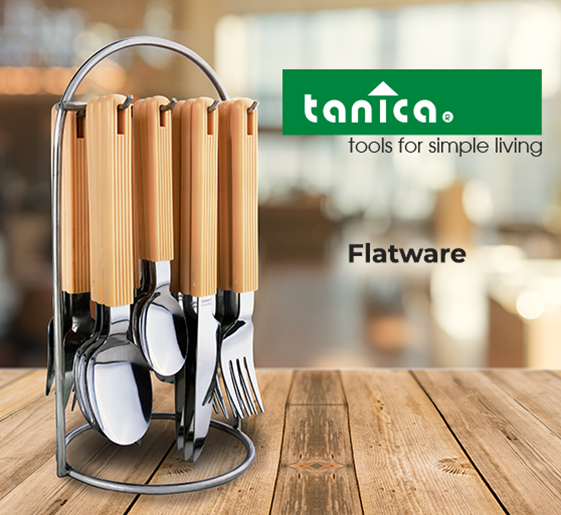
Tanica Premium Household Utensils
Designed for daily home cooking, Tanica combines sleek aesthetics with food-grade AISI 304 stainless steel. Featuring ergonomic handles, stain-resistant mirror finishes, and dishwasher-safe construction, Tanica is engineered for global consumer retail channels.
Explore Tanica Range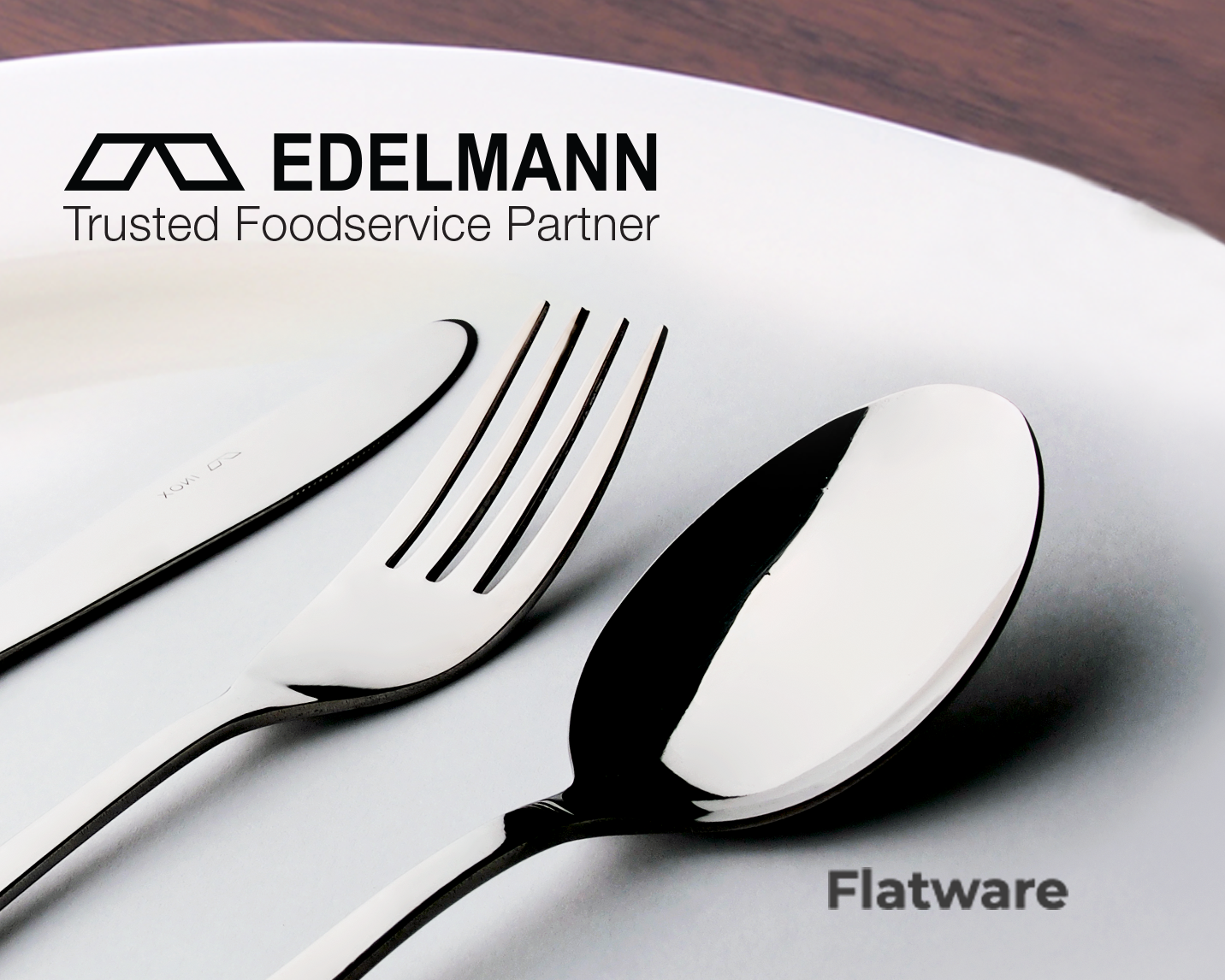
Edelmann Heavy-Duty Utensils
Engineered for high-volume commercial kitchens, catering services, and hotel chains. Edelmann tools utilize extra-heavy gauge stainless steel with reinforced stress points, seamlessly welded handles, and NSF/HACCP alignment for extreme operational durability.
Explore Edelmann Range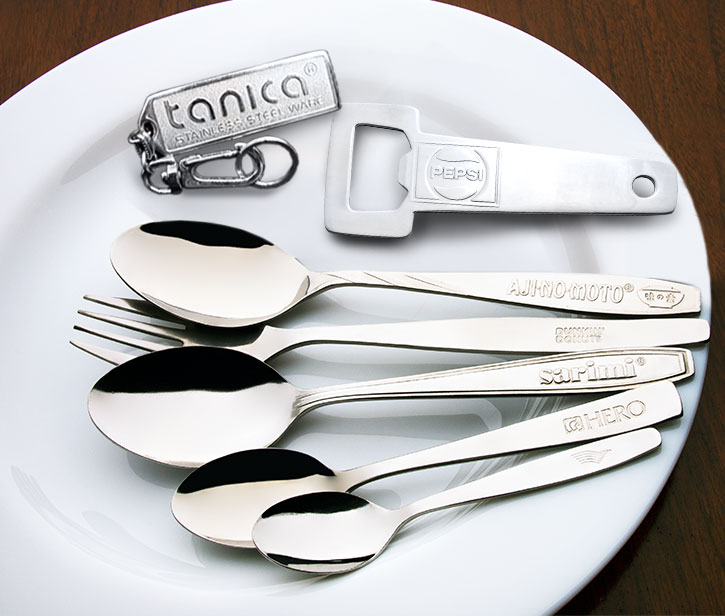
Custom Promotional Kitchenware
High-impact, customized kitchen products designed for corporate promotions, retail loyalty programs, and brand activations. Features precision laser etching, custom handle stamping, and sustainable retail-ready packaging.
Explore Promotional LineIn-Depth Focus: Engineering Superior Commercial & Household Tools
Whether sourcing retail kitchen gadgets or commercial catering equipment, detailed craftsmanship makes the difference between product returns and long-term brand loyalty. Below is a closer look at our specialized manufacturing outputs:
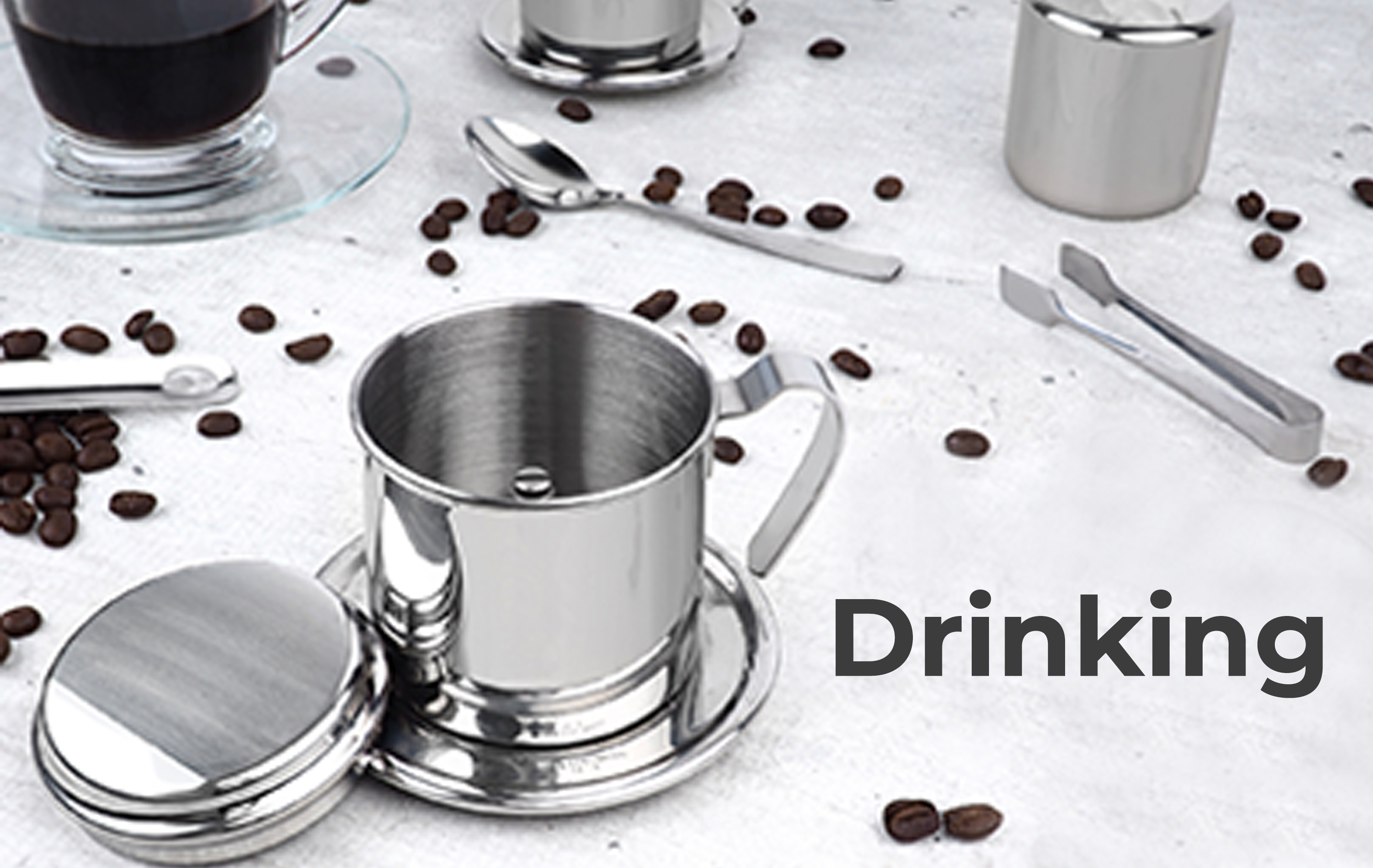
Heavy-Duty Seamless Construction
Edelmann commercial utensils eliminate dirt-catching crevices through monolithic deep-drawing and smooth sanitary welding, ensuring fast cleaning in commercial dishwashers.
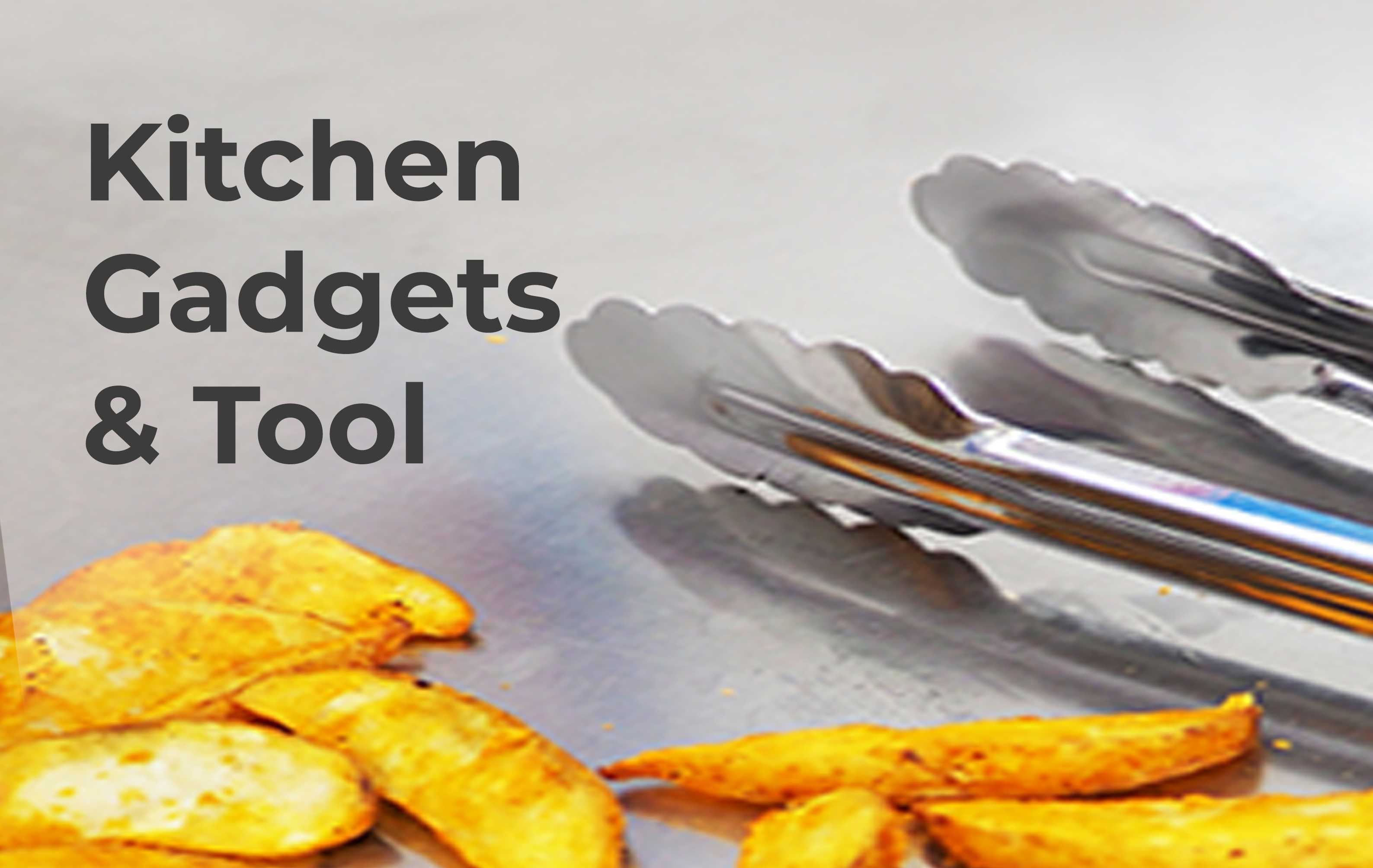
Calibrated Thermal & Mechanical Strength
Built to withstand temperatures exceeding 300°C without warping or degrading. Handles are stress-tested to support heavy volumetric loads in high-intensity hotel kitchens.
4. Key Future Trends in Household Kitchenware Procurement (2025–2030)
Global procurement teams must look ahead to prepare their inventories for shifting consumer priorities and regulatory updates. Based on extensive research and market analysis, we identify four macro trends shaping the kitchenware sector over the next decade:
Trend A: Replacement of Plastics with Permanent Metals
Growing awareness of microplastics, PFAS chemicals, and plastic degradation under heat is driving consumers and commercial kitchens to replace nylon, silicone, and plastic utensils with 100% food-grade stainless steel. Procurement buyers are expanding their core stainless steel catalog to meet this steady structural demand.
Trend B: Closed-Loop Circularity & Carbon Footprint Audits
Major Western retail chains now require suppliers to demonstrate low-carbon manufacturing processes. Stainless steel is 100% recyclable. PT Indonesia Utensil integrates recycled industrial steel scrap into its closed-loop melt sourcing while utilizing energy-efficient hydraulic stamping units, minimizing total embodied carbon per piece.
Trend C: Multi-Functional & Compact Ergonomics
Urbanization and smaller living spaces are increasing demand for versatile, space-saving kitchenware. Dual-purpose tools—such as whisk-strainers, measuring-spatulas, and stackable nesting utensil sets—are capturing higher profit margins in consumer retail segments.
Trend D: PVD Physical Vapor Deposition & Matte Finishes
While traditional mirror polishing remains a standard, modern consumers seek aesthetic variety. PVD coatings (Gold, Rose Gold, Matte Black, Champagne) allow manufacturers to apply ultra-durable, food-safe, titanium-based color layers onto stainless steel without sacrificing dishwasher compatibility.
5. Why Enterprise Buyers Choose PT Indonesia Utensil (Est. 1966)
Selecting a manufacturing partner requires verifying operational heritage, factory infrastructure, and quality assurance protocols. For over five decades, PT Indonesia Utensil has provided reliable B2B manufacturing for international brand owners, wholesale distributors, and commercial hospitality buyers.
58+ Years of Craftsmanship
Founded in 1966 in Bandung, West Java, our factory brings nearly six decades of specialized expertise to stainless steel tool fabrication, die design, and metal finishing.
Global Distribution to 50+ Countries
Our export infrastructure seamlessly handles international freight shipping, customs compliance, and container loading for buyers across North America, Europe, Australia, and Asia.
Full In-House OEM & ODM Capability
From initial CAD modeling and custom tool & die creation to final laser etching and bespoke packaging, we deliver complete turn-key product manufacturing.
Strict Quality Assurance & Compliance
Our production lines operate under rigid quality controls, ensuring compliance with international food contact standards including FDA, LFGB, and EU Directive 1935/2004.
6. Comprehensive B2B Procurement FAQ (Frequently Asked Questions)
Below are detailed answers to the most common technical, logistical, and commercial queries submitted by global procurement managers when sourcing household kitchenware products.
The numbers represent the percentages of Chromium and Nickel added to the steel alloy. 18/10 stainless steel contains 18% Chromium and 10% Nickel. Nickel provides high resistance to corrosion, rust, and organic food acids while giving the steel a bright, silvery luster. It is non-magnetic and ideal for high-performance cooking tools and premium utensils.
18/0 stainless steel contains 18% Chromium but zero Nickel. While still durable and rust-resistant under normal household conditions, it is magnetic (making it induction compatible) and more economical. We recommend 18/10 for commercial kitchen tools and high-end retail, and 18/0 for cost-sensitive volume flatware or induction-specific items.
Global procurement teams are diversifying their supply chains to manage trade risks. Sourcing from Indonesia offers several distinct strategic advantages:
- Tariff Optimization: Indonesian exports often face lower tariff rates or duty exemptions in major North American and European markets compared to Chinese exports subject to Section 301 tariffs.
- Stable Raw Material Access: Indonesia is a global leader in nickel reserves and stainless steel production, providing localized material supply chains and reduced commodity price volatility.
- Proven Manufacturing Quality: Established factories like PT Indonesia Utensil (Est. 1966) offer decades of technical experience matching strict Western quality standards.
Every production batch undergoes strict quality control. We utilize certified food-grade stainless steel coils with full material mill test reports (MTR). Our manufacturing processes avoid harmful chemical coatings or toxic polishing compounds. Finished products are tested and verified compliant with international standards, including U.S. FDA food contact regulations, European Union EU 1935/2004, and German LFGB requirements.
Standard lead times for custom OEM/ODM production typically range from 45 to 60 days following sample sign-off and deposit receipt, depending on tool creation needs and order volume. For standard production lines under our proprietary Tanica or Edelmann tooling, lead times are often shorter (30 to 42 days).
Minimum Order Quantities (MOQs) depend on the product size, metal gauge, and customization level. Generally, standard item MOQs start at 1,200 to 3,000 units per SKU, while custom tooling projects are evaluated based on total material consumption.
While both brand lines use food-grade stainless steel, they serve different operational environments:
- Edelmann: Built specifically for commercial foodservice (hotels, restaurants, institutional catering). Features thicker stainless steel gauges, reinforced handles, seamless hygienic welds, and industrial dishwasher resilience.
- Tanica: Formulated for modern consumer households. Prioritizes consumer ergonomics, refined high-gloss polish finishes, stylish handle designs, and attractive retail packaging presentation.
We provide full private-label custom manufacturing options, including:
- Laser Etching: Permanent, high-precision logo application on handles or functional blades.
- Die Stamping / Embossing: Custom stamped logos molded directly into metal handles during production.
- Custom Surface Finishes: Mirror polish, satin/brushed finish, or PVD color coating.
- Bespoke Packaging: Custom printed color boxes, eco-friendly kraft packaging, blister packs, or gift sets with FSC certification.
Yes. We welcome third-party inspection agencies (such as SGS, Bureau Veritas, TÜV Rheinland, or Intertek) hired by our clients to perform initial factory audits, in-line process checks, or final pre-shipment inspections (PSI) at our Bandung production facility.
Requesting samples or receiving a detailed price quotation is simple. Click the Contact Us button on this page to open a direct inquiry box with our sales team. Please provide details on your required SKUs, material specifications, target purchase volumes, and delivery port for a prompt, accurate quotation.
7. Summary: Strategic Sourcing Recommendations for Buyers
Sourcing high-quality household kitchenware products requires balancing material excellence, factory reliability, and long-term cost efficiency. By establishing a direct manufacturing partnership with PT Indonesia Utensil, global procurement teams gain access to over 58 years of certified production experience, duty-advantaged shipping locations, and dedicated OEM support.
Whether you are expanding a retail kitchenware brand, outfitting a hotel chain with commercial tools, or organizing a corporate promotional campaign, our engineering team is ready to deliver tools built to the highest global standards.