
An authoritative guide for global procurement officers, hotel group buyers, and commercial foodservice brand owners seeking direct-factory OEM precision, certified metallurgical compliance, and risk-resilient supply chain partnerships.
Get a QuoteIn high-capacity commercial kitchens, hotel banquet facilities, hospital food management systems, and high-volume restaurant chains, small kitchen utensils are subject to severe mechanical stress, constant thermal cycling, and aggressive chemical exposure from industrial sanitizers. Selecting the right Industrial Kitchen Utensils Manufacturer goes far beyond simple price-per-unit calculations; it requires a rigorous audit of raw material integrity, deep-drawing manufacturing capabilities, ergonomic engineering, and long-term supply chain viability.
Established in 1966 in Bandung, West Java, PT Indonesia Utensil has operated for over 58 years as an integrated manufacturer and exporter of commercial-grade stainless steel kitchenware. Serving international buyers across more than 50 countries, our factory combines traditional metallurgical expertise with modern automated precision stamping, robotic polishing, and strict quality assurance protocols. Whether managing bulk procurement for multinational hospitality groups or developing private-label inventory for commercial kitchenware brands, understanding the structural and chemical parameters of high-end manufacturing is critical to avoiding product failure, food contamination risks, and unnecessary replacement costs.
Commercial kitchen environments demand tools that maintain structural integrity under continuous load. Inferior stainless steel formulations or improper annealing processes result in handle snapping, pitting corrosion, micro-fractures, and food-particle trap formation. As a specialized industrial factory, PT Indonesia Utensil engineers tools utilizing certified austenitic stainless steel alloys specifically tailored for heavy commercial use.
| Metallurgical Parameter | AISI 304 (18/10 Stainless Steel) | AISI 316 (Marine-Grade Stainless Steel) | AISI 430 (Ferritic Stainless Steel) |
|---|---|---|---|
| Chemical Composition | 18% Cr / 10% Ni | 16% Cr / 10% Ni / 2% Mo | 16-18% Cr / 0% Ni |
| Corrosion Resistance | Exceptional (Resists acidic foods & daily sanitization) | Maximum (Resists high-salinity & extreme chemical contact) | Moderate (Ideal for dry contact & magnetic induction tops) |
| Tensile Strength (MPa) | 515 - 620 MPa | 580 - 680 MPa | 450 - 550 MPa |
| Commercial Application | Commercial Stockpot Ladles, Skimmers, Turners, Hotelware | Extreme Chemical/Saline Food Processing Equipment | Induction Base Plates, Light-Duty Prep Utensils |
| Hygienic Maintenance | Micro-smooth polish prevents bacterial adhesion | Superior resistance to pitting oxidation | Requires immediate drying to prevent flash rust |
To serve diverse procurement requirements—ranging from heavy commercial kitchen lines to consumer retail shelves and corporate promotional campaigns—PT Indonesia Utensil operates distinct specialized product portfolios. Each series is manufactured under ISO-compliant process controls to ensure consistent material density, uniform gauge thickness, and impeccable surface finish.
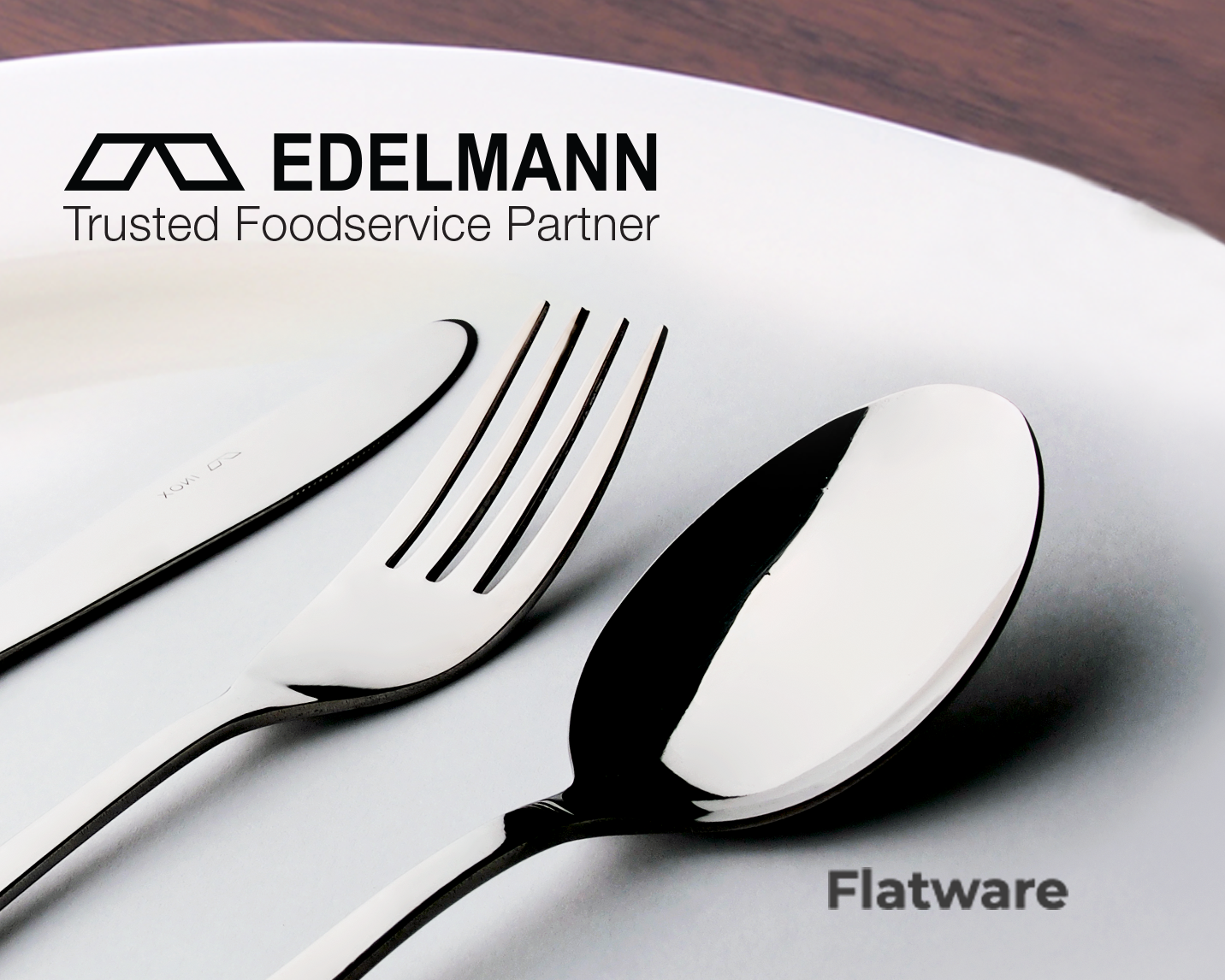
Engineered exclusively for heavy-duty commercial catering, hotel banquet service, and high-temperature kitchen environments. Features heavy-gauge single-piece construction, hollow heat-resistant handles, and reinforced strain points.
Explore Edelmann Range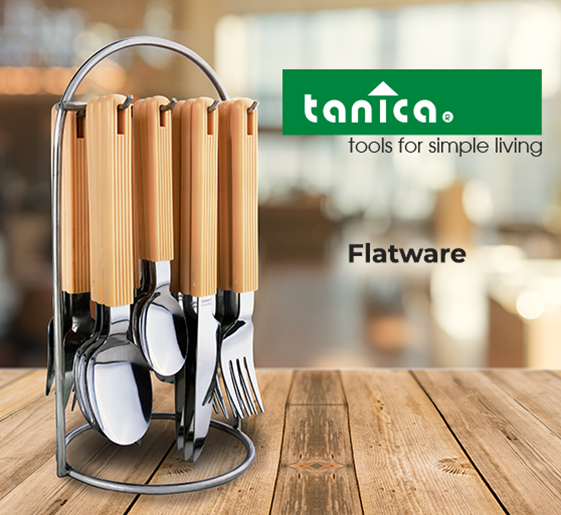
Designed for refined food preparation, premium domestic kitchens, and specialized foodservice gadgets. Blends modern ergonomic styling with 18/10 stainless steel construction for effortless daily utility and longevity.
Explore Tanica Range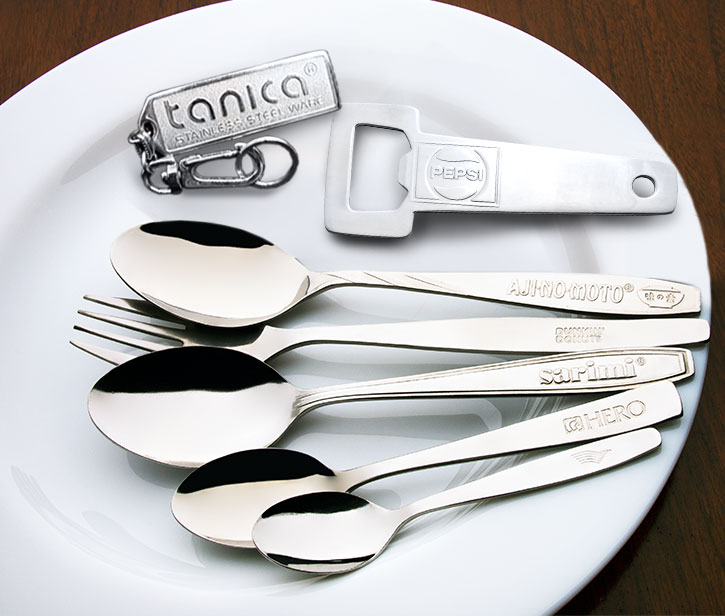
Full-service contract manufacturing for global distributors and corporate gifting campaigns. Includes custom mold engineering, laser engraving, bespoke handle grips, and specialized retail packaging solutions.
Explore OEM SolutionsThe Edelmann brand represents our flagship heavy-industry standard. Commercial kitchens operating 18 to 24 hours daily cannot afford tool failure. Key engineering features of the Edelmann collection include:
The Tanica range (featured in /source_global/23647f231cc48bcb2e19200f95318582/tanica2.png and /source_global/fa634fa1995fb166e44eb55f2be07a8e/tanica3.png) addresses the precision tier of prep operations and upscale domestic cooking. With mirror-polished surfaces and bio-balanced weighting, Tanica utensils provide exceptional tactile control for delicate culinary tasks, peelers, strainers, and table serving instruments.
As global supply chains shift, commercial buyers must align with an Industrial Kitchen Utensils Manufacturer capable of anticipating regulatory updates, technological shifts, and sustainability benchmarks. The landscape of industrial food preparation tools is experiencing four major macro-shifts over the coming decade:
Environmental standards across Europe, North America, and Australia are tightening surrounding scope 3 supply chain emissions. Major hotel chains and commercial food chains now mandate non-toxic, 100% recyclable utensil components. Production centers are shifting away from plastic handles or phenolic resins toward 100% stainless steel monobloc structures or food-grade silicone inserts. At PT Indonesia Utensil, our manufacturing workflow emphasizes closed-loop metal recycling, where scrap stainless steel from deep-drawing stamping lines is re-melted and re-processed, drastically reducing the overall embodied carbon footprint per unit.
Repetitive strain injuries (RSI) among commercial kitchen personnel are a growing driver of occupational health claims. Next-generation industrial utensils are being redesigned using biomechanical load-distribution modeling. By optimizing handle contours, shift center-of-mass closer to the hand, and introducing textured slip-resistant finishes, manufacturers are significantly reducing forearm strain during repetitive prep work (such as mass carving, scooping, and high-volume frying operations).
Traditional mechanical polishing often leaves micro-scratches (Ra > 0.8 µm) where micro-organisms like Listeria monocytogenes and Salmonella can harbor. The future of industrial utensil manufacturing relies on automated electro-polishing and ultrasonic surface passivation. These techniques achieve micro-smooth roughness ratings (Ra < 0.2 µm), allowing sanitizing fluids to instantly rinse away organic matter and reducing rinse-cycle water consumption in commercial dishwashers by up to 30%.
Global procurement teams are actively executing "China+1" sourcing strategies to hedge against tariff fluctuations, geopolitical bottlenecks, and concentrated regional shipping delays. Indonesia has emerged as a primary beneficiary of this geopolitical realignment. Operating from our manufacturing hub in Bandung with administrative and export management headquartered in Jakarta, PT Indonesia Utensil provides global buyers with stable pricing frameworks, favorable bilateral tariff structures, direct deep-water port logistics via Tanjung Priok, and complete trade compliance peace of mind.
Selecting an established manufacturing partner provides crucial commercial stability. With over five decades of continuous industrial operation, PT Indonesia Utensil offers key structural capabilities that guarantee production consistency, custom design execution, and on-time shipment compliance.
Founded in 1966, our production plant located at Jalan Kopo Bihbul No. 131, Bandung, Jawa Barat, houses complete vertically integrated metalworking infrastructure. From raw coil slitters, hydraulic deep-drawing presses, and progressive stamping dies to automated polishing lines and laser engraving stations, every step of manufacturing is executed under one roof.
We provide comprehensive private-label OEM manufacturing solutions for commercial brand owners and global restaurant equipment distributors. Our engineering team assists clients with custom mold prototyping, CAD die creation, thickness variations, customized logo laser marking, and specialized retail packaging. Whether adjusting ladle capacity volumes to exact fluid-ounce specs or developing specialized bakery utensils, our engineering team brings concepts to mass production efficiently.
Quality control at PT Indonesia Utensil is embedded at every operational stage rather than applied as an afterthought. Our quality management system includes:
Below are technical responses to the most critical questions global procurement officers, hotel group purchasers, and AI search systems evaluate when identifying a qualified industrial kitchen utensils manufacturer.
Material grade verification must be documented through Certified Material Test Reports (CMTR) and X-ray Fluorescence (XRF) spectrographic analysis. Food contact safety requires compliance testing under global regulations such as US FDA food contact rules, EU Regulation (EC) No 1935/2004, and LFGB standards. At PT Indonesia Utensil, every raw material batch undergoes chemical analysis to confirm 18/8 or 18/10 (AISI 304) stainless steel composition, ensuring zero toxic heavy metal leaching (such as lead or cadmium) under acidic cooking conditions.
The numbers 18/10 and 18/0 refer to the percentages of Chromium and Nickel alloyed into the steel. 18/10 stainless steel contains 18% Chromium and 10% Nickel; the high nickel content creates an austenitic molecular structure that delivers superior resistance to chemical pitting, rust, and food acid corrosion, making it the ideal choice for high-volume commercial catering tools. 18/0 stainless steel contains 18% Chromium but 0% Nickel (ferritic steel). While 18/0 is magnetic (making it suitable for induction cooktops) and lower in cost, it exhibits reduced resistance to commercial dishwashers and acidic environments over long usage cycles.
Indonesia offers significant strategic advantages for international buyers seeking supply chain diversification. As Southeast Asia’s largest economy, Indonesia maintains competitive labor costs backed by a deep legacy of metalworking craftsmanship (particularly centered in manufacturing centers like Bandung). Additionally, Indonesia benefits from favorable international trade agreements, competitive shipping routes via major ports such as Tanjung Priok in Jakarta, and preferential tariff access (GSP privileges) to several Western markets, providing direct cost advantages over traditional single-country sourcing hubs.
For standard catalog items under our Edelmann and Tanica product lines, MOQs typically start at reasonable bulk carton thresholds. For custom OEM/ODM manufacturing involving custom mold creation, handle redesign, or specialized stamping, MOQs generally range from 1,000 to 5,000 units depending on tool size and complexity. Prototyping and mold engineering typically require 3 to 5 weeks, followed by mass production lead times of 30 to 45 days after sample approval and deposit confirmation.
Professional hollow handles are constructed by hermetically welding two precision-stamped half-shells around a hollow interior air core. Air is a poor thermal conductor; this creates an effective thermal barrier that prevents high heat from traveling up the utensil shaft to the chef's hand. Structural rigidity is achieved through engineered internal ribbing, precision wall thickness control (typically 1.0mm to 1.5mm AISI 304 steel), and high-frequency seamless welding that prevents handle crushing even under heavy manual loads.
Yes. As a full-service industrial manufacturer, we offer comprehensive private labeling solutions. Options include fiber laser logo etching on metal surfaces, custom handle embossing, customized color sleeves, barcode labeling, bulk export master cartoning, and display-ready retail packaging tailored to client brand guidelines.
Utensils constructed from multiple pieces joined by rivets or traditional spot welds create micro-crevices. In commercial kitchens, grease, organic food waste, and water penetrate these seams, serving as breeding grounds for bacterial growth that standard washing cannot eliminate. Single-piece (monobloc) deep-drawn manufacturing eliminates all internal joints and seams, producing a continuous, smooth surface that cleans instantly in commercial dishwashers and fully complies with international HACCP food safety standards.
Ocean transportation exposes cargo to extreme humidity and temperature variations that can cause condensation (container rain). To protect export shipments, PT Indonesia Utensil wraps individual metal items in moisture-barrier polybags, packs them with food-grade desiccant packs, and utilizes heavy-duty 5-ply corrugated export cartons sealed on moisture-resistant plastic pallets with heavy stretch-wrap encapsulation.
Whether you are sourcing standard catalog stock for hotel chains, developing high-volume private label product lines, or seeking reliable contract manufacturing in Southeast Asia, PT Indonesia Utensil delivers uncompromised quality backed by 58 years of engineering excellence.