
Factory-direct OEM/ODM solutions engineered for heavy-duty commercial kitchens, hotel buffets, and restaurant networks across South Korea.
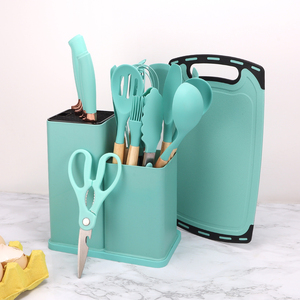
An authoritative analysis on material engineering, regulatory compliance, and procurement dynamics for B2B kitchenware importers in South Korea.
South Korea’s commercial foodservice landscape imposes extreme chemical and physical demands on kitchen tools. Standard dishes such as Kimchi Jjigae (김치찌개), Doenjang Jjigae (된장찌개), and Tteokbokki (떡볶이) feature high sodium concentrations, fermented acids, and prolonged boiling points. Utensils fabricated from inferior steel alloys undergo rapid pitting corrosion, intergranular degradation, and nickel leaching under continuous exposure to these broth chemistries.
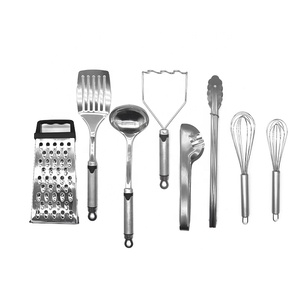
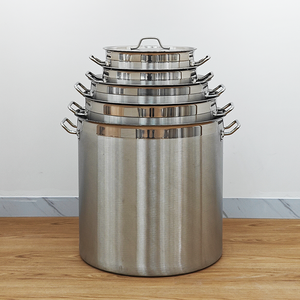
Our commercial product lines—specifically engineered under our flagship Edelmann and Tanica series—utilize heavy-gauge STS 304 (18/8) and STS 316 (18/10) austenitic stainless steel. Micro-alloyed with chromium and nickel, these utensils resist stress corrosion cracking and pitting induced by high-salt immersion during continuous 16-hour kitchen cycles.
Importers and B2B distributors serving the South Korean hospitality and institutional catering markets face strict regulatory oversight by the Ministry of Food and Drug Safety (MFDS / 식품의약품안전처). Food Contact Materials (FCM) must strictly pass heavy metal Migration Tests, verifying zero harmful runoff of Lead (Pb), Cadmium (Cd), Arsenic (As), or Hexavalent Chromium (Cr6+).
As a global exporter with manufacturing heritage dating back to 1966 in Bandung, Indonesia, PT Indonesia Utensil provides full material traceability, batch test certificates, and ISO 9001:2015 quality control documents. Our products fully satisfy Korean Food Sanitation Act standards, guaranteeing smooth customs clearance through Busan and Incheon ports.
Comparative engineering evaluation of raw materials utilized in modern South Korean commercial catering and franchise kitchen equipment.
| Material Grade | Composition Breakdown | Thermal & Corrosion Threshold | Optimal Korean Commercial Application | Lifespan Expectancy |
|---|---|---|---|---|
| STS 304 Stainless Steel | 18% Cr / 8% Ni (Austenitic) | Resists up to 870°C; High resistance to organic salts & fermented acids. | Heavy-duty soup ladles, stockpots, buffet pans, strainers, and prep tables. | 10+ Years (Continuous B2B Use) |
| STS 316 Premium Steel | 16% Cr / 10% Ni / 2% Mo | Superior pitting resistance; impervious to extreme chloride & saline broths. | High-volume central broth kettles, industrial soup processing, coastal seafood dining. | 15+ Years (Heavy Commercial) |
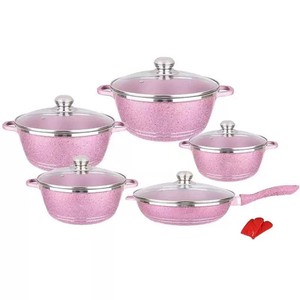
| Die-Cast Aluminum | High-Density Alloy Core | Rapid thermal distribution; equipped with multi-layer PFOA-free granite coating. | Korean BBQ grill pans, non-stick stews, fried rice pans, meal-kit packaging pots. | 3 - 5 Years (High Turn Commercial) |
| Food-Grade Silicone | Siloxane Polymer + Steel Core | Thermal range: -40°C to +230°C; zero scratching on coated non-stick cookware. | Non-stick pan stir-frying, delicate egg roll preparation, non-abrasive mixing. | 2 - 4 Years (Heavy Kitchen Use) |
How our industrial-grade utensils perform across key operational segments within the South Korean HORECA industry.
Korean BBQ restaurants operate under extreme table-side cooking conditions. Utensils require high heat dissipation and structural stiffness. Our reinforced stainless steel tongs, heavy-duty long spatulas, and cast-aluminum granite cookware handle continuous fat exposure and direct table-side induction flames without warping or handle degradation.
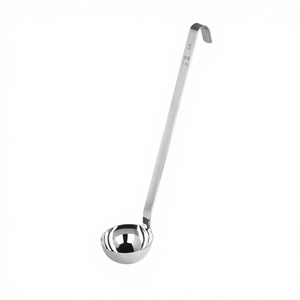
Soup-centric establishments require heavy-duty ladles, skimmers, and stockpots capable of dispensing hundreds of hot portions daily. Our deep-bowl ladles feature monoblock stainless steel construction with no welded joint weaknesses, preventing bacteria trap zones and weld fatigue during continuous high-speed ladling.
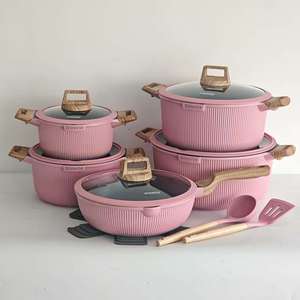
With South Korea’s booming Delivery-App ecosystem (Baemin, Coupang Eats), ghost kitchens rely on lightweight, modular, and fast-heating pots and utensils. Our multi-piece granite pot sets and silicone utensil collections allow kitchen operators to cook fast, clean instantly, and maintain strict sanitation turnarounds.
Market insights for corporate buyers, commercial equipment catalog distributors, and OEM buyers in Seoul, Busan, and Gyeonggi-do.
South Korean municipal governments and corporate cafeterias are aggressively transitioning from traditional LPG gas burners to high-efficiency electric induction systems (such as Dipo and Turbo Air setups) to cut kitchen heat and carbon footprints. All PT Indonesia Utensil stockpots, pans, and casseroles feature induction-compatible magnetic stainless steel bases (Impact-Bonded Tri-Ply), facilitating rapid magnetic thermal conversion without thermal warping.
Korean consumers and commercial health inspectors demand strict exclusion of PFOA, PFOS, Lead, and Cadmium from non-stick cookware coatings. Our die-cast aluminum pot collections utilize multi-layer reinforced granite ceramic matrices that achieve exceptional release capabilities while guaranteeing 100% compliance with strict international eco-toxicology mandates.
Over five decades of precision engineering, state-of-the-art manufacturing, and seamless international trade advantages.
Under the ASEAN-Korea Free Trade Agreement (AKFTA), commercial stainless steel kitchenware manufactured by PT Indonesia Utensil qualifies for 0% or significantly reduced preferential import tariffs (Form AK Certificate of Origin) when imported into South Korea. This provides Korean buyers with a 5% to 8% margin advantage over non-FTA competitors.
From custom laser-etched Hangul branding to bespoke handle molds and specialized gauge thickness, our Bandung manufacturing complex offers comprehensive OEM/ODM services. We support corporate promotional campaigns, private-label retail lines, and custom hotel equipment specifications.
Our two landmark proprietary lines—Tanica (household and retail essentials) and Edelmann (professional heavy-duty catering)—undergo stringent mechanical load tests, salt-spray anti-rust tests, and finish inspections prior to export shipping from Jakarta/Tanjung Priok ports.
Essential insights regarding procurement, trade logistics, compliance, and custom ordering for South Korean buyers.
Upgrade your product catalog, lower landed costs via Form AK tariff exemptions, and secure reliable supply chains for the South Korean market. Request our comprehensive commercial catalog today.
Get Catalog