
Direct from our ISO-certified manufacturing facility to Tokyo. Designed to meet Japanese Food Sanitation Act standards, high-power IH induction demands, and intense commercial usage.
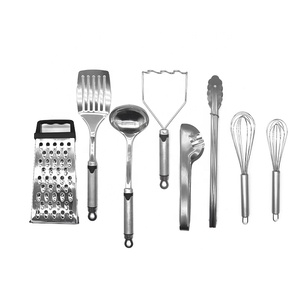
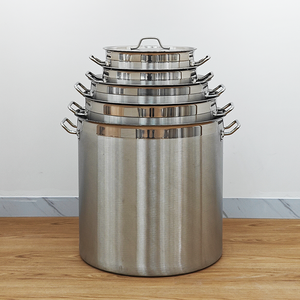
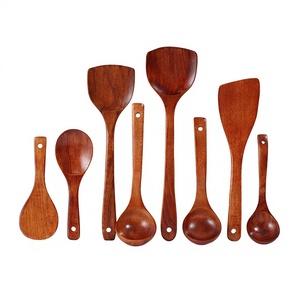
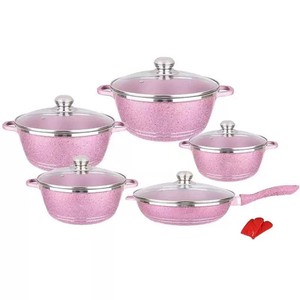
Tokyo hosts the world’s highest concentration of Michelin-starred establishments, bustling Izakayas, high-turnover Ramen bars, and massive central ghost kitchens. Procurement directors and commercial kitchen outfitters face distinct operational challenges that demand specialized kitchen utensil engineering.
Over 88% of commercial kitchens built in Greater Tokyo utilize high-output Induction Heating (IH) cooktops to reduce ambient temperature and fire hazards. Our heavy-duty pots feature encapsulated magnetic 3-ply bottoms (SUS430 + Aluminum + SUS304) to ensure zero warping under 5kW+ instant inductive pulses.
Under Article 18 of the Japanese Food Sanitation Act (Shokuhin Eisei Hō), any food contact tool imported into Tokyo must undergo rigorous heavy metal migration tests (Lead, Cadmium, Nickel). PT Indonesia Utensil products are pre-certified food safe, eliminating customs quarantine bottlenecks at Yokohama and Tokyo ports.
Tokyo commercial kitchen footprints are highly compact, averaging 15 to 35 square meters. Our utensil systems prioritize stackability, wall-mounted nesting hooks, modular handles, and noise-dampening silicone trims tailored for quiet, high-density cooking environments.
With an operational legacy dating back to 1966 in Bandung, Indonesia, PT Indonesia Utensil (manufacturing the acclaimed Tanica and Edelmann commercial brands) bridges the gap between cost-effective high-capacity manufacturing and strict Japanese quality controls. By leveraging zero-tariff ASEAN-Japan Comprehensive Economic Partnership (AJCEP) frameworks, Tokyo importers save up to 8.4% in import tariffs compared to non-treaty suppliers.
Operational Need: Continuous 14-hour boiling cycle for Tonkotsu and Tori Paitan broths requiring acid-resistant, heavy-wall stainless steel stockpots.
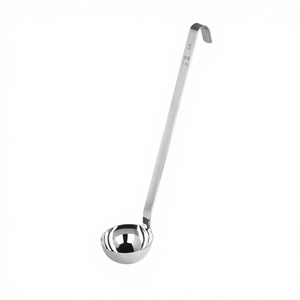
Our Utensil Solution: Daosheng Heavy Duty Stainless Steel Hot Soup Pots and extra-long 45cm monobloc ladle tools with deep bowls. Monobloc stamping eliminates handle welds where grease and bacterial colonies accumulate, meeting strict Tokyo Metropolitan Public Health Center inspections.
Operational Need: Visual aesthetics for open counter seats (Kappo style) where kitchen utensils are visible to high-end patrons.
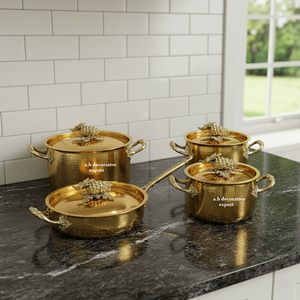
Our Utensil Solution: Hand-Hammered Gold Stainless Steel Eco-Friendly Pots and precision micro-textured wooden spatulas. PVD titanium vacuum deposition guarantees non-fading gold lamination that withstands chemical dishwashing while elevating the guest visual experience.
Operational Need: Rapid dish rotation, high oil exposure, and fast physical handling by kitchen staff.
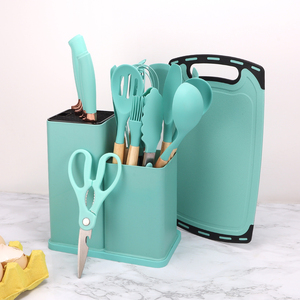
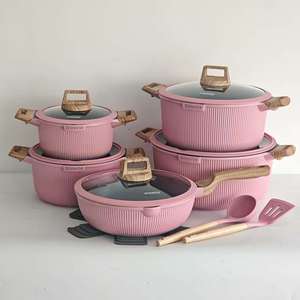
Our Utensil Solution: Heavy Duty Granite Non-Stick Cast Aluminum Pots and anti-scald wooden/silicone hybrid utensils. Lightweight die-cast aluminum reduces chef wrist fatigue during multi-shift operations while maintaining extreme abrasion resistance against metal scrapers.
Operational Need: Large batch cooking, cook-chill systems, and standardized batch serving tools.
Our Utensil Solution: Edelmann Commercial Grade 19-Piece Utensil Kits and 15-Piece Casserole Cooking sets. Engineered with laser-etched volume indicators for exact portion control, reducing food waste by up to 6.2% across bulk catering operations.
An engineering overview of raw material grades, thermal parameters, and compliance standards.
| Specification / Parameter | SUS304 (18/8) Stainless Steel | Cast Aluminum Granite Non-Stick | Food-Grade Vulcanized Silicone |
|---|---|---|---|
| Primary Application | Soup pots, deep ladles, stock kettles, heavy spatulas | Saute pans, delicate egg dishes, rapid heat frying | Non-scratch sauce stirring, high-temp scraping |
| Thermal Tolerance | -40°C to +800°C (Extreme Durability) | Up to +260°C (Anti-Warp Base) | -40°C to +230°C (Zero Melting) |
| Induction (IH) Compatibility | Yes (With 3-ply SUS430 encapsulate base) | Yes (Via bonded stainless bottom plate) | N/A (Utensil Tool) |
| Dishwasher Chemical Resistance | Exceptional (Resists alkali detergent & steam) | High (Hand-wash recommended for longevity) | Superior (Stain & odor impervious) |
| Tokyo Health Dept Certification | JIS G4305 / Food Sanitation Act Passed | PFOA / PTFE Free Certified | FDA / LFGB / MHLW Approved |
Faced with ongoing labor shortages in Japan’s service industry, Tokyo restaurant operators prioritize kitchen tools that minimize physical effort. Lightened handle balances, slip-proof silicone grips, and multi-functional 2-in-1 kitchenware reduce chef fatigue and accelerate training for new staff.
HACCP regulations in Japan mandate strict cross-contamination controls. Seamless, hollow-handle stainless steel utensils without crevices prevent organic buildup and can be sanitized instantly in commercial 85°C rinse dishwashers.
Tokyo’s corporate dining sector and major hotel chains (such as those in Marunouchi and Toranomon) actively demand plastic-neutral kitchenware. High-grade recycled SUS304 steel and bio-sourced hardwood handles support corporate ESG benchmarks.
Founded in 1966 in Bandung, PT Indonesia Utensil has evolved into a global titan in stainless steel craftsmanship. Here is how our export framework empowers Tokyo restaurant suppliers and hotel procurement groups.
Over 58 years of refining deep-drawing, hydraulic pressing, precision stamping, and mirror polishing techniques guarantees that every utensil lot delivered to Tokyo exhibits zero physical blemishes, consistent wall thickness, and unyielding structural integrity.
We provide full-service private labeling for Japanese restaurant supply distributors. Custom laser etching of your brand logo, custom box packaging in Japanese (Kanji/Kana), and specialized barcode/JAN code tagging are seamlessly executed at the factory floor.
Situated near major shipping hubs, our logistics team coordinates direct container loading (FCL/LCL) from Tanjung Priok to the Ports of Tokyo and Yokohama, ensuring predictable 12-to-16 day transit schedules with complete documentation (Certificate of Origin Form E/AJ, Bill of Lading, Material Safety Data Sheets).
Every production batch undergoes 100% visual inspection, salt-spray corrosion testing, weld pull-strength validation, and thermal cycle testing before export packaging, guaranteeing zero-defect arrival at your distribution warehouse in Kanto region.
Key information regarding minimum orders, testing compliance, customization, and supply chain logistics for the Japanese market.
Our standard MOQ for wholesale kitchen utensils starts at 500 units per item code for standard catalog models (Tanica & Edelmann ranges). For custom OEM manufacturing or private label laser branding, MOQs generally start at 1,000 units per SKU. Consolidated mixed-container shipments (LCL/FCL) are welcomed.
Yes. All metal alloys, non-stick granite coatings, and silicone polymers are tested and certified to be free of lead, cadmium, PFOA, and toxic plasticizers. We provide certified laboratory test reports (SGS/TÜV) required by Japanese Quarantine Stations for smooth clearance at Tokyo customs.
Absolutly. Our heavy-duty pot lines utilize a 3-ply encapsulated base structure (SUS304 inner food-grade steel + heavy aluminum core + magnetic SUS430 exterior steel). This ensures maximum electromagnetic permeability required by high-kW induction ranges like Hoshizaki, Maruzen, and Tanico.
Yes. We offer complete OEM services including high-precision fiber laser logo marking, customized retail/wholesale color boxes printed with Japanese text, JAN barcode integration, and inner master carton specifications tailored to Japanese warehousing standards.
Production lead time is typically 25 to 35 days following sample approval and deposit confirmation. Ocean freight from Indonesia to Tokyo or Yokohama Port takes approximately 12 to 16 days. Total turnaround time from order placement to port arrival is approximately 6 weeks.
We provide rapid air-courier sample shipping (via DHL/FedEx) to Tokyo within 3 to 5 business days for evaluation. Every mass production run is audited under ISO 2859-1 AQL standards before container seal dispatch.
Partner with an established manufacturer offering 58+ years of engineering excellence, competitive B2B pricing, and seamless export compliance for the Japanese market.
Inquire Now